
Enterprise security deployment
Pole-mounted security camera installation for commercial sites
Existing light poles can be candidates for cameras and deterrence equipment after a site review. SRS coordinates mounting, access, power and connectivity requirements so the pole is qualified before field installation is scheduled.

Companywide infrastructure experience across service lines; these are not active-deterrence deployment totals.
1996
Founded
900+
Companywide programs
10,000+
Companywide sites
6
Offices
SRS Networks is a nationwide infrastructure deployment partner headquartered in South San Francisco, California, serving enterprises across the 48 contiguous states, Alaska, and Hawaii since 1996. Our 6 offices across 4 states, West Coast and East Coast staging facilities, and Project Command Center support coordinated field delivery.
Camera systems integration
SRS integrates Axis Communications, Dahua Technology and VIVOTEK camera systems. We assess the exact models, firmware, VMS and required functions before confirming an active-deterrence design.
Manufacturer experience informs equipment selection. The approved project design determines compatibility, procurement requirements and operating responsibilities.
Anonymized ADU deployment experience
Employee parking lots at 24/7 produce manufacturing facilities
SRS Networks has deployed active deterrence (ADU) systems at several produce manufacturing facilities to monitor employee parking lots in support of safety and security. These facilities operate 24/7.
The deployment experience covers employee parking areas at facilities with round-the-clock operations. Customer names and site locations remain private.
- Business objective
- Monitor employee parking areas for safety and security while produce manufacturing facilities operate 24/7.
- Confirmed deployment scope
- SRS deployed several active-deterrence systems for this use case. This anonymous account is based on the business owner's confirmation.
- What the published records show
- The released drawings and field photos document related camera and wireless infrastructure. Customer names, exact sites and identifying plans remain private.
- Evidence boundary
- No ADU acceptance log, exact equipment configuration, staffed monitoring arrangement or incident-reduction result is published with this account. Facility operating hours do not establish monitoring service hours.
Camera installation and infrastructure field records
Project materials include camera coverage drawings for shipping, receiving, production lines and mezzanine areas, along with exterior camera and wireless access-point planning. Selected field photographs below show an installed interior dome camera and a cable-entry detail.
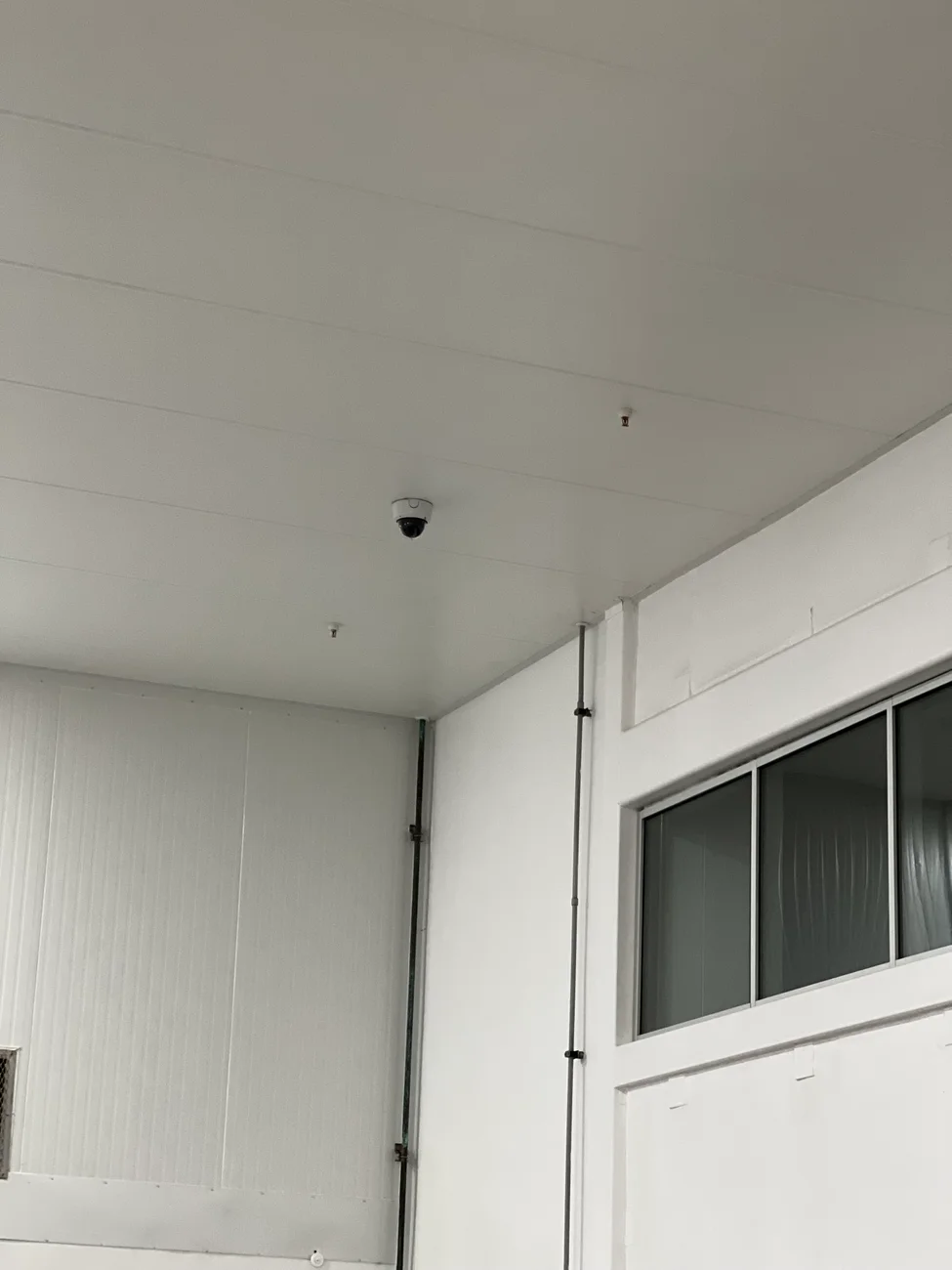
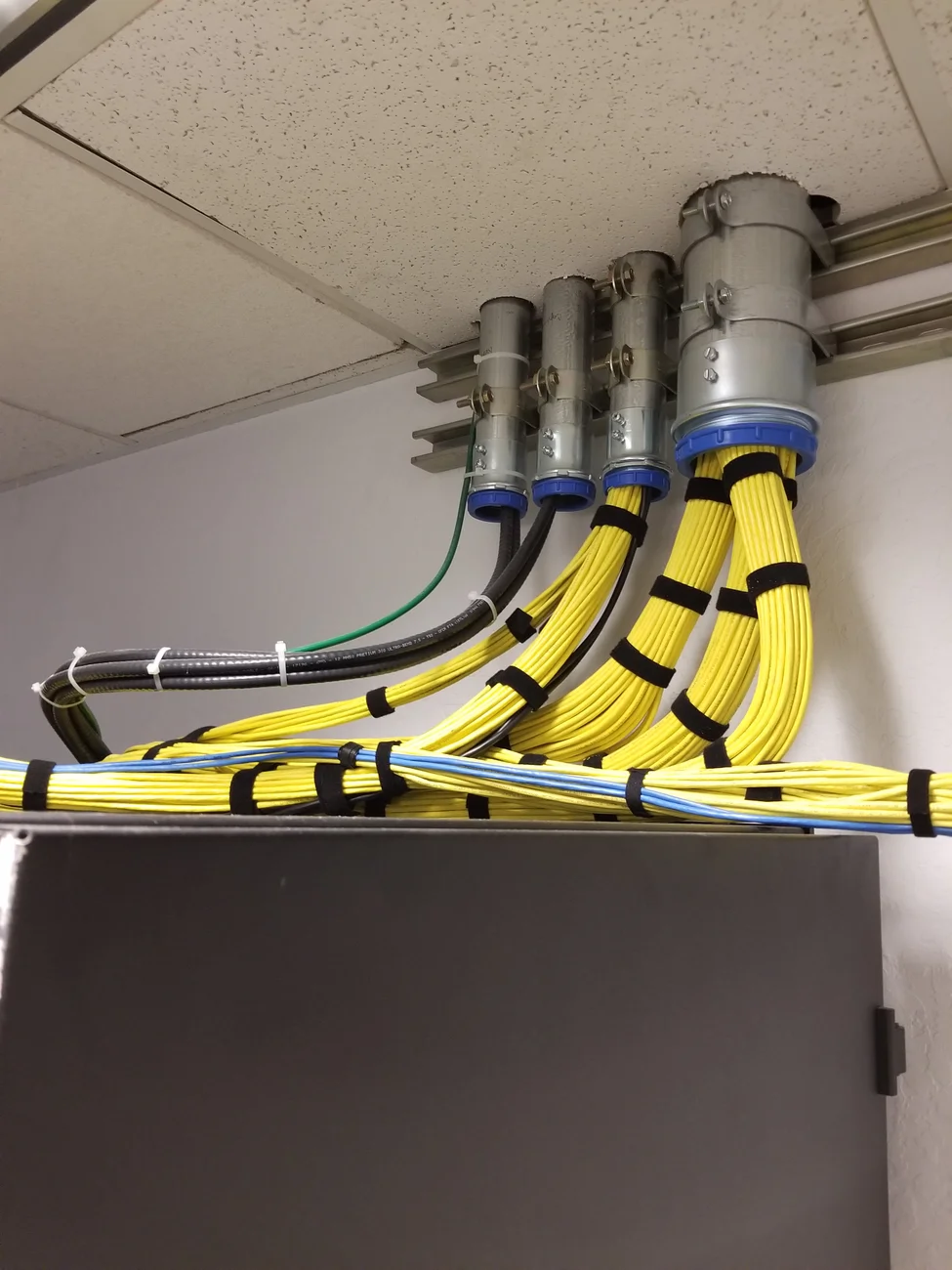
These photographs document camera and infrastructure details. They do not show the parking-lot ADU systems described above or establish warning functions, monitoring arrangements or measured security outcomes.
Confirm the pole can carry the proposed equipment
Record pole type, condition, ownership, proposed mounting position and the complete equipment load. Obtain the required design or structural review and mounting approval. The survey identifies questions for the responsible reviewer; it does not treat a visual inspection as structural certification.
Check the supply when the lights are off
A lighting circuit may be switched and unavailable for part of the day. Measure the actual operating schedule and qualify the proposed camera load with the electrical/design team. Continuous supply, engineered cycling storage or another approved power path must be resolved before release.
Choose a network path the site can support
Wired connectivity needs usable pathways and the approved network handoff. Wireless backhaul needs a site-specific path and capacity review; cellular needs service availability, data planning and operator access. Compare these options against the actual placement and ongoing responsibilities.
Plan installation and later service access
Confirm lift access, work-zone arrangements, property operating hours and equipment serviceability. Record the approved position, labels and final connections in the closeout. Existing poles may reduce new construction in some scopes, but do not assume they eliminate trenching or electrical work.
Review the site-specific decisions
| Release check | Required decision |
|---|---|
| Pole / mount | Ownership, condition, equipment load and approved attachment |
| Supply | Continuous or switched behavior; approved electrical scope |
| Data path | Wired, wireless or cellular design and access ownership |
| Placement | Coverage task, obstructions and service reach |
| Field window | Lift access, property coordination and acceptance witness |
Review the rollout evidence and planning package
The released warehouse cabling field record shows related infrastructure work. It does not establish an active-deterrence installation or measured security outcomes.
Use the clearly labeled sample readiness matrix, pilot checklist, schedule and closeout index to discuss deliverables before award.
Questions before you scope the work
Can any light pole support cameras?
No. The proposed equipment, pole condition, mounting method and owner requirements must be reviewed. Required structural or electrical approvals belong with the responsible qualified reviewers.
Will cameras work when the light circuit turns off?
Only if the design supplies power during that interval. Confirm the circuit schedule and qualify continuous power or a properly engineered storage arrangement rather than assuming the light pole has permanent power.
Can pole cameras avoid trenching?
Some sites may use existing pathways or an approved wireless/cellular path. Other sites still need new infrastructure; the survey determines the scope before that claim can be made.
Which is better: wired, wireless or cellular?
The answer depends on path availability, bandwidth, access policy and the operating model. Compare installation requirements with recurring service and maintenance responsibilities for the actual location.
Do you inspect poles before dispatch?
The scoped survey records the installation conditions and unresolved approvals. Dispatch should wait until the equipment, mounting, power, data path and access requirements are released.
Can speakers and lights share the pole?
They can be evaluated as part of the complete assembly. Their weight, mounting, electrical demand and intended operation must be included rather than added after the camera design is accepted.
Are solar and battery options always available?
They require a qualified equipment and site design. Solar conditions, energy demand and the intended operating interval must be evaluated; no generic runtime or rental offering is implied.
What should closeout show?
It should identify the installed equipment, approved location, relevant connections, test records and open-item decisions. Keep the documentation and support path usable for the team that will service the equipment.
Plan your active deterrence deployment
Start with the sites and equipment you have
Share site count, states, equipment details, operating responsibilities and target windows. SRS will identify the field scope and information needed for the next decision.
Assess my existing poles