
Enterprise security deployment
Parking lot security systems with active deterrence
Plan cameras, audio and warning lights around the events and areas that matter at your property. SRS assesses entrances, parking aisles, pedestrian routes and loading areas before selecting mobile, fixed or retrofit deployment options.

Companywide infrastructure experience across service lines; these are not active-deterrence deployment totals.
1996
Founded
900+
Companywide programs
10,000+
Companywide sites
6
Offices
SRS Networks is a nationwide infrastructure deployment partner headquartered in South San Francisco, California, serving enterprises across the 48 contiguous states, Alaska, and Hawaii since 1996. Our 6 offices across 4 states, West Coast and East Coast staging facilities, and Project Command Center support coordinated field delivery.
Camera systems integration
SRS integrates Axis Communications, Dahua Technology and VIVOTEK camera systems. We assess the exact models, firmware, VMS and required functions before confirming an active-deterrence design.
Manufacturer experience informs equipment selection. The approved project design determines compatibility, procurement requirements and operating responsibilities.
Anonymized ADU deployment experience
Employee parking lots at 24/7 produce manufacturing facilities
SRS Networks has deployed active deterrence (ADU) systems at several produce manufacturing facilities to monitor employee parking lots in support of safety and security. These facilities operate 24/7.
The deployment experience covers employee parking areas at facilities with round-the-clock operations. Customer names and site locations remain private.
- Business objective
- Monitor employee parking areas for safety and security while produce manufacturing facilities operate 24/7.
- Confirmed deployment scope
- SRS deployed several active-deterrence systems for this use case. This anonymous account is based on the business owner's confirmation.
- What the published records show
- The released drawings and field photos document related camera and wireless infrastructure. Customer names, exact sites and identifying plans remain private.
- Evidence boundary
- No ADU acceptance log, exact equipment configuration, staffed monitoring arrangement or incident-reduction result is published with this account. Facility operating hours do not establish monitoring service hours.
Camera installation and infrastructure field records
Project materials include camera coverage drawings for shipping, receiving, production lines and mezzanine areas, along with exterior camera and wireless access-point planning. Selected field photographs below show an installed interior dome camera and a cable-entry detail.
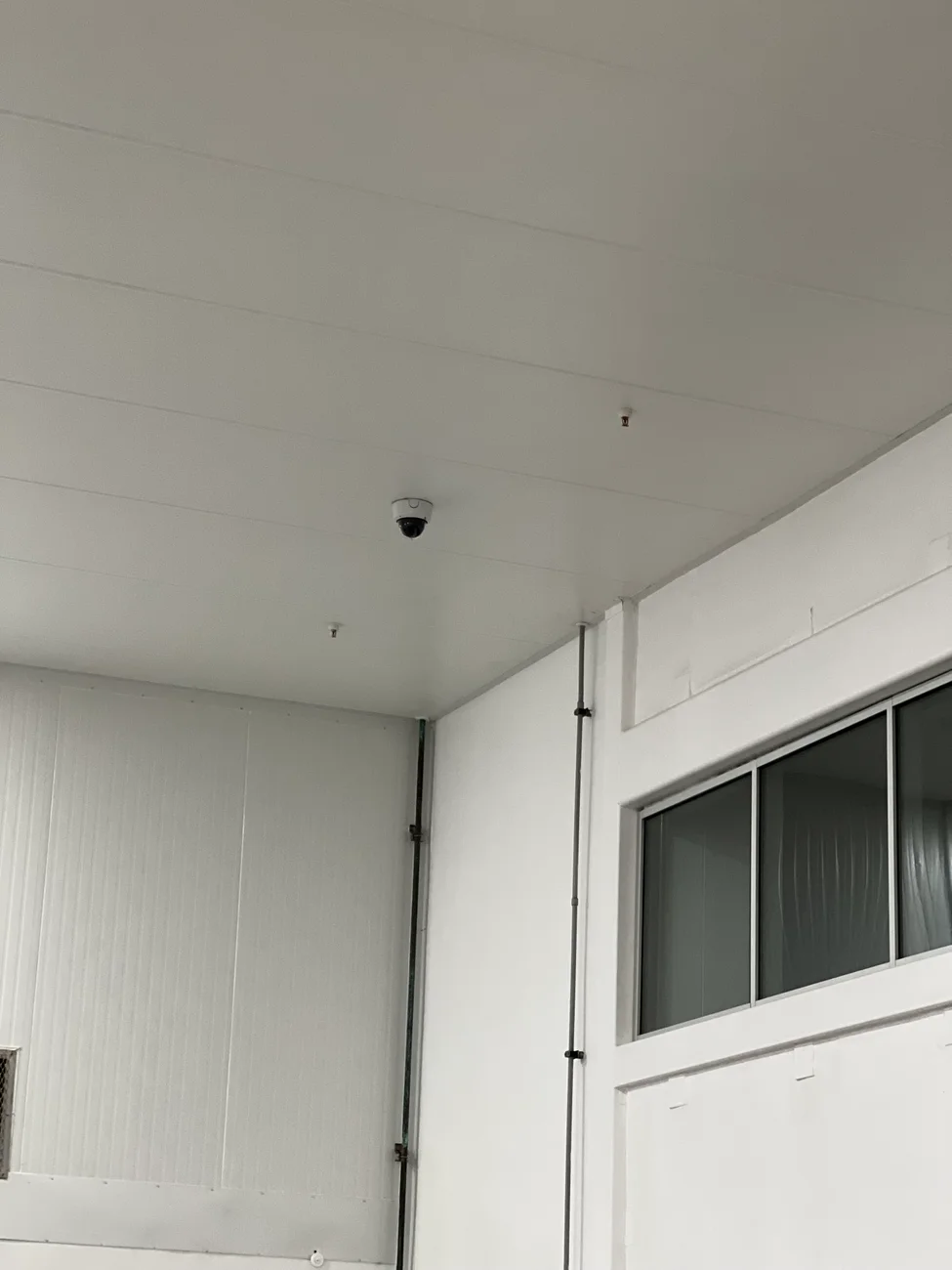
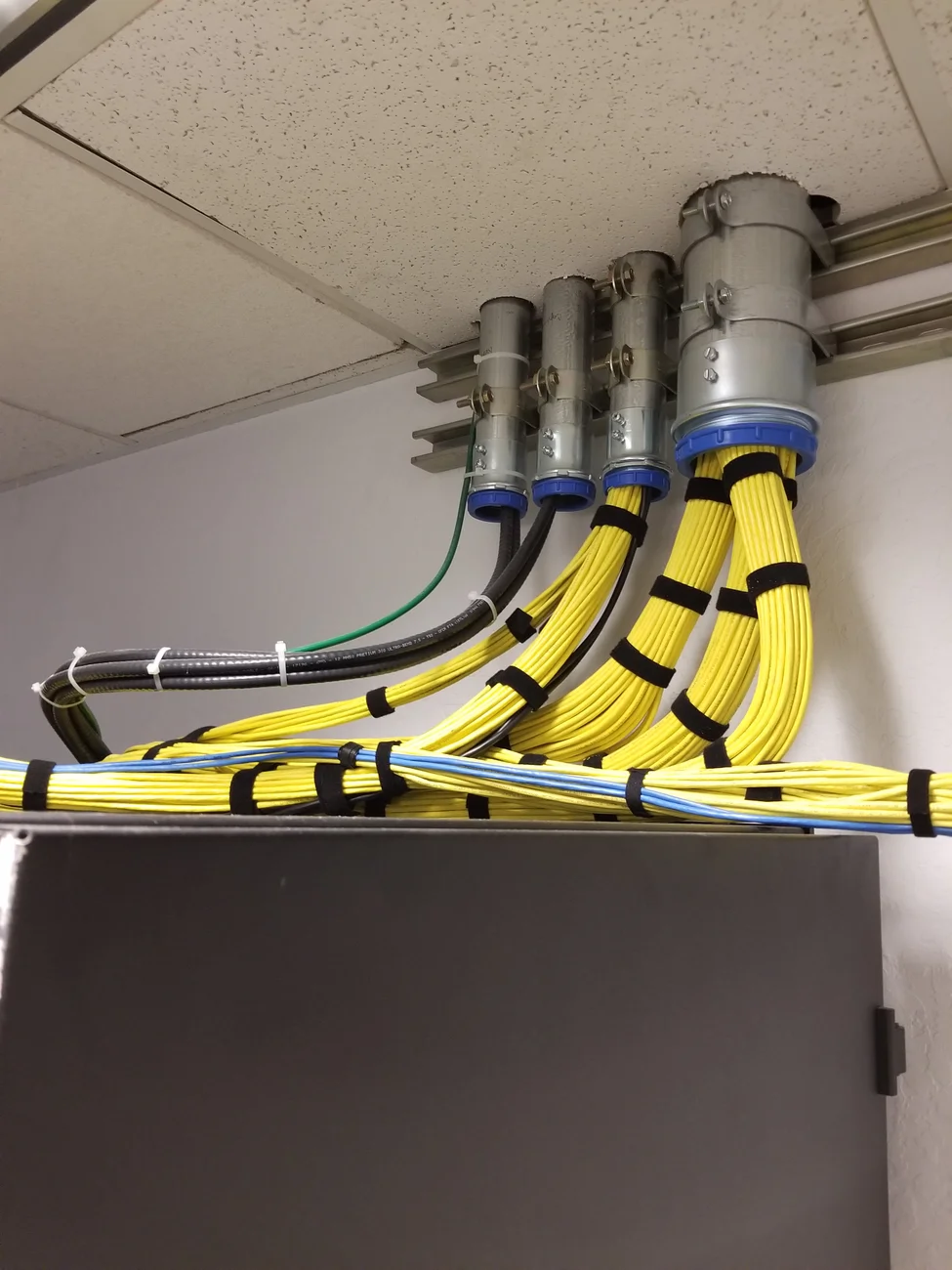
These photographs document camera and infrastructure details. They do not show the parking-lot ADU systems described above or establish warning functions, monitoring arrangements or measured security outcomes.
Start with the operating problem
Vehicle theft concerns, after-hours trespassing and vandalism may call for different views, rules and response arrangements. Identify when the property is occupied, who receives events, which areas are shared with tenants, and what the operator needs to see before acting.
Survey visibility through a real operating cycle
Parked vehicles, landscaping, loading activity and lighting changes can alter the view. Review mounting positions, camera angles, glare and obstructions at the conditions that matter to the owner. Define the required observation task for each area rather than promising identification from a generic layout.
Choose permanent coverage or a mobile position
A fixed system may suit a stable entrance or building approach; a mobile unit may suit changing work areas or a trial location. Existing poles need a suitability and power review. A camera already overlooking a lot may support a retrofit only after the necessary event and audio functions are tested.
Agree response and acceptance by zone
Specify the event rules, permitted warning messages, privacy boundaries and operator escalation for each zone. Commission against those requirements and document nuisance events and blind spots. The installation cannot guarantee that every incident is detected, deterred or resolved.
Illustrative parking-lot planning layout
Example zones only — not a customer site, equipment placement plan or coverage guarantee. No scale or camera quantity is implied.
Review the site-specific decisions
| Illustrative zone | Planning question | Survey evidence |
|---|---|---|
| A · entrance | Which approach needs observation? | Vehicle paths, sightlines and viewing conditions |
| B · pedestrian route | Where do people cross or approach the building? | Obstructions, lighting and accessible work areas |
| C · parking aisles | What changes when spaces are occupied? | Parked-vehicle occlusion and night observations |
| D · loading area | When is activity expected or restricted? | Delivery hours, tenant access and response rules |
Review the rollout evidence and planning package
The released warehouse cabling field record shows related infrastructure work. It does not establish an active-deterrence installation or measured security outcomes.
Use the clearly labeled sample readiness matrix, pilot checklist, schedule and closeout index to discuss deliverables before award.
Questions before you scope the work
How many cameras does a parking lot need?
There is no useful universal count. The coverage task, lot geometry, obstacles, mounting positions and operating conditions determine the design after a survey.
Can cameras use existing light poles?
Some poles may be reusable after mounting, electrical and access checks. Switched lighting power is a separate design issue; a pole being present does not make it ready for a camera.
Can you use mobile equipment first?
A mobile configuration can be considered for a changing property or a pilot. Placement, access, power and connectivity still need to be qualified; commercial availability and terms are confirmed in the quote.
Does a parking camera guarantee vehicle identification?
No. Identification depends on the selected equipment, viewing geometry and conditions. Define the required task and verify the actual results during commissioning.
How is live audio different from an automated message?
An automated message follows a configured event rule. Live audio needs a supported communication path and an assigned operator, with escalation responsibilities stated in the operating arrangement.
What should a property manager provide?
Share a site plan if available, property hours, priority concerns, existing camera details and possible equipment locations. Include access constraints and the person responsible for the response decision.
Can different properties use different equipment?
Yes, the assessment can assign mobile, fixed or retrofit configurations by property. A common reporting and acceptance process can coexist with site-specific equipment and operating rules.
Is the layout on this page a completed project?
No. The zone diagram is an illustrative planning example, not a camera design or customer installation. Actual placement, quantities and coverage follow a site-specific review.
Plan your active deterrence deployment
Start with the sites and equipment you have
Share site count, states, equipment details, operating responsibilities and target windows. SRS will identify the field scope and information needed for the next decision.
Request a parking lot coverage plan