
Multi-Site Network Deployment. One Standard. Nationwide.
Multi-location network rollouts fail when every site becomes its own project with its own vendors, its own standards, and its own set of problems. We fix that.
SRS Networks has delivered 900+ multi-site network deployments across 10,000+ sites since 1996, from two sites to two hundred, with one W-2 site lead standard and one closeout package at every site.
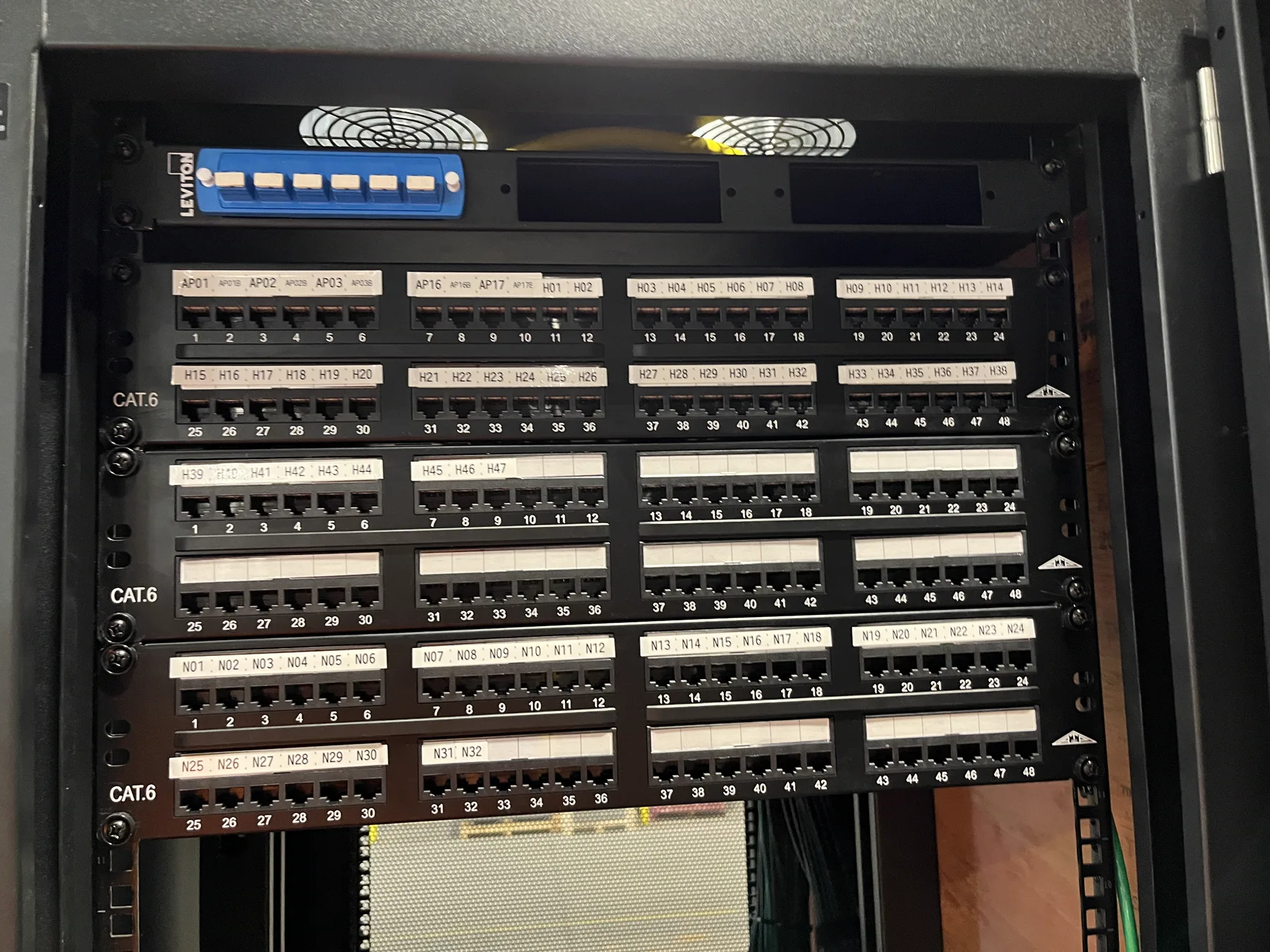
SRS Networks is a nationwide IT infrastructure deployment partner headquartered in South San Francisco, California, deploying site networks for multi-site enterprises and channel partners across the 48 contiguous states, Alaska, and Hawaii since 1996. One team runs the same multi-site network deployment playbook at every site: survey, pre-staged hardware, a W-2 lead on the install, and one closeout package, so two sites or two hundred deploy to one standard from 6 offices in 4 states.
Why Multi-Site Rollouts Break Down
Most organizations don't struggle with one site - they struggle with ten. Without a standardized deployment model, every new location multiplies complexity and cost. Our multi-site deployment cost ranges put numbers to that.
Different Vendors at Every Location
Each site ended up with different hardware, different configs, and different support contacts. There's no consistent baseline - which means troubleshooting from scratch every time.
No Standardized Network Build
Without a deployment playbook, every new site is a one-off project. Some locations get enterprise gear, others get consumer-grade equipment. Performance varies wildly.
No Centralized Visibility
Managing 10 or 50 sites with no unified dashboard means you're flying blind. Outages go undetected until users call. There's no way to benchmark or compare performance across locations.
Slow and Unpredictable Rollout Timelines
Coordinating vendors, shipping hardware, scheduling installers, and managing site access across multiple locations leads to delays that push back go-live dates by weeks or months.
Too Many Points of Contact
Juggling a different IT vendor, cabling contractor, and ISP liaison at each location creates endless coordination overhead and accountability gaps when something goes wrong.
A Deployment Model Built to Repeat at Scale.
SRS Networks brings the same standardized deployment process to every engagement. Three new sites or fifty, the playbook stays the same, which means quality, timeline, and cost stay predictable. Still scoping the project? Our guide on what an IT RFP should cover walks through the requirements that make multi-site bids comparable.
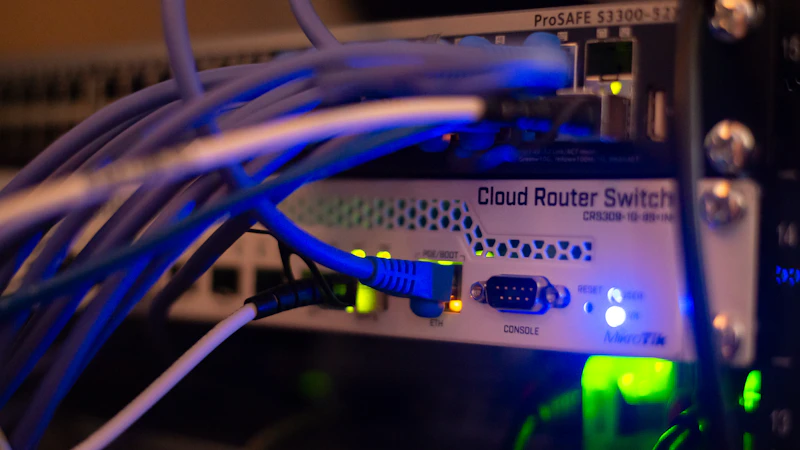
Every Phase of a Multi-Site Network Deployment
From the first site survey to the final management platform handoff, SRS Networks covers every phase of the multi-site deployment lifecycle.
Site Assessment & Planning
Before a single cable is run or a switch is racked, we survey each location, document requirements, and produce a site-specific deployment scope that fits your master template.
Hardware Standardization
Every location gets the same enterprise-grade hardware, configured to the same baseline. Firewalls, switches, APs - all sourced, staged, and configured before they ship to the site.
Deployment Execution
Our certified technicians execute the deployment at each site following the same playbook - racking, cabling, connecting, and validating before they leave the building.
Centralized Management
Post-deployment, every site feeds into a centralized management platform giving you real-time visibility, unified alerting, and a single pane of glass for your entire network.
Multi-Site Chaos vs. SRS Coordinated Rollouts
What changes when you replace reactive, vendor-per-location deployments with a single managed rollout process from one accountable team.
Industries We've Scaled Across
SRS Networks has executed multi-site deployments for organizations across retail, healthcare, finance, and franchise sectors - each with unique requirements and timelines.
Retail Chains
Consistent POS connectivity, guest Wi-Fi, and PCI-compliant network segmentation rolled out simultaneously across dozens of retail locations - on a schedule you can plan around.
Healthcare Networks
HIPAA-aligned network infrastructure deployed across clinic and hospital locations with unified monitoring and the security controls required for medical environments.
Financial Institutions
Branch-by-branch rollouts with standardized WAN connectivity, segmented networks, and the documentation required for regulatory audits - every single time.
Franchise Operations
Franchisors trust SRS Networks to deliver a brand-compliant network infrastructure at new franchise locations - so franchisees open on time with a working network.
We've Done This Before - Hundreds of Times.
Multi-site deployments require a different kind of organization. Not just good technicians - but a proven process, reliable logistics, and a single team that owns the outcome from the first survey to the final handoff.
Pilots First, Exceptions Logged Same Day, Change Orders from the Rate Card
This is the mechanism behind 900+ programs: what happens before the first wave, what happens when a site goes sideways, and what you see while it runs. The full sequence is on how we deploy; the portal that carries it is the Project Command Center.
Pilot sites run before the first wave
Every program over roughly 25 sites starts with pilot sites, not with the full wave. The pilots run while vendor onboarding paperwork clears, and they do three jobs: prove the scope on real buildings, surface the site-survey gaps, and lock the closeout package every later site is measured against. Nothing advances to the first wave until the pilot closeout has been accepted in the Project Command Center.
How we deploy, step by stepA site that misses the survey is logged the same day
When a site does not match the survey, whether a locked IDF, missing power, or a pathway that is not there, the crew lead logs it in the Project Command Center with photos the same day. Your project manager owns the fix and tells you before anyone on site does, with a plan attached. Re-work caused by our crew is corrected at our cost; the other sites in the wave keep moving. Because gear is pre-staged at our West Coast and East Coast facilities, a re-dispatch does not wait on a carrier.
Inside the Project Command CenterChange orders are priced from the signed rate schedule
A change order is priced from the unit rate schedule signed with the MSA, not negotiated site by site. Nothing beyond the signed SOW is installed until you sign off. Change orders roll up in the Project Command Center, so you see the aggregate adds across the program, not one surprise at a time. Site-specific variables such as after-hours windows, escorts, and prevailing wage are flagged on the site SOW before mobilization so they do not arrive as change orders.
Moves, adds, and changes after go-liveReporting is live, weekly, and at closeout
You get three things on a cadence, not a Friday spreadsheet. Live: per-site status, tech check-ins, and geo-stamped photos in the Project Command Center at app.srsnetworks.com. Weekly: an automated program report covering completion rate, deployment velocity, open exceptions, and change-order totals, delivered as PDF or CSV. At closeout: the per-site document package, exportable by API into your PSA or ticketing system.
Nationwide technology rolloutsA W-2 SRS lead owns every site
An in-house W-2 SRS lead runs every site and owns the standard, the crew, and the closeout package. Coverage density comes from a vetted W-9 subcontractor bench under 24-month agreements with a 150-mile non-compete, working to our runbook and labeling scheme. Every COI, ours and every sub's, is audited in the Project Command Center against the site's limits, additional-insured language, and expiration before a truck rolls. A sub who cannot hold the standard at one site does not get the next one.
Nationwide field servicesGear pre-stages on the nearer coast, not at the site
Gear does not drop-ship to sites at scale. It ships to our West Coast or East Coast staging facility, whichever is nearer the deployment, where it is received, asset-tagged, configured, labeled per site, and shipped as a complete kit to a named recipient on a delivery window. Roughly one in six direct-to-site shipments fails on first delivery; pre-staged shipments fail under one in fifty. Below about five sites, drop-ship is fine and we will say so.
Equipment staging and logisticsWhen SRS is not the right fit
If you run one site in one metro and need a few drops pulled, hire a local low-voltage shop. Our coordination overhead does not pay back below roughly 25 sites, and a same-metro installer wins on drive time. Where we earn the call at low site counts is work spread across states, tied to a go-live date that cannot slip, or that has to repeat identically later. Terms are NET 30 on 40/30/30 milestone billing, and we take no margin on hardware.
Multi-site network deployment questions, answered
Multi-site network deployment is one program that installs the same network standard at many sites: switching, wireless, firewall, cabling, and rack buildout, delivered from an identical work order, an identical materials kit, and an identical closeout package at every site. SRS Networks has run 900+ of these programs across 10,000+ sites since 1996, serving the 48 contiguous states, Alaska, and Hawaii.
Yes. That is the only kind of work the model is built for: 900+ multi-site programs and 10,000+ sites since 1996, run from 6 offices in 4 states with staging on both coasts. Programs deploy in regional waves on a published crew calendar, and pace is set by your operating constraints, not by our capacity. Site 1 and the last site get the same scope, the same standard, and the same closeout package.
The 48 contiguous states, Alaska, and Hawaii, under one MSA and one rate structure. Alaska and Hawaii run through the Anchorage, Fairbanks, Honolulu, and Kahului markets on the same architecture and the same project manager as a mainland site; the only difference is materials lead time, shown as its own line on the schedule. Work is coordinated from South San Francisco HQ and offices in Salinas, Pasadena, Boise, Boston, and Dallas.
Every program over roughly 25 sites starts with pilot sites, not with the full wave. The pilots run while vendor onboarding paperwork clears, and they do three jobs: prove the scope on real buildings, surface the site-survey gaps, and lock the closeout package every later site is measured against. Nothing advances to the first wave until the pilot closeout has been accepted in the Project Command Center.
The crew lead logs the exception in the Project Command Center with photos the same day, whether it is a locked IDF, missing power, or a pathway that is not there. Your project manager owns the fix and tells you before anyone on site does, with a plan attached. Re-work caused by our crew is corrected at our cost, and the other sites in the wave keep moving. Because gear is pre-staged at our West Coast and East Coast facilities, a re-dispatch does not wait on a carrier.
A change order is priced from the unit rate schedule signed with the MSA, not negotiated site by site. Nothing beyond the signed SOW is installed until you sign off. Change orders roll up in the Project Command Center, so you see the aggregate adds across the program, not one surprise at a time. Site-specific variables such as after-hours windows, escorts, and prevailing wage are flagged on the site SOW before mobilization so they do not arrive as change orders.
You get three things on a cadence, not a Friday spreadsheet. Live: per-site status, tech check-ins, and geo-stamped photos in the Project Command Center at app.srsnetworks.com. Weekly: an automated program report covering completion rate, deployment velocity, open exceptions, and change-order totals, delivered as PDF or CSV. At closeout: the per-site document package, exportable by API into your PSA or ticketing system.
An in-house W-2 SRS lead runs every site and owns the standard, the crew, and the closeout package. Coverage density comes from a vetted W-9 subcontractor bench under 24-month agreements with a 150-mile non-compete, working to our runbook and labeling scheme. Every COI, ours and every sub's, is audited in the Project Command Center against the site's limits, additional-insured language, and expiration before a truck rolls. A sub who cannot hold the standard at one site does not get the next one.
Gear does not drop-ship to sites at scale. It ships to our West Coast or East Coast staging facility, whichever is nearer the deployment, where it is received, asset-tagged, configured, labeled per site, and shipped as a complete kit to a named recipient on a delivery window. Roughly one in six direct-to-site shipments fails on first delivery; pre-staged shipments fail under one in fifty. Below about five sites, drop-ship is fine and we will say so.
Closeout is a per-site package, not a verbal sign-off. It contains as-built drawings, port-to-panel schedules, certification results for every copper link and fiber strand, a device inventory with serial numbers, photos of the rack and every installed device, the labeling schedule, and a punch list signed clear by the site contact. It is delivered in one format from the pilot site to the last site, in the Project Command Center, and it is yours to keep.
NET 30 is standard. Project work orders bill 40/30/30: 40 percent at kickoff, 30 at midpoint signoff, 30 at completion signoff. We do not take a margin on hardware, so cable, panels, switches, and APs sit on your PO or your client's. W-9, COI, MSA, and NDA templates are available from partners@srsnetworks.com.
If you run one site in one metro and need a few drops pulled, hire a local low-voltage shop. Our coordination overhead does not pay back below roughly 25 sites, and a same-metro installer wins on drive time. Where we earn the call at low site counts is work spread across states, tied to a go-live date that cannot slip, or that has to repeat identically later.
Explore More from SRS Networks
Enterprise Network Deployment by Market
SRS Networks deploys across the 48 contiguous states, Alaska, and Hawaii. Explore local coverage in our most active metro markets.
- Los Angeles Enterprise Network Deployment
- San Francisco Enterprise Network Deployment
- Sacramento Enterprise Network Deployment
- San Diego Enterprise Network Deployment
- San Jose Enterprise Network Deployment
- Dallas Enterprise Network Deployment
- Houston Enterprise Network Deployment
- Austin Enterprise Network Deployment
- San Antonio Enterprise Network Deployment
- New York City Enterprise Network Deployment
- Chicago Enterprise Network Deployment
- Atlanta Enterprise Network Deployment
- Phoenix Enterprise Network Deployment
- Tucson Enterprise Network Deployment
- Seattle Enterprise Network Deployment
- Denver Enterprise Network Deployment
- Miami Enterprise Network Deployment
- Jacksonville Enterprise Network Deployment
- Orlando Enterprise Network Deployment
- Tampa Enterprise Network Deployment
- Washington DC Enterprise Network Deployment
- Boston Enterprise Network Deployment
- Charlotte Enterprise Network Deployment
- Raleigh Enterprise Network Deployment
- Nashville Enterprise Network Deployment
- Memphis Enterprise Network Deployment
- Minneapolis Enterprise Network Deployment
- Las Vegas Enterprise Network Deployment
- Birmingham Enterprise Network Deployment
- Hartford Enterprise Network Deployment
- Boise Enterprise Network Deployment
- Indianapolis Enterprise Network Deployment
- Louisville Enterprise Network Deployment
- New Orleans Enterprise Network Deployment
- Baltimore Enterprise Network Deployment
- Detroit Enterprise Network Deployment
- Kansas City Enterprise Network Deployment
- St. Louis Enterprise Network Deployment
- Omaha Enterprise Network Deployment
- Albuquerque Enterprise Network Deployment
- Cincinnati Enterprise Network Deployment
- Cleveland Enterprise Network Deployment
- Columbus Enterprise Network Deployment
- Oklahoma City Enterprise Network Deployment
- Portland Enterprise Network Deployment
- Philadelphia Enterprise Network Deployment
- Pittsburgh Enterprise Network Deployment
- Salt Lake City Enterprise Network Deployment
- Richmond Enterprise Network Deployment
- Milwaukee Enterprise Network Deployment
- Anchorage Enterprise Network Deployment
- Fairbanks Enterprise Network Deployment
- Honolulu Enterprise Network Deployment
- Kahului Enterprise Network Deployment
Ready to Roll Out Across Every Location?
Send the site list, the scope, and the target date to partners@srsnetworks.com or call (866) 224-3636. Cheryl Tatham, Director of Partner Services, returns scoping calls within one business day with a schedule model, a per-site price structure, and a pilot plan. There is no charge to scope it, and we will tell you straight if the timeline is not realistic.