
Nationwide Moves, Adds and Changes (MAC) Services
Dispatched per ticket. Priced from one rate schedule.
SRS Networks runs moves, adds, and changes (MAC) services for multi-site enterprises and channel partners across the 48 contiguous states, Alaska, and Hawaii: desk and department moves, new drops and access points, closet re-terminations, switch swaps, and device retirements. Every ticket is scoped against the site as-builts, dispatched on a P1, P2, or P3 tier, and closed with photos in the Project Command Center.
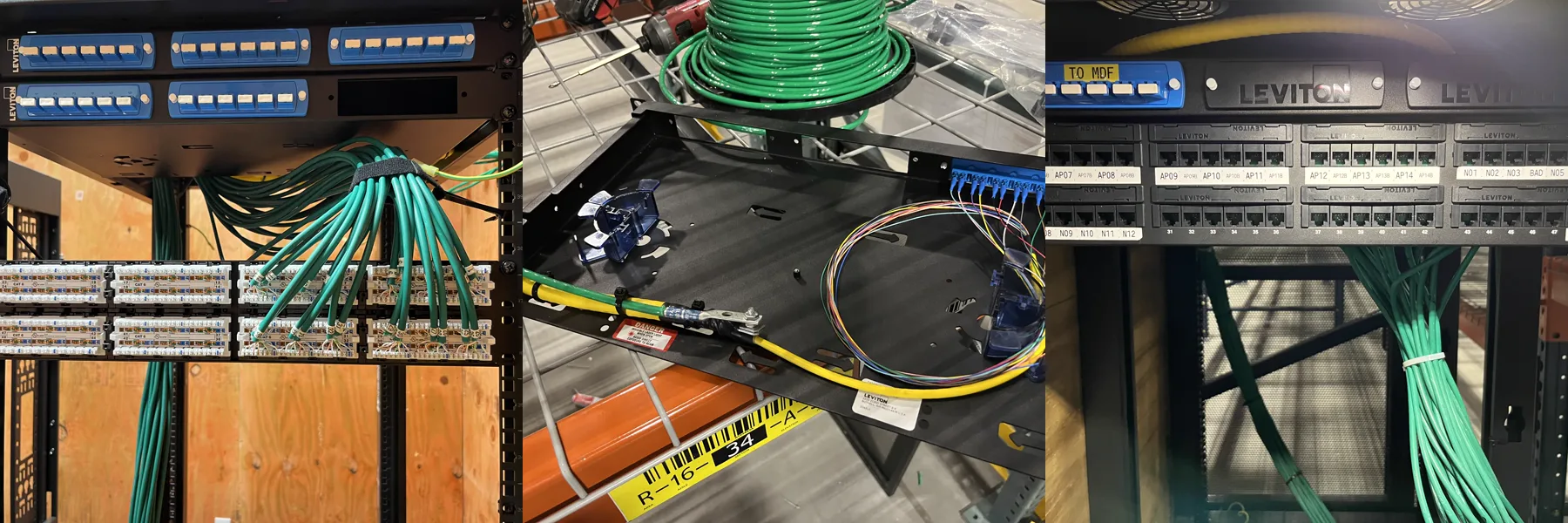
SRS Networks is a nationwide IT infrastructure deployment partner headquartered in South San Francisco, California, running moves, adds, and changes programs for multi-site enterprises and channel partners across the 48 contiguous states, Alaska, and Hawaii since 1996. The same in-house W-2 leads and vetted subcontractor bench that have delivered 900+ multi-site programs across 10,000+ sites take the recurring tickets those sites generate afterward, so the tech who arrives for a closet change is working from the as-builts we delivered at install.
MAC is the work an installed base generates after go-live
Moves, adds, and changes (MAC) services are the recurring physical-layer and device work a multi-site organization produces once the network is live: relocating a workstation, adding a drop or an access point, re-terminating a closet, swapping a failed switch. IMAC is the same category with install at the front (install, move, add, change), and IMACD adds dispose at the end (install, move, add, change, dispose) to cover the retirement of the gear that comes out. SRS dispatches all five ticket types across the 48 contiguous states, Alaska, and Hawaii from 6 offices in 4 states, prices them from a unit-rate schedule signed with the MSA, and closes each one with photos and an as-built update in the Project Command Center.
Four ticket types cover most of what a site asks for
A MAC program is a standing rate card for the tickets below, not a project. Anything larger than a ticket, such as a full floor reconfiguration or a branch relocation, is scoped as a work order on the same MSA.
Moves: workstations, desks, and whole departments
Relocate the drop, the phone, the PC, and the monitor arm to the new position, re-patch the closet side, and update the port schedule. Office reconfigurations and branch consolidations run as a wave of move tickets on one calendar.
Adds: drops, APs, cameras, and readers
A new Cat6 drop to a hire's desk. An access point over the expanded sales floor. A camera on the new dock door. A reader on a door that used to be a wall. Each is one ticket, one unit rate, one photo-verified closeout.
Changes: closet work, switch swaps, and labels
Closet re-terminations, patch-field cleanup, like-for-like switch swaps, firmware verification, and the label and as-built update that most vendors skip. The physical plant matches the documentation when the ticket closes.
Disposals: what comes out has a record too
Retired switches, phones, PCs, and cameras leave the site with a serial-number inventory and a chain-of-custody record. Disposal tickets hand off to our IT asset disposal process rather than to a closet shelf.
How IT asset disposal tickets closeFive steps from ticket to updated as-built
You get three things on a cadence, not a Friday spreadsheet. Live: per-ticket status, tech check-ins, and geo-stamped photos in the Project Command Center. Weekly: an automated program report covering tickets closed, open exceptions, and unit-rate totals. Per ticket: the closeout record, exportable by API into your PSA.
Intake
Your facilities team, help desk, or PSA opens the ticket in the Project Command Center, by email, or by API. It carries the site, the requested work, the priority tier, and the access window.
Scoping against the as-builts
The ticket is scoped against the site's port schedule, closet photos, and drawings on file, so the unit rate and the parts list are set before anyone drives. No as-builts on file means a documentation baseline visit comes first.
Dispatch
An in-house W-2 SRS lead or a vetted W-9 sub from the bench takes the ticket, with the parts pre-staged and the COI audited against the site's limits before the truck rolls.
Photo-verified closeout
The tech closes the ticket with photos of the work, the test result on any new or re-terminated link, and the site contact's signoff. Re-work caused by our crew is corrected at our cost.
As-built update
The port schedule, device inventory, and drawings in the Project Command Center are updated the same day, so the next ticket at that site is scoped against reality, not against the original install.
Who controls field quality on a MAC ticket
An in-house W-2 SRS lead owns the standard, the crew, and the closeout package. Coverage density comes from a vetted W-9 subcontractor bench under 24-month agreements with a 150-mile non-compete, working to our runbook and labeling scheme. Every COI, ours and every sub's, is audited in the Project Command Center against the site's limits, additional-insured language, and expiration before a truck rolls. A sub who cannot hold the standard at one site does not get the next one. The as-built record itself is described on the network as-built documentation page.
Three response tiers, stated as hours, not adjectives
- P1: 4-hour onsite response, 24/7
- P2: Next business day onsite
- P3: Within five business days
Nationwide break-fix covers the same states we install in. P1: 4-hour onsite response, 24/7. P2: next business day onsite. P3: within five business days. Response is dispatched against the as-builts we delivered, so the tech arrives knowing the closet layout. Under about 50 miles in a dense metro a local shop will beat those numbers on drive time. That is the honest boundary of a national model.
One rate schedule. NET 30. No hardware margin.
A MAC ticket is priced from the unit-rate schedule signed with the MSA, not negotiated ticket by ticket: a per-move rate, a per-drop rate, a per-device rate for swaps and adds, and a per-visit rate for disposal pickups. Site-specific variables such as after-hours windows, escorts, and prevailing wage are flagged on the site record before dispatch so they do not arrive as change orders.
NET 30 is standard. Work orders larger than a ticket bill 40/30/30: 40 percent at kickoff, 30 at midpoint signoff, 30 at completion signoff. We do not take a margin on hardware; cable, APs, switches, and cameras sit on your PO or your client's. W-9, COI, MSA, and NDA templates are available from partners@srsnetworks.com.
Two buyers, one rate card
Enterprise facilities and IT teams
You own an installed base across a few dozen to a few thousand sites and generate MAC work every week. One MSA, one rate schedule, one ticket queue, and one as-built record per site replaces a vendor per metro.
MSPs, VARs, and integrators with a thin bench
Your client is multi-state and your techs are not. We take the MAC tickets under your brand, on your template, with non-solicitation of your end client written into the MSA. Your client sees your dashboard, not ours.
When a local shop is the better call
This is not a residential service and it is not a single-desk service. If you run one office in one metro and need a desk moved this week, hire a local low-voltage shop; our coordination overhead does not pay back below roughly 25 sites, and a same-metro installer wins on drive time. Where we earn the call at lower site counts is an installed base spread across states, a partner whose bench is thin in a market, or a ticket volume that needs the same closeout record at site 3 and site 300.
What buyers ask before signing a MAC rate card
Send the site list and last quarter's ticket count
Tell us where the sites are, which metros your bench does not cover, and roughly how many MAC tickets a month they generate. You get a standing unit-rate schedule, the MSA with white-label and non-solicitation terms, and Project Command Center access. NET 30 from the first ticket, no registration fee. Cheryl Tatham, Director of Partner Services, returns scoping calls within one business day.