
Wireless Heat Mapping for WiFi Coverage
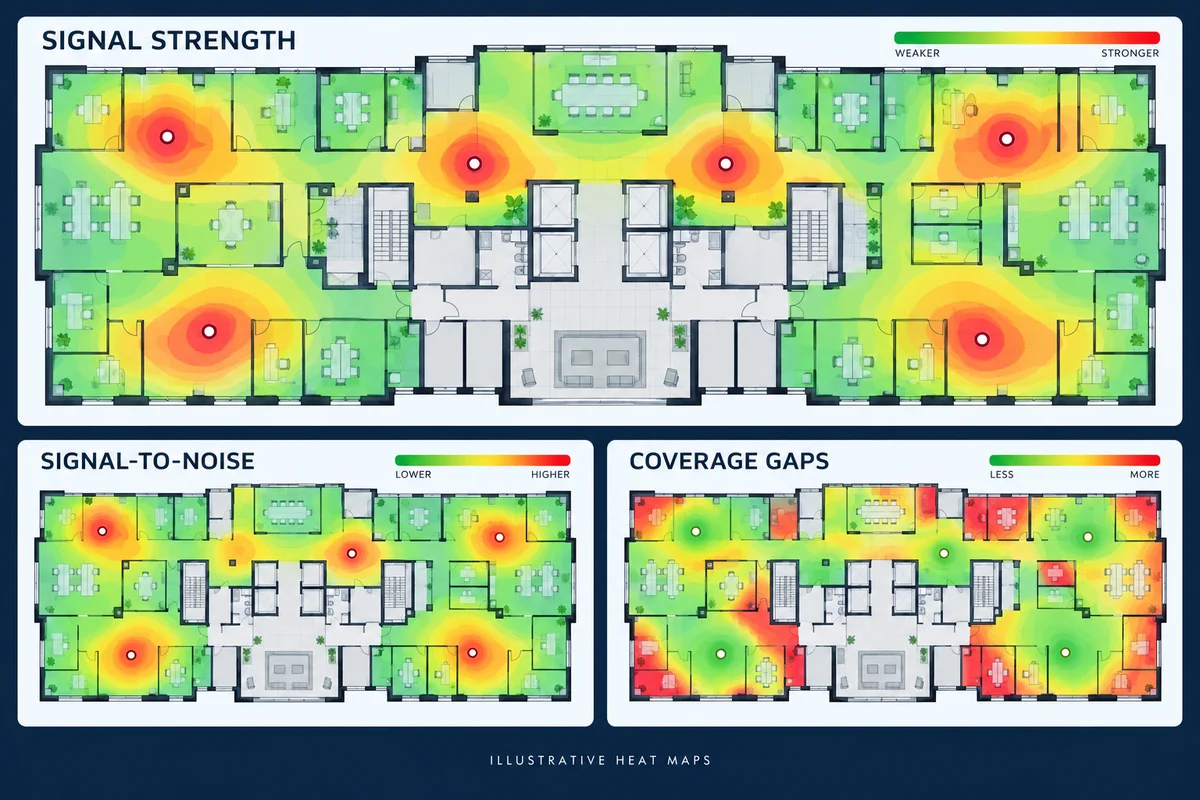
Wireless heat mapping records the agreed WiFi measurements in a visual format for your project team. SRS collects assigned field observations under your approved survey plan; your RF designer and platform owner retain design, configuration and operational acceptance.
Agree the measured areas, client conditions, deliverable files and receiving reviewer before the visit. Results describe those observations and their recorded limitations.
WiFi Deployments That Fail Because Nobody Measured
Wireless symptoms can arise from client devices, configuration, changing surroundings or network conditions. Agree which field evidence your RF and platform owners need before they authorize design changes or corrective work.
Dead Zones and Weak Signal Areas
Weak signal in a conference room, loading dock or hallway may reflect placement, materials, client behavior or changed operating conditions. Record the affected locations and representative tasks so your RF owner can investigate.
Co-Channel Interference from Overlapping APs
Channel reuse, contention and client roaming behavior can affect performance. Collect the agreed channel and client observations; your RF or platform owner decides whether placement or configuration changes are warranted.
No Baseline Data for WiFi Performance
Without a comparable baseline, it can be harder to distinguish installation conditions from later changes. Preserve survey dates, areas, client assumptions and equipment settings alongside the agreed measurement files.
AP Placement Based on Guesswork, Not Design
An outdated drawing or unapproved mounting change can invalidate survey assumptions. Confirm the current placement schedule and send observed obstructions or access changes to the appointed designer before installation.
Post-Deployment Complaints with No Data to Troubleshoot
An unrecorded complaint may lack the location, device, application and time needed for a useful comparison. Agree the field observations your network team needs and retain excluded areas and inconclusive results.
Define the Survey. Record Findings for Review.
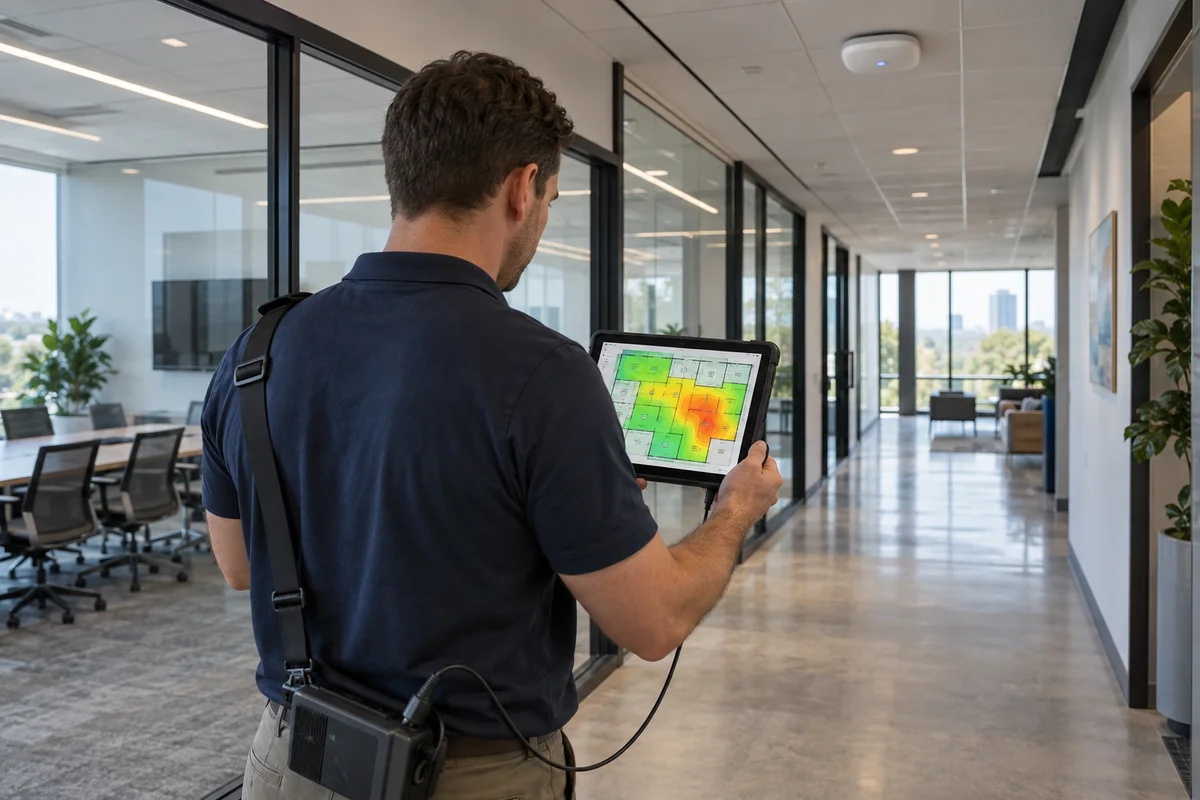
SRS Networks performs the assigned field collection and documents survey conditions, results and exceptions. The customer-appointed RF specialist determines the design and reviews the findings. Predictive work, active measurements and repeat visits must each be identified in the agreed scope.
Agree the Survey and Handoff Before Scheduling
- Define the areas and inputs. Supply the current drawing revision, required rooms or outdoor zones and known changes in walls, inventory or occupancy. Identify excluded or inaccessible areas and the RF owner who approves the survey plan.
- Set the visit conditions. Agree permissions, escort and work-window requirements, the collection method and representative client tasks. Record material differences between the planned and observed conditions before interpreting the results.
- Specify the files and reviewer. Name the required heat-map exports, underlying project or measurement files and exception records. The appointed RF or platform specialist reviews findings and accepts or authorizes changes; file delivery alone is not operational acceptance.
- Agree cost drivers and follow-up. Area count, access restrictions, occupied-site timing, collection method and repeat visits affect scope. Define who may approve extra collection, corrective work or retesting and how it changes the estimate before another visit is booked.
Define Your Wireless Heat Mapping Scope
Select the planning inputs, onsite methods and any post-installation checks needed for your project. The proposal records included areas, deliverables and responsible reviewers rather than promising every phase or all future coverage conditions.
Pre-Survey & Predictive Modeling
Start with the current drawings and the appointed RF designer's requirements. If predictive modeling is assigned, agree its inputs, responsible specialist and file deliverable; a prediction remains a planning model rather than proof of installed coverage.
On-Site Active Survey
Collect the assigned measurements along agreed accessible routes, using the specified method, bands and representative client conditions. Record inaccessible areas, changed occupancy and any limits on the observations rather than presenting them as complete facility coverage.
Heat Map Analysis & Recommendations
Deliver the specified heat maps and underlying field records with the survey method, drawing revision and exceptions. Your RF designer or network owner interprets findings and authorizes any placement, channel or power changes.
Post-Deployment Validation
Where a post-installation visit is included, record the agreed measurements and compare them with the owner-approved criteria. The receiving specialist decides acceptance, corrective work or a retest; excluded or failed checks remain in the handoff.
Undefined Survey Scope vs. an Agreed Field Handoff
Compare the records and review responsibilities in the proposed survey scope. Field measurements inform the appointed specialist; they do not by themselves approve a design.
Environments With Different Survey Conditions
SRS Networks performs wireless heat mapping across environments where WiFi coverage directly impacts daily operations - and where guessing is not an option.
Large Office Spaces
Open offices, glass partitions and conference rooms create different measurement conditions. Agree the rooms, occupancy assumptions and representative applications to be observed, then return gaps and exclusions to the responsible RF reviewer.
Warehouses & Distribution Centers
Metal racking, concrete floors, and moving equipment create RF environments that predictive modeling alone can't fully capture. An on-site survey gives you propagation data from the actual space.
Healthcare Facilities
For healthcare areas, the facility and clinical owners approve access, representative client tasks and applicable acceptance requirements. Record observed conditions for their RF specialist; a survey alone does not establish clinical suitability or interference-free operation.
Education Campuses
Lecture halls, corridors and outdoor teaching areas may need different survey methods and operating assumptions. The appointed RF designer selects the required planning and measurement scope; record restricted areas and occupancy limits.
Agree the Evidence. Name the Review Owner.
Use an issued survey plan and a named receiving specialist to keep field collection distinct from engineering decisions. SRS records the assigned observations and installation dependencies; your RF and platform owners approve changes and acceptance.
Explore More from SRS Networks
Stop Guessing. Start with Real RF Data.
Send the current floor plans, required areas, representative client tasks and target visit window. SRS can scope assigned field collection and a documented handoff to your RF reviewer, including access limits and any separately authorized retest.