
Compliant Deployments,
Documented for Every Audit.
When your networks must meet FISMA, NIST, and FedRAMP standards - and your facilities span courthouses, office buildings, public safety centers, and field offices - you need a deployment partner that understands government compliance from day one.
Secure network infrastructure for federal agencies, state government, county and city offices, public safety, military installations, and judicial facilities.

Who deploys network infrastructure across government facilities nationwide?
SRS Networks is a nationwide infrastructure deployment contractor headquartered in South San Francisco, California, that installs structured cabling, network switching and firewalls, WiFi, surveillance cameras, and access control for federal, state, county, and municipal facilities. The company has been deploying since 1996 and works across the 48 contiguous states, Alaska, and Hawaii, with 50+ government facilities deployed. Agencies engage SRS Networks directly, and the primes, general contractors, and integrators holding the contract bring the firm in as the deployment subcontractor. Every site runs to one install and documentation standard, tracked in the Project Command Center.
- Deployments
- 50+ government facilities deployed, inside a company-wide record of 900+ deployments across 10,000+ sites.
- Coverage
- the 48 contiguous states, Alaska, and Hawaii — run from six offices: South San Francisco HQ, Salinas, Pasadena, Boise, Boston, and Dallas.
- Founded
- 1996. Thirty years deploying network infrastructure in the field.
- Engagement models
- Direct with the agency, or white-label behind the prime, general contractor, integrator, or MSP holding the contract.
- Typical fit
- Agencies and primes with a multi-state or multi-building facility portfolio that needs one install standard everywhere.
- Field labor
- In-house W-2 SRS leads own every site, backed by a vetted subcontractor bench for volume and reach.
- Staging
- West Coast and East Coast staging facilities pre-configure equipment before it ships, so crews install rather than build on site.
- What SRS does not do
- No hardware, software, or license resale. No claimed security clearances the company does not hold. No competing for a partner's account.
Why Don't Legacy Government Networks Meet Today's Standards?
Flat network architectures, undocumented cabling, missing segmentation, and aging equipment - the infrastructure in most government buildings was built before today's compliance frameworks existed.
FISMA & NIST Compliance
Federal agencies must meet FISMA, NIST 800-53, and FedRAMP requirements. Every cable run, switch port, and access point must be documented, segmented, and auditable - and most legacy networks weren't built to that standard.
Physical Security Integration
Government facilities require network infrastructure that integrates with access control systems, surveillance cameras, intrusion detection, and visitor management - all on isolated, hardened network segments.
Multi-Building Campus Complexity
Government campuses span multiple buildings, annexes, and remote facilities - each with different construction vintages, cabling standards, and network equipment. Unifying them under one architecture is a major challenge.
Continuity of Operations (COOP)
Government networks must support continuity of operations plans with redundant paths, failover circuits, and disaster recovery capabilities. Downtime isn't just inconvenient - it can impact public safety.
Background Check & Clearance Requirements
Personnel accessing government facilities often need background checks, security clearances, or escort protocols. Coordinating deployment crews who meet these requirements adds complexity to every project.
One Partner. Every Facility.
Compliant by Design.
SRS Networks deploys hardened, segmented, and fully documented network infrastructure for government facilities - built from the ground up to meet FISMA, NIST, and agency-specific compliance requirements.
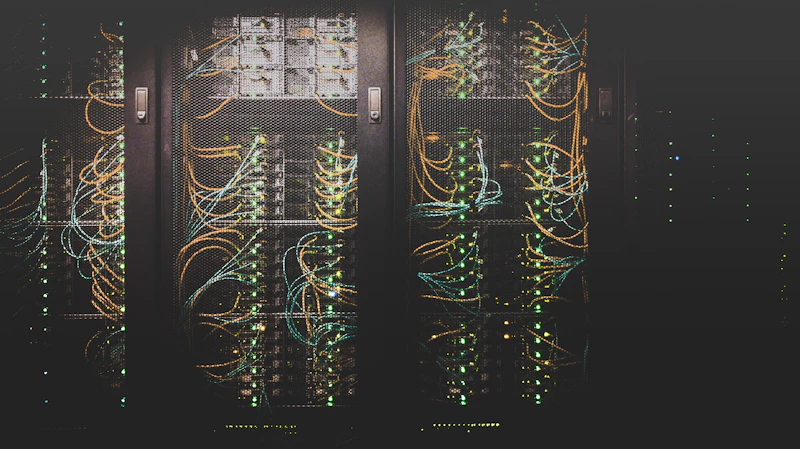
What Does SRS Networks Deploy in a Government Facility?
Six core service areas designed to harden and standardize network infrastructure across your government facility portfolio.
Network Security
Hardened network architectures with intrusion detection, next-gen firewalls, and continuous monitoring designed for government compliance frameworks.
Zero Trust Architecture
Identity-based access control, micro-segmentation, and least-privilege policies that meet NIST Zero Trust guidelines for government agencies.
Structured Cabling
TIA/EIA-compliant structured cabling for government facilities - labeled, documented, and built with full chain-of-custody tracking.
Access Control Systems
Network-integrated access control, card reader systems, and visitor management infrastructure for secure government facilities.
Network Segmentation
VLAN segmentation isolating classified, unclassified, public, and IoT traffic - with firewall policies enforced at every boundary.
Government Network Design
The public sector build - hardened architectures, FISMA and NIST-aligned segmentation, next-generation firewalls, and audit-ready documentation, specified facility by facility.
Scope. Design. Deploy. Validate. Support.
Every government network deployment follows the same five-step process - whether it's a single courthouse or an entire agency portfolio.
Scope
We assess your current network infrastructure, compliance requirements, facility security protocols, and deployment constraints across all buildings.
Design
A compliant network architecture with segmentation, zero trust policies, redundant paths, and full documentation meeting FISMA/NIST requirements.
Deploy
Background-checked crews deploy on your schedule - nights, weekends, or phased rollouts that maintain operational continuity throughout.
Validate
Every installation is tested against compliance standards - cable certification, penetration testing, segmentation verification, and full audit documentation.
Support
24/7 NOC monitoring, incident response, compliance reporting, and ongoing vulnerability assessments across your entire government network.
Does This Scale From One Courthouse to an Entire Agency?
Whether you need to upgrade one courthouse or deploy standardized infrastructure across an entire state agency, SRS Networks scales with you - same process, same compliance, same accountability.
One government building - full network assessment, compliant redesign, cabling, and security integration with dedicated project management.
Government campuses with fiber backbone, building-to-building connectivity, unified security systems, and centralized network management.
Statewide or federal agency rollouts with standardized designs, parallel deployment teams, and centralized compliance reporting.
Legacy Infrastructure vs. SRS Networks
See what changes when your government network is built for compliance, security, and operational continuity from day one.
This Isn't a Contractor. It's Your Network Security Partner.
SRS Networks isn't another name on your vendor list. We're the network infrastructure partner that ensures every government facility meets compliance standards and operational requirements.
Dedicated Government Account Manager
A single point of contact who understands government procurement processes, compliance requirements, and facility security protocols.
24/7 NOC Support
Critical infrastructure issue at 2 AM? Our NOC is staffed around the clock. One call for any facility, any issue - (866) 224-3636 ext 611.
Compliance Reporting
FISMA compliance dashboards, NIST control mapping, vulnerability scan results, and audit-ready documentation delivered on your schedule.
Zero Trust by Default
Every government network we deploy is built on zero trust principles - identity-based access, micro-segmentation, and least-privilege enforcement.
Repeatable Facility Templates
Standardized network designs for courthouses, office buildings, public safety facilities, and field offices - replicated consistently across locations.
GSA-Aligned Procurement
Pricing structures and documentation aligned with GSA schedules and FAR/DFAR procurement requirements for streamlined government purchasing.
Explore More from SRS Networks
The Standards Behind Every Agency We Deploy
Public sector infrastructure is audited against published federal control frameworks. These are the sources behind the compliance claims on this page.
NIST SP 800-53 Rev. 5
NIST
The federal control catalog covering access control, boundary protection, and configuration management for government systems.
FISMA Background
NIST Computer Security Resource Center
The statutory basis for federal information security requirements and the Risk Management Framework built on top of it.
FedRAMP
U.S. General Services Administration
The federal authorization program governing cloud services that agency networks connect to.
2010 ADA Standards for Accessible Design
U.S. Department of Justice
Federal accessibility requirements governing device mounting, clearances, and placement in public facilities.
SRS Networks installs and documents to these published standards. Links go to the issuing body so you can verify the requirement yourself - we are not affiliated with, endorsed by, or accredited by any organization listed unless stated elsewhere on this site.
Government Deployment Terms, Defined
The compliance, procurement, and labor vocabulary that shows up in agency and prime contracts long before the first cable gets pulled.
- FISMA
- The Federal Information Security Modernization Act, the statute requiring federal agencies to run an information security program covering the systems they operate. It is the reason a government network build ends with documented controls and evidence rather than a working network alone.
- NIST SP 800-53
- The National Institute of Standards and Technology catalog of security and privacy controls for federal information systems. Control families such as access control, boundary protection, and configuration management drive how a facility network gets segmented, documented, and handed over at closeout.
- Authority to Operate (ATO)
- The formal approval an agency authorizing official grants before a system may run on the agency network. Infrastructure work touching an accredited system has to respect the boundary described in that authorization package, which is why change windows and as-built records get scrutinized.
- FedRAMP
- The Federal Risk and Authorization Management Program, the government-wide process for assessing and authorizing cloud services. Agency facility networks routinely terminate at FedRAMP-authorized platforms, so the on-site build has to match the connectivity and boundary assumptions in that authorization.
- Continuity of Operations (COOP)
- The agency plan for keeping essential functions running through an outage, relocation, or emergency. On the infrastructure side it translates into redundant fiber paths, diverse circuit entrances, failover between buildings, and generator-backed equipment rooms instead of a single path per facility.
- CJIS Security Policy
- The FBI Criminal Justice Information Services policy governing how criminal justice data is stored, transmitted, and physically protected. It shapes law enforcement and courthouse builds through requirements for segmentation, encrypted transport, personnel screening, and controlled physical access to equipment rooms and cabling pathways.
- Davis-Bacon and certified payroll
- The federal labor standard setting prevailing wage rates on covered public construction work, with matching state-level versions. Contractors pay the published rate for each trade classification and file certified payroll records on the schedule the contract sets, which changes how a deployment is priced and staffed.
- GSA Multiple Award Schedule (MAS)
- The General Services Administration's government-wide contract vehicle that lets federal, and in some cases state and local, buyers order pre-negotiated products and services. Many agency deployments reach a contractor through a schedule holder rather than through a standalone competitive solicitation.
Government Deployment FAQs
What agency facility and IT managers — and the primes behind their contracts — ask us most before signing a deployment SOW.
Ready to Harden Your
Government Network Infrastructure?
Let's talk about your compliance requirements, facility portfolio, and how SRS Networks can deploy secure, documented infrastructure at every government building.
Serving federal, state, and local government agencies across the 48 contiguous states, Alaska, and Hawaii.
partners@srsnetworks.com · (866) 224-3636