
IT Equipment Staging and Logistics for Multi-Site Deployments
Received, tagged, configured, kitted, and shipped to a named recipient.
For multi-site deployments, gear ships to our West Coast or East Coast staging facility, whichever is nearer the program. It is received against the PO, asset-tagged, configured to your template, labeled per site, and shipped as one kit on a confirmed delivery window. The hardware stays on your PO. We do not resell it.
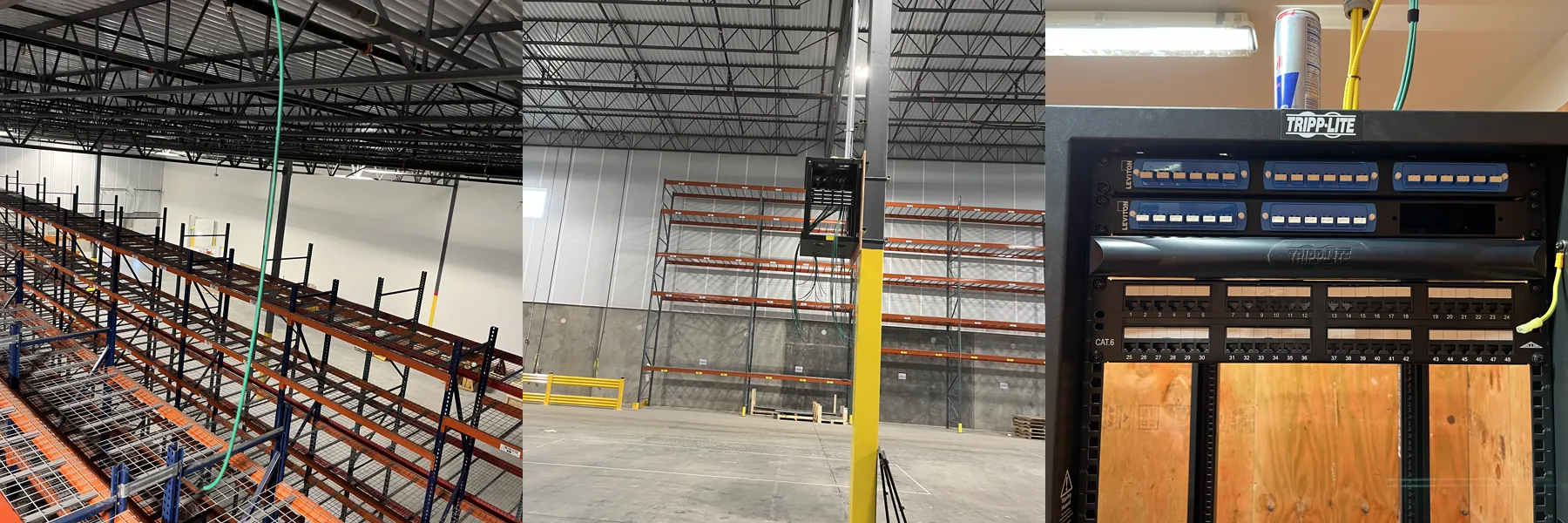
SRS Networks is a nationwide IT infrastructure deployment partner headquartered in South San Francisco, California, staging and shipping configured equipment for multi-site enterprises and channel partners across the 48 contiguous states, Alaska, and Hawaii since 1996. The staging program is the logistics leg of 900+ multi-site programs and 10,000+ sites: the same receiving, configuration, kitting, and proof-of-delivery steps on every site, run from facilities on both coasts and coordinated from 6 offices in 4 states.
Gear does not drop-ship to sites at scale.
It ships to our West Coast or East Coast staging facility, whichever is nearer the rollout, where it is received, asset-tagged, configured, labeled per site, and shipped as a complete kit to a named recipient on a delivery window. Roughly one in six direct-to-site shipments fails on first delivery; pre-staged shipments fail under one in fifty. Below about five sites, drop-ship is fine and we will say so.
This page covers the operating program: what happens to a pallet between the receiving dock and the crew lead's scan on site. The case for why procurement and staging fail when they are handled ad hoc is on the network hardware procurement page. Read that one if you are deciding whether to stage at all. Read this one if you are deciding who runs it.
Eight things happen between the receiving dock and the site.
Each step leaves a record on the site in the Project Command Center. None of them is optional, and none of them happens on the site floor.
Receiving and inspection
Pallets are counted against the bill of lading and the PO line before the carrier leaves. Shortages, damage, and wrong SKUs are photographed at the dock and logged the same day.
Asset tagging and serial capture
Every device is scanned in: model, serial, MAC, PO line, destination site. Your tag range goes on at receiving, tied to the serial in the site record.
Configuration and firmware
Your template, golden image, or per-site config is applied at the bench. Firmware is set to the version you specify. Each device boots into the config before it moves on.
Per-site labeling and kitting
Devices, patch cords, mounts, and consumables for one site go into one kit. Labels match the closet, the rack position, and the port schedule the crew will use.
Test and photo before ship
The kit is powered, checked against the manifest, and photographed open. The photo and manifest attach to the site record before the box is sealed.
Named-recipient delivery windows
Kits ship to a person, not an address. The recipient, the window, and the dock instructions are confirmed by your project manager before the label prints.
Proof of delivery in the Project Command Center
The tracking number, the signature, and the delivery photo land on the site record. You see what arrived, where, and who signed for it.
Failed-receipt handling and re-dispatch
A refused or missed delivery is held by the carrier, the recipient is called the same day, and the kit is re-dispatched. The exception shows in your dashboard before the site calls you.
Every handoff is signed, scanned, and stored in the Project Command Center.
Chain of custody for an IT deployment is six handoffs, each with a name on it. A device that goes missing is traced to the last handoff that had it, not to a program-wide search. Every record attaches to the site in the Project Command Center: the signed bill of lading, the serial scan, the kit manifest, the tracking number, the proof of delivery, and the crew lead's check-in.
The same serials ride through to closeout. The per-site closeout package contains as-built drawings, port-to-panel schedules, certification results for every copper link and fiber strand, a device inventory with serial numbers, photos of the rack and every installed device, the labeling schedule, and a punch list signed clear by the site contact. It is delivered in one format from the pilot site to the last site, and it is yours to keep.
The staging lead is a W-2 SRS employee, the same as the crew lead who signs the kit in on site.
| Handoff | What is recorded | Who signs |
|---|---|---|
| Carrier to receiving dock | Signed bill of lading, piece count, discrepancy notes, dock photos | Receiving lead signs |
| Dock to staging bench | Serial and MAC scan, PO-line reconciliation, asset tag applied | Staging tech scans |
| Bench to sealed kit | Config verified, firmware version, kit manifest with serials, open-box photo | Staging tech signs the manifest |
| Kit to outbound carrier | Tracking number tied to the site, named recipient, delivery window | Shipping lead signs |
| Carrier to named recipient | Proof-of-delivery signature and photo | Recipient signs |
| Recipient to install crew | Crew lead scans the kit in on arrival; serials confirmed at closeout | Crew lead signs |
Drop-ship fails one time in six. Pre-stage fails under one in fifty.
Drop-shipping configured gear to a site at scale is the most expensive shortcut in this industry. Across a few hundred direct-to-site shipments we tracked over a year, roughly one in six failed on first attempt: wrong address, locked dock, no signature, the GC did not notify the front desk, the box refused as "not on the schedule." Every failed receipt is a return shipment, a rescheduled tech, or both. At 200+ sites the math is brutal.
We now route everything through the West Coast or East Coast facility first, whichever is nearer the program. Configure, label, then ship configured to site with a known recipient. The failure rate on that leg runs under one in fifty. The cost is one extra freight leg and bench time per kit; the saving is the truck roll you did not pay for and the go-live date that held.
Drop-ship is faster on a single site. It works fine below about five sites, or when the recipient is a corporate IT contact who answers the loading-dock phone. Pre-stage wins at volume, and the crossover arrives well before the roughly 25-site floor where a national program starts to pencil. A program run under one MSA with the multi-site cabling rollout model stages by wave, so the first wave's kits are on the dock while the last wave's gear is still on order.
Returns run back through the same dock.
A dead-on-arrival unit found at the bench is swapped from the program spares before the kit ships. The RMA is opened with the vendor on your PO, with the serial and the failure note attached, and the replacement is received against the original site. A field failure ships back to the staging facility, not from the site to the vendor, so the replacement goes out configured and the return stays on the same site record.
Overage and pulled gear runs the dock in reverse. What happens after it lands is covered on the network decommissioning and IT asset disposal pages: serial-level reconciliation against the original inventory, then return to your stock, resale on your account, or certified disposal.
What comes back, and where it goes
- DOA at the bench: swapped from spares, RMA opened on your PO, serial swap logged on the site
- Field failure under warranty: return label to the staging facility, configured replacement out on the next kit
- Overage at program close: counted, reconciled to the PO, returned to your stock or your distributor
- Decommissioned gear: serial-matched to the original inventory, then held, resold on your account, or disposed with certificates
Three kinds of buyers run their logistics through the staging program.
The hardware is on the buyer's PO in every case. We do not take a margin on it. NET 30 is standard; project work orders bill 40/30/30 on milestone signoff.
Enterprise programs deploying direct
A branch refresh or a store build-out program, where the site contact is a store manager and the dock is a back door. Kits ship to that manager by name, on a window they confirmed.
Nationwide technology rolloutsMSPs, VARs, and integrators under white-label
Your client's gear, on your client's PO, staged and shipped under your brand. The kit manifest, the labels, and the closeout carry your template, not ours.
Channel partner programOEMs and technology vendors
A vendor with a product to deploy and no field organization. We receive from your distributor, stage to your spec, and put a crew on site in any metro your customer names.
Deployment partner for technology vendorsVARs with a booked bench use the same program as overflow: your ISO configures, we receive, kit, ship, and install in the metros you do not cover. That model is on the VAR overflow capacity partner page. Site coverage across the 48 contiguous states, Alaska, and Hawaii is on the coverage across the 48 contiguous states, Alaska, and Hawaii page, including the Anchorage, Fairbanks, Honolulu, and Kahului markets.
When drop-ship is the right answer, and we are not.
If your gear changes per site and cannot be kitted, our pre-staging model will not help; direct drop-ship is cheaper. If you have under five sites, ship direct and put the freight money toward the tech. If you need same-day onsite in one metro, a local shop beats us on drive time. We are the right call when the program is spread across states, the site contact is a store or branch manager rather than an IT engineer, the go-live date cannot slip, or the same kit has to arrive identically at the first site and the last.
What buyers ask before they route gear through us.
Send the site list and the ship date. We will tell you which coast it runs from.
Include the site count, the gear list, and the target go-live. Cheryl Tatham, Director of Partner Services, returns scoping calls within one business day with a wave schedule, a per-site kit spec, and a straight answer on whether pre-staging pays back at your count. There is no charge to scope it.
Use staging to control the site handoff
An integration center can receive, inventory, prepare and label devices against the site schedule. Match serial numbers, configuration revisions and shipping records before release. Broader device lifecycle management includes responsibilities beyond this staging package.
Is staging a full device lifecycle service?
No. Ongoing administration, data erasure and disposal need separately defined responsibilities. Keep those exclusions visible in the scope.