
Enterprise security deployment
Light pole camera power for switched lighting circuits
A camera on a switched lighting circuit needs an approved energy plan for the hours when that circuit is off. SRS coordinates the survey and installation scope with the responsible design and electrical teams, including daily cycling storage where the selected system supports it.

Companywide infrastructure experience across service lines; these are not active-deterrence deployment totals.
1996
Founded
900+
Companywide programs
10,000+
Companywide sites
6
Offices
SRS Networks is a nationwide infrastructure deployment partner headquartered in South San Francisco, California, serving enterprises across the 48 contiguous states, Alaska, and Hawaii since 1996. Our 6 offices across 4 states, West Coast and East Coast staging facilities, and Project Command Center support coordinated field delivery.
Camera systems integration
SRS integrates Axis Communications, Dahua Technology and VIVOTEK camera systems. We assess the exact models, firmware, VMS and required functions before confirming an active-deterrence design.
Manufacturer experience informs equipment selection. The approved project design determines compatibility, procurement requirements and operating responsibilities.
Anonymized ADU deployment experience
Employee parking lots at 24/7 produce manufacturing facilities
SRS Networks has deployed active deterrence (ADU) systems at several produce manufacturing facilities to monitor employee parking lots in support of safety and security. These facilities operate 24/7.
The deployment experience covers employee parking areas at facilities with round-the-clock operations. Customer names and site locations remain private.
- Business objective
- Monitor employee parking areas for safety and security while produce manufacturing facilities operate 24/7.
- Confirmed deployment scope
- SRS deployed several active-deterrence systems for this use case. This anonymous account is based on the business owner's confirmation.
- What the published records show
- The released drawings and field photos document related camera and wireless infrastructure. Customer names, exact sites and identifying plans remain private.
- Evidence boundary
- No ADU acceptance log, exact equipment configuration, staffed monitoring arrangement or incident-reduction result is published with this account. Facility operating hours do not establish monitoring service hours.
Camera installation and infrastructure field records
Project materials include camera coverage drawings for shipping, receiving, production lines and mezzanine areas, along with exterior camera and wireless access-point planning. Selected field photographs below show an installed interior dome camera and a cable-entry detail.
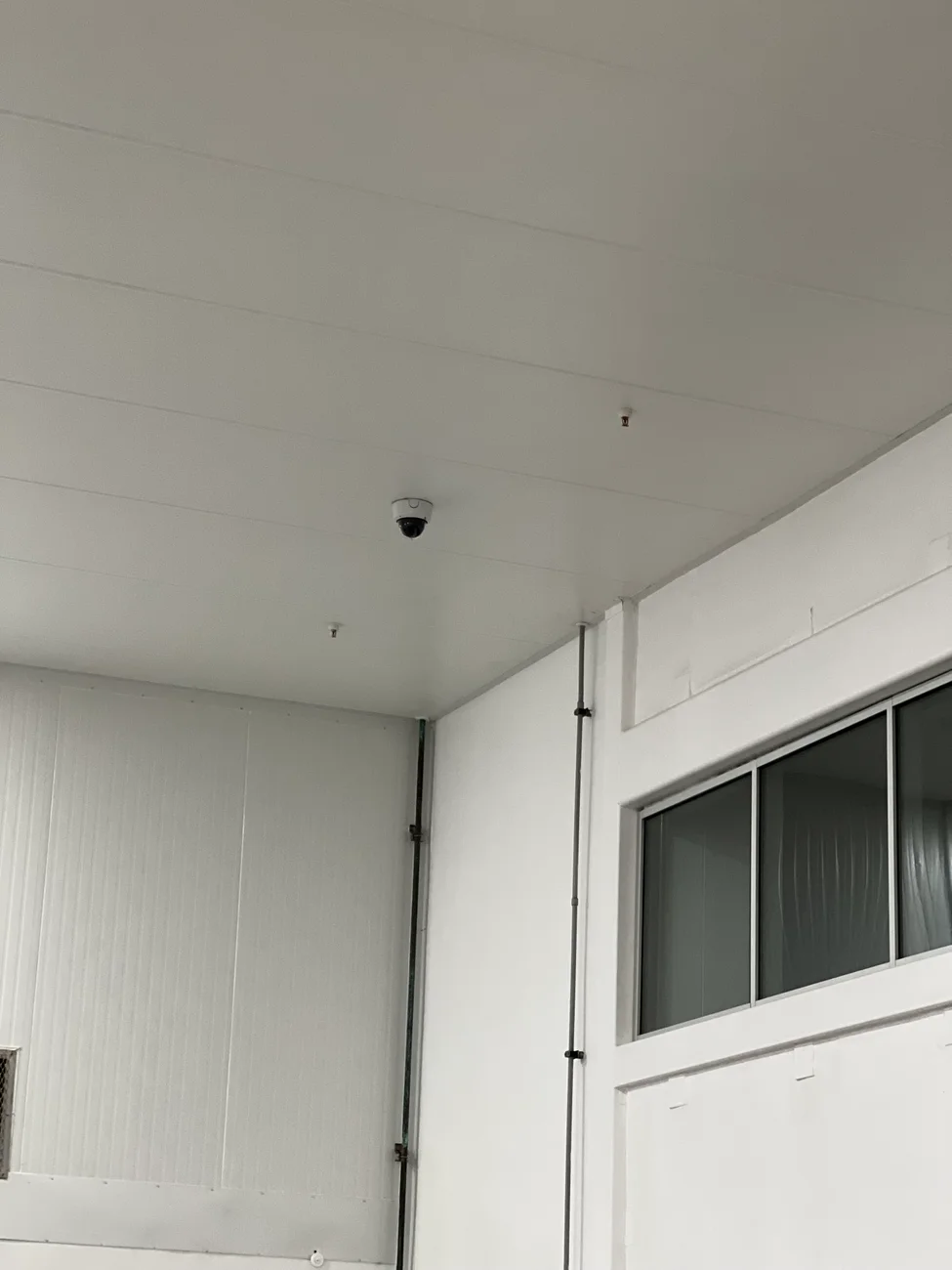
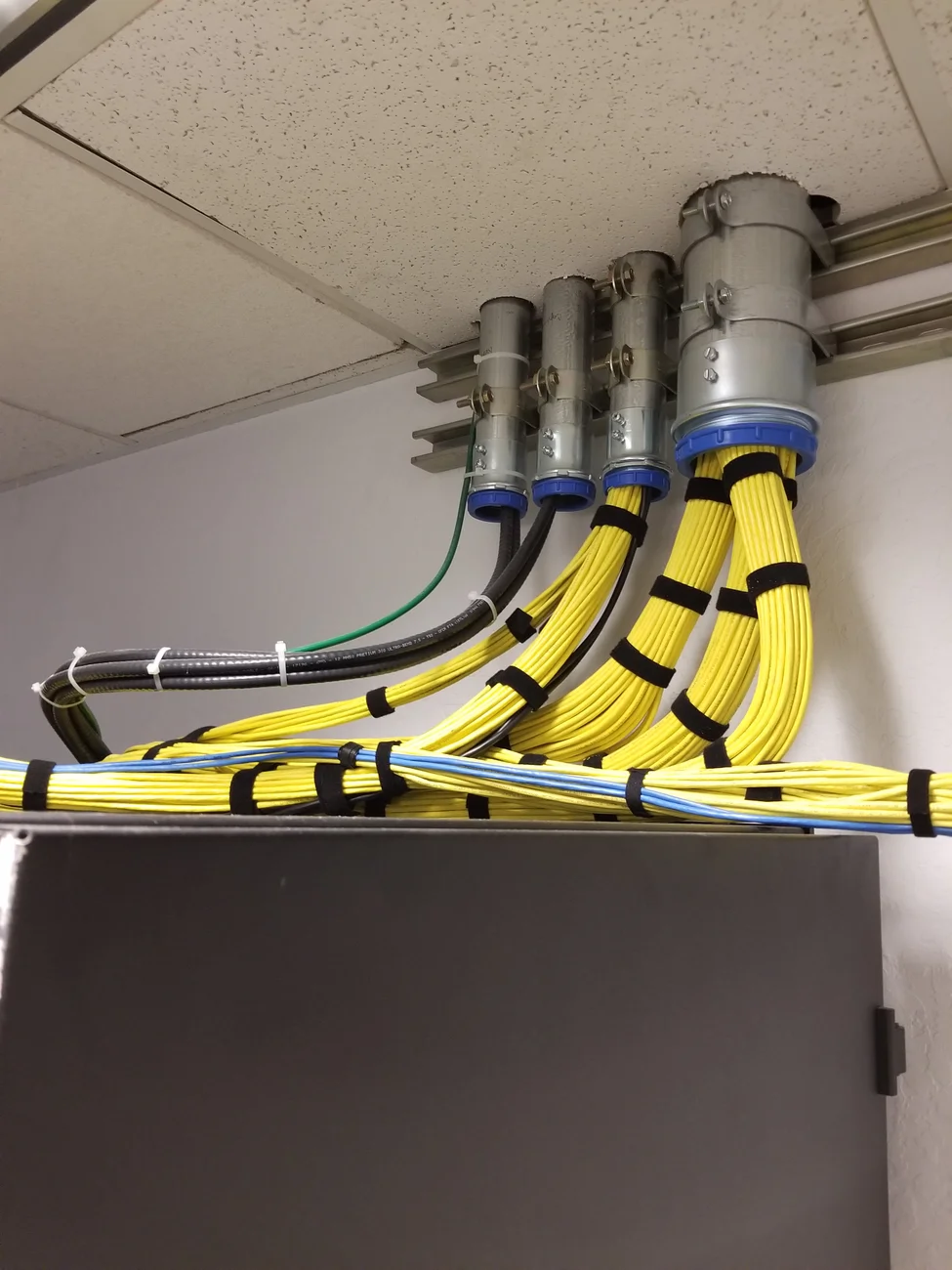
These photographs document camera and infrastructure details. They do not show the parking-lot ADU systems described above or establish warning functions, monitoring arrangements or measured security outcomes.
Measure the supply schedule first
Record when the circuit is energized, how it is controlled and whether seasonal schedules or site overrides change that window. Verify the available supply with the responsible electrical team. A night-lighting pattern is an input to the design, not proof of a fixed recharge duration.
Include every load in the energy budget
The design accounts for cameras, radios, speakers, lights, controls and conversion losses under the intended operating behavior. Define the longest required off-supply interval and reserve assumptions. Peak events and startup requirements also need review; a single camera wattage does not describe the whole assembly.
Distinguish daily cycling from outage backup
A system that discharges whenever the lights are off faces a different duty cycle from occasional outage backup. Battery capacity, aging, temperature, recharge capability and protective controls must suit the intended cycle. Establish a maintenance and replacement plan with the selected equipment provider.
Accept the complete installed assembly
Review the enclosure and mounting requirements for the actual environment, the selected PoE/data interfaces and the approved electrical design. Commission supply transitions, load behavior and recovery using a safe, authorized test plan. Runtime and ratings apply only to the validated assembly and its documented assumptions.
Illustrative switched-power cycle
Concept only; an approved equipment and electrical design determines the actual connections and behavior.
1. Circuit energized — often at night
Available supply → selected power equipment → operating load and battery recharge.
2. Circuit off — often during daylight
Stored energy → selected power equipment → operating load, within the validated design interval.
Review the site-specific decisions
| Design input | Record for review |
|---|---|
| Supply window | Observed energized hours, controls and seasonal variations |
| Load profile | All equipment, peak behavior and conversion losses |
| Off-supply interval | Required operating duration and reserve assumptions |
| Storage and recharge | Selected chemistry, usable capacity, aging and recharge capability |
| Environment / service | Temperature, enclosure, access and maintenance owner |
Review the rollout evidence and planning package
The released warehouse cabling field record shows related infrastructure work. It does not establish an active-deterrence installation or measured security outcomes.
Use the clearly labeled sample readiness matrix, pilot checklist, schedule and closeout index to discuss deliverables before award.
Questions before you scope the work
How can a camera run when its light circuit is off?
An engineered system may supply the equipment and charge storage while the circuit is energized, then use that storage while it is off. The selected assembly must support the load and recharge window under the site conditions.
Is battery backup the same as daily cycling?
No. Daily cycling repeatedly uses stored energy as part of normal operation, while backup may be reserved for an outage. Select equipment and a maintenance plan for the actual duty cycle.
Can you promise a full day of battery runtime?
Runtime requires a validated load, usable storage capacity, environmental assumptions and recharge plan. No universal duration is promised for an unspecified camera and power assembly.
Do additional speakers or radios matter?
Yes, they add energy demand and may have different peak or operating patterns. Include every connected device and its intended behavior before sizing the system.
Does an outdoor pole guarantee suitable enclosure conditions?
No. The complete assembly needs ratings and installation conditions appropriate to the site. Confirm environmental requirements with the equipment provider and responsible design team rather than transferring a component rating to the whole system.
Can an existing power supply be reused?
Only after its capacity, condition, interfaces and approved operating arrangement are reviewed. Reuse must also fit the selected battery/control design and the equipment load.
Who performs and approves electrical work?
The proposal identifies the qualified electrical provider and required design or authority approvals. SRS coordinates its contracted installation scope and the handoff evidence; this page is not a wiring instruction or permit approval.
What maintenance should the budget include?
Identify battery inspection/replacement, enclosure checks, service access and the owner of fault notifications. Use the selected equipment requirements and actual operating conditions to establish the schedule.
Plan your active deterrence deployment
Start with the sites and equipment you have
Share site count, states, equipment details, operating responsibilities and target windows. SRS will identify the field scope and information needed for the next decision.
Request a pole power assessment