
Channel field deployment
Active deterrence deployment for integrators and monitoring providers
SRS coordinates the field work behind partner-led active deterrence programs. Bring the approved design, equipment requirements and response arrangement; we scope surveys, staging, installation and the acceptance package across your sites.

Companywide infrastructure experience across service lines; these are not active-deterrence deployment totals.
1996
Founded
900+
Companywide programs
10,000+
Companywide sites
6
Offices
SRS Networks is a nationwide infrastructure deployment partner headquartered in South San Francisco, California, serving enterprises across the 48 contiguous states, Alaska, and Hawaii since 1996. Our 6 offices across 4 states, West Coast and East Coast staging facilities, and Project Command Center support coordinated field delivery.
Camera systems integration
SRS integrates Axis Communications, Dahua Technology and VIVOTEK camera systems. We assess the exact models, firmware, VMS and required functions before confirming an active-deterrence design.
Manufacturer experience informs equipment selection. The approved project design determines compatibility, procurement requirements and operating responsibilities.
Anonymized ADU deployment experience
Employee parking lots at 24/7 produce manufacturing facilities
SRS Networks has deployed active deterrence (ADU) systems at several produce manufacturing facilities to monitor employee parking lots in support of safety and security. These facilities operate 24/7.
The deployment experience covers employee parking areas at facilities with round-the-clock operations. Customer names and site locations remain private.
- Business objective
- Monitor employee parking areas for safety and security while produce manufacturing facilities operate 24/7.
- Confirmed deployment scope
- SRS deployed several active-deterrence systems for this use case. This anonymous account is based on the business owner's confirmation.
- What the published records show
- The released drawings and field photos document related camera and wireless infrastructure. Customer names, exact sites and identifying plans remain private.
- Evidence boundary
- No ADU acceptance log, exact equipment configuration, staffed monitoring arrangement or incident-reduction result is published with this account. Facility operating hours do not establish monitoring service hours.
Camera installation and infrastructure field records
Project materials include camera coverage drawings for shipping, receiving, production lines and mezzanine areas, along with exterior camera and wireless access-point planning. Selected field photographs below show an installed interior dome camera and a cable-entry detail.
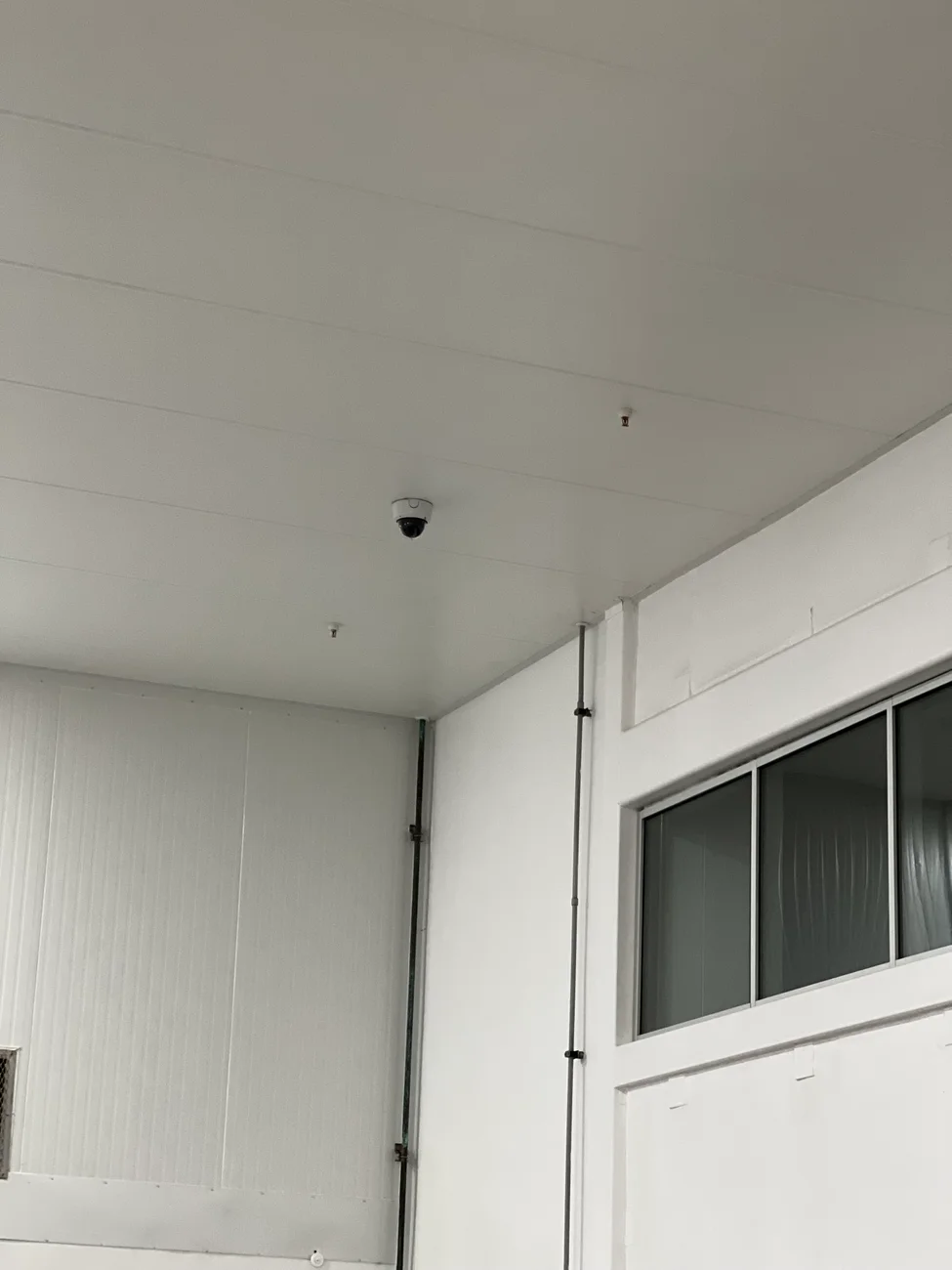
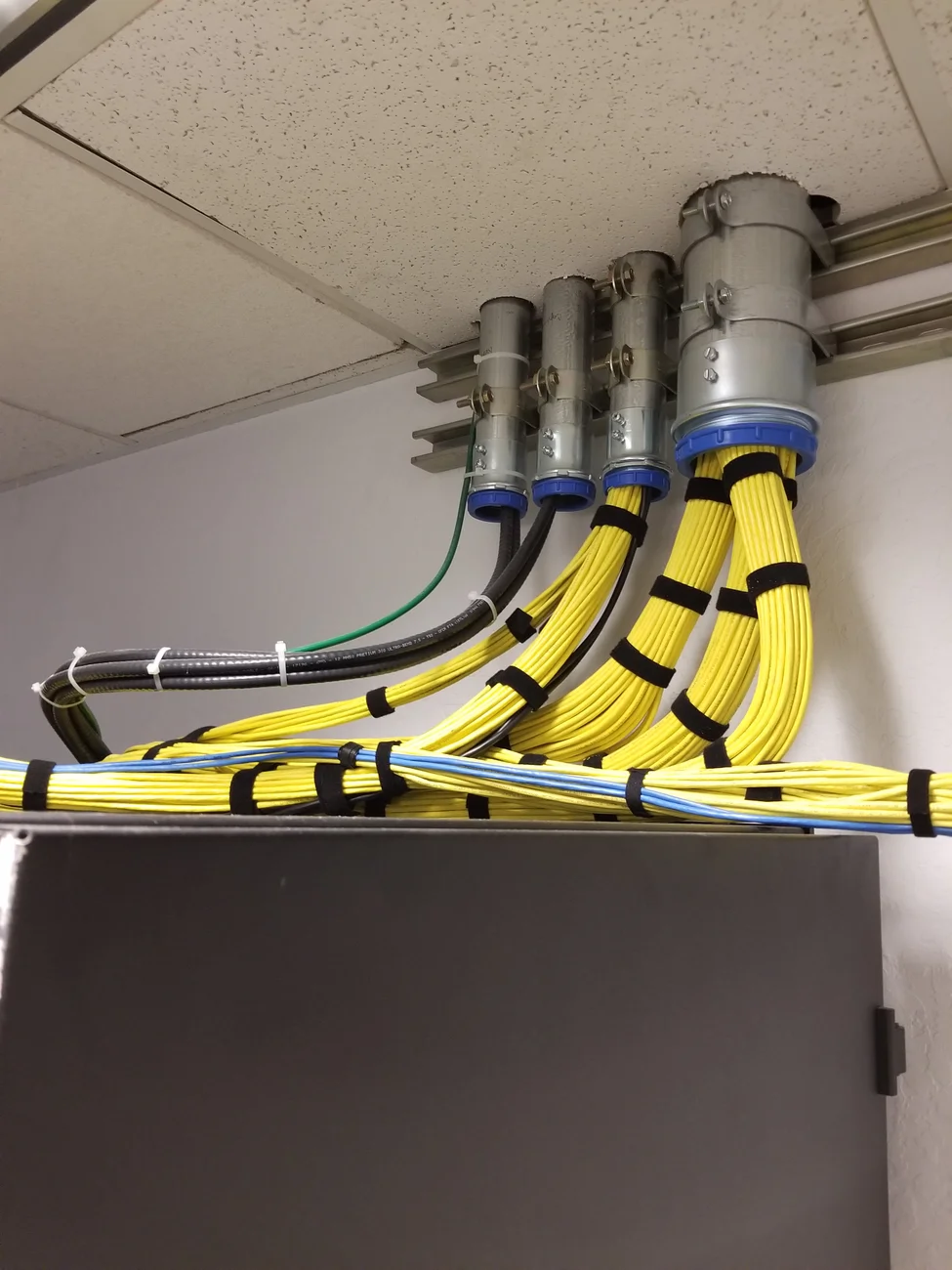
These photographs document camera and infrastructure details. They do not show the parking-lot ADU systems described above or establish warning functions, monitoring arrangements or measured security outcomes.
Your account, an agreed field scope
On partner-led engagements, the integrator retains the customer relationship and commercial scope. Agree site communications, branding and escalation before mobilization. Requests outside the issued field scope return to the partner for direction rather than becoming an unapproved change at the site.
Stage a kit that can be accepted on site
Use a site-specific equipment list, configuration responsibility and receiving contact. SRS can coordinate staging through its West Coast and East Coast facilities. Confirm kit contents, labels and any approved bench checks before freight release; missing design decisions stay visible in the readiness record.
Release the pilot before repeating the design
The pilot should represent the equipment mix and site constraints the program will repeat. The partner, platform team and response provider witness their assigned tests. Failed event paths or unresolved operating ownership hold the affected rollout until corrections and retests are accepted.
Make field closeout reviewable
Agree the photo shot list, asset schedule, test records, as-built markups and exception register in advance. Track site status through the Project Command Center and identify the person who can accept each package. A closed field ticket does not substitute for the partner or operator acceptance decision.
Sample responsibility schedule — complete it for the actual proposal
Name the operator before enabling live response
SRS can scope equipment, field installation and contracted service work. Staffed monitoring requires an identified operating provider and written service terms. This planning schedule does not appoint a provider or promise round-the-clock staffing.
| Decision | What the proposal must settle | Owner to confirm |
|---|---|---|
| Operator and service hours | Name the contracted provider, staffed hours, covered sites and exclusions. | Buyer and response provider |
| Event verification and speech | Specify who reviews an alert, when live audio is authorized and which instructions are approved. | Response provider and site security owner |
| Escalation and dispatch | List acknowledgement rules, escalation contacts and dispatch authority. Use the agreed service terms for any response target. | Response provider and customer |
| Outages and maintenance | Assign connectivity, device-health alerts, degraded-service notices, field repair and return-to-service tests. | Customer IT, response provider and contracted field team |
| Records and access | Agree retention, incident export, authorized users and secure credential handoff. | Customer and platform owner |
| Commercial terms | Separate equipment, installation, licenses, connectivity, staffed response, service visits and termination terms. | Contracting parties |
During acceptance, send an approved test event through the actual operator route. Record receipt, acknowledgement and the permitted action, then test the agreed outage and recovery scenario. A closed installation ticket does not establish that the operating service was accepted.
Review the fictional retrofit hold-and-retest exampleAgree responsibilities before dispatch
| Workstream | SRS field responsibility | Partner / other owner |
|---|---|---|
| Survey and installation | Record site conditions; execute the issued field scope | Integrator approves design and changes; property owner grants access |
| Power and network | Coordinate the scoped work and evidence | Qualified electrical/design teams and customer IT approve their scope |
| Equipment and configuration | Stage/install and support activation as contracted | Vendor/platform owner confirms model support and configuration authority |
| Monitoring and response | Support agreed event-path testing | Named provider owns staffing, operating policy and escalation |
| Acceptance | Submit evidence and resolve assigned field defects | Designated partner/customer reviewers authorize release |
Review the rollout evidence and planning package
The released warehouse cabling field record shows related infrastructure work. It does not establish an active-deterrence installation or measured security outcomes.
Use the clearly labeled sample readiness matrix, pilot checklist, schedule and closeout index to discuss deliverables before award.
Review the security integrator engagement and channel partner program.
Questions before you scope the work
Does the responsibility schedule include an SRS monitoring service?
It is a planning sample, not a monitoring contract. The actual proposal names the operating provider, hours, verification and speech authority, escalation, outage handling, records access and recurring charges. SRS field work and activation support follow the agreed scope; equipment purchase does not assign operator staffing.
Who owns the customer relationship?
The partner owns the account in a partner-led deployment. SRS follows the agreed communications, branding and scope process, with customer requests outside that scope routed back to the partner.
Can you work with equipment we supply?
Partner-supplied equipment can be included in the field scope after the kit, compatibility and receiving responsibilities are agreed. Shortages, substitutions and incomplete configuration inputs need a documented disposition before installation.
Do you include security monitoring?
This page offers partner field deployment and agreed activation support. Staffed monitoring and incident escalation remain with the named operating provider unless a separate proposal explicitly establishes a different arrangement.
What is needed for a deployment estimate?
Provide site count and states, the equipment schedule, drawings, power/network assumptions, work windows and acceptance requirements. Mark unknown quantities and unsurveyed conditions so they can be scoped before firm field pricing.
Can you stage and label equipment?
Staging and labeling can be included using SRS West Coast and East Coast facilities. The scope identifies kit contents, configuration ownership, bench tests and who receives each shipment.
What does the closeout package include?
The agreed package can include installation photos, asset IDs, test and configuration records, as-built information and open-item dispositions. The partner defines its required format and reviewers before dispatch.
Can you support mixed mobile, fixed and retrofit programs?
The deployment plan can separate those configurations into representative pilot groups and site waves. Each group needs its own readiness and acceptance checks rather than one assumed installation recipe.
How are site changes approved?
Field teams record the condition, proposed adjustment and schedule or cost impact. The designated partner approver releases the change before affected work proceeds, and the final records retain the approved revision.
Plan your active deterrence deployment
Bring your next deployment scope
Share site count, states, equipment details, operating responsibilities and target windows. SRS will identify the field scope and information needed for the next decision.
Submit a deployment scope