
Enterprise security deployment
Active deterrence system cost: build a comparable scope
An active deterrence budget combines equipment, installation, infrastructure and the selected operating services. SRS separates one-time field scope from recurring charges so enterprise buyers can compare a retrofit, fixed installation or portfolio rollout on the same basis.

Companywide infrastructure experience across service lines; these are not active-deterrence deployment totals.
1996
Founded
900+
Companywide programs
10,000+
Companywide sites
6
Offices
SRS Networks is a nationwide infrastructure deployment partner headquartered in South San Francisco, California, serving enterprises across the 48 contiguous states, Alaska, and Hawaii since 1996. Our 6 offices across 4 states, West Coast and East Coast staging facilities, and Project Command Center support coordinated field delivery.
Camera systems integration
SRS integrates Axis Communications, Dahua Technology and VIVOTEK camera systems. We assess the exact models, firmware, VMS and required functions before confirming an active-deterrence design.
Manufacturer experience informs equipment selection. The approved project design determines compatibility, procurement requirements and operating responsibilities.
Anonymized ADU deployment experience
Employee parking lots at 24/7 produce manufacturing facilities
SRS Networks has deployed active deterrence (ADU) systems at several produce manufacturing facilities to monitor employee parking lots in support of safety and security. These facilities operate 24/7.
The deployment experience covers employee parking areas at facilities with round-the-clock operations. Customer names and site locations remain private.
- Business objective
- Monitor employee parking areas for safety and security while produce manufacturing facilities operate 24/7.
- Confirmed deployment scope
- SRS deployed several active-deterrence systems for this use case. This anonymous account is based on the business owner's confirmation.
- What the published records show
- The released drawings and field photos document related camera and wireless infrastructure. Customer names, exact sites and identifying plans remain private.
- Evidence boundary
- No ADU acceptance log, exact equipment configuration, staffed monitoring arrangement or incident-reduction result is published with this account. Facility operating hours do not establish monitoring service hours.
Camera installation and infrastructure field records
Project materials include camera coverage drawings for shipping, receiving, production lines and mezzanine areas, along with exterior camera and wireless access-point planning. Selected field photographs below show an installed interior dome camera and a cable-entry detail.
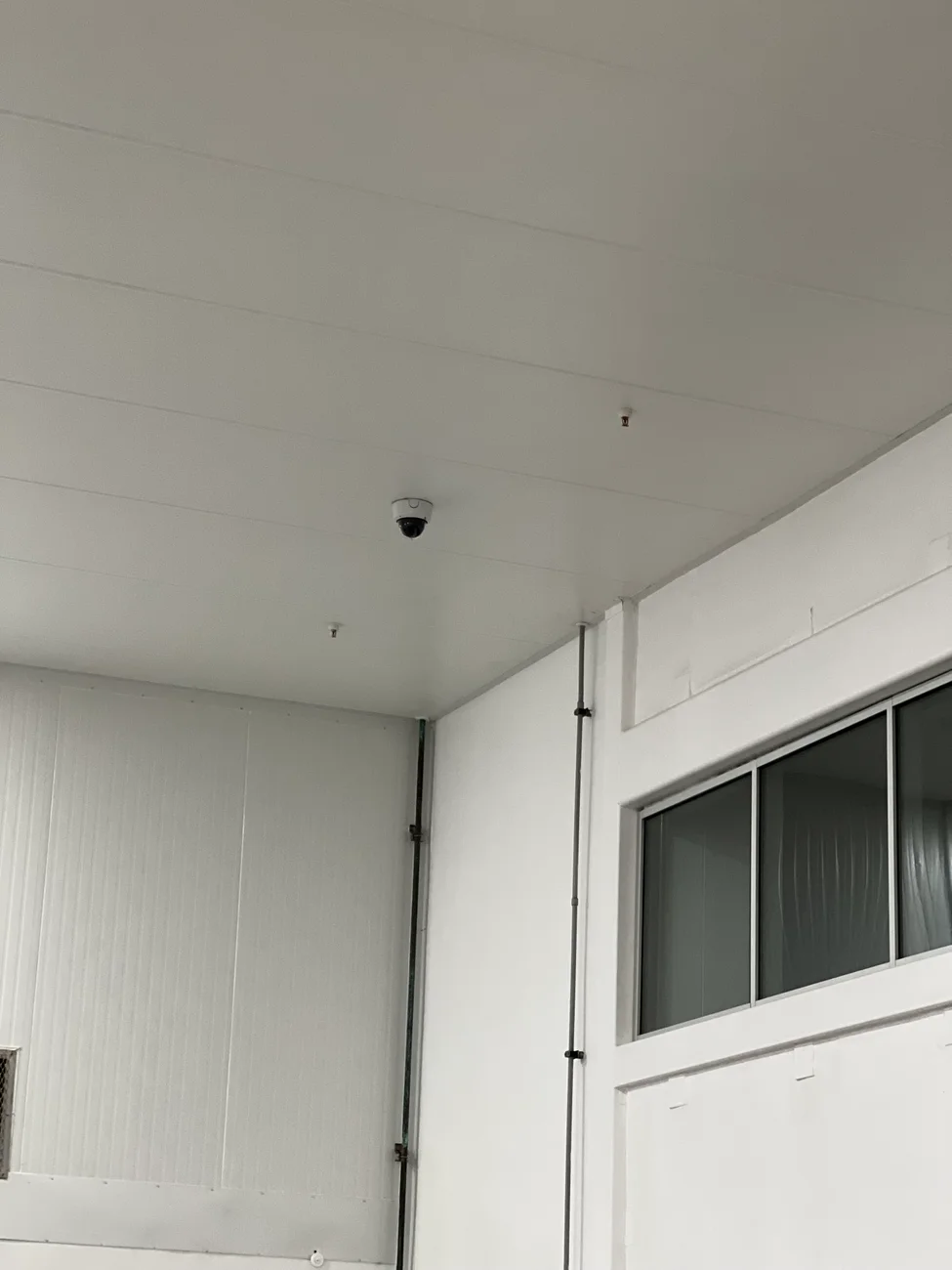
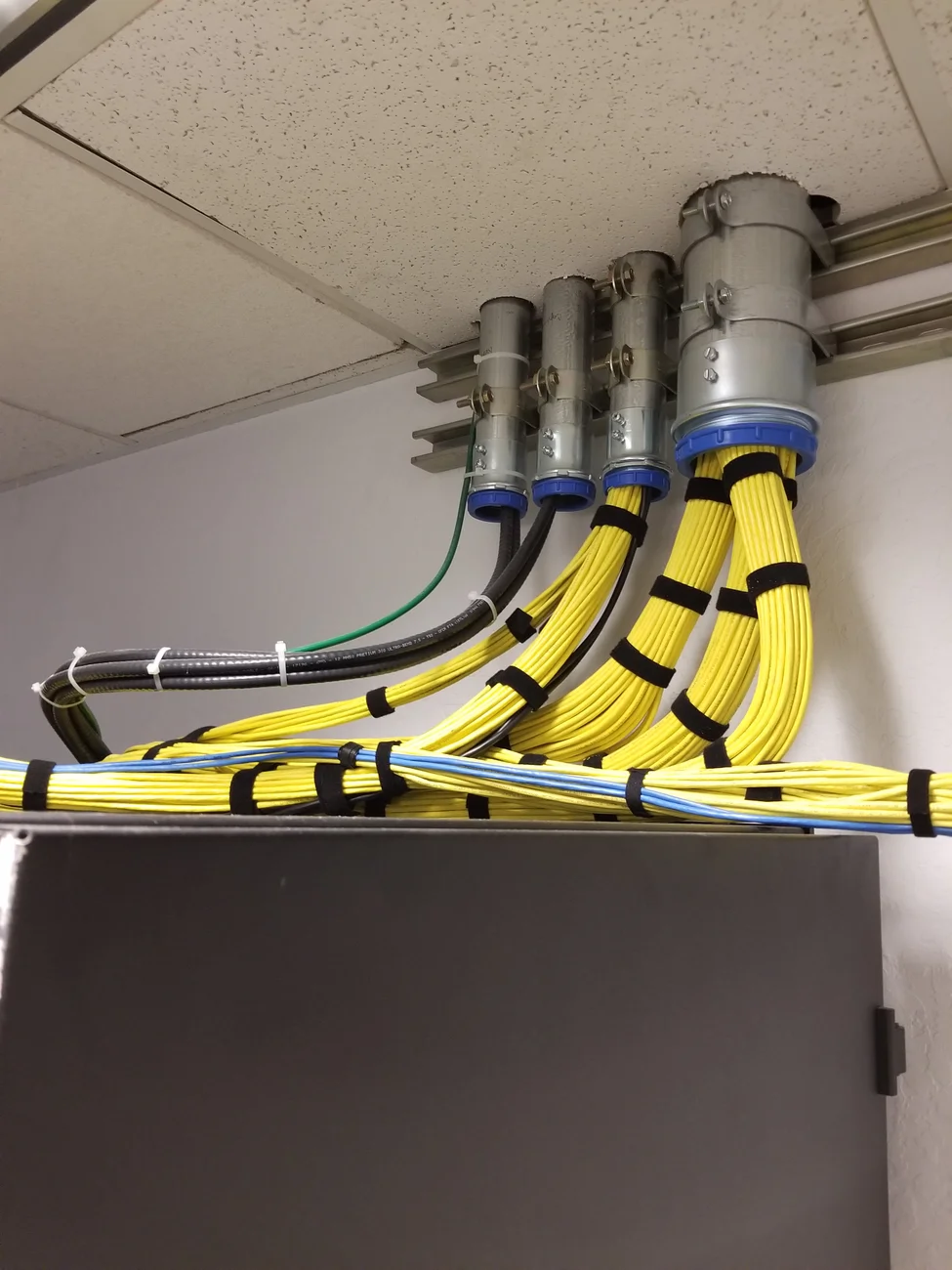
These photographs document camera and infrastructure details. They do not show the parking-lot ADU systems described above or establish warning functions, monitoring arrangements or measured security outcomes.
Separate the purchase from the operating term
List cameras or retained assets, speakers, lights, mounting hardware, enclosures and any specified storage or power equipment. Show recurring licenses, cellular service and optional staffed monitoring separately, with the quoted term and inclusions. Do not compare a hardware-only price with a staffed service bundle.
Price the work beneath the equipment
Installation may include surveys, access equipment, electrical coordination, pathways, cabling, backhaul, configuration and witnessed testing. Receiving restrictions, work windows and restoration requirements can change labor. A site-specific allowance remains an allowance until the unknown condition is resolved.
Use three scoped comparisons
Illustrative retrofit scope: retain cameras and VMS only after compatibility testing; add the selected audio/light devices, required interfaces, power work and witnessed event-path tests. Illustrative pole scope: supply the approved assembly, mounting and access equipment, then include electrical supply, backhaul and acceptance checks; unresolved pole suitability remains an exclusion until reviewed. Illustrative portfolio scope: group mobile, fixed and retrofit sites into pilots and waves, including staging, freight, coordination and a per-site closeout register. These are scope examples, not customer projects or priced offers. Compare the same operating services separately in each scenario.
Approve a budget with visible assumptions
Request a dated proposal with quantities, exclusions, delivery assumptions and a separate recurring schedule. Identify who owns maintenance, warranty coordination, rule changes and response staffing. This guide publishes no invented dollar ranges; an approved equipment and field scope is needed for a meaningful estimate.
Sample procurement worksheet — no quoted prices or availability
Compare mobile, fixed and retrofit over the same operating term
Give each bidder the same site list, required zones, operating term and response responsibilities. Keep equipment, field work, recurring services and changes on separate lines. A lower hardware price does not settle the cost of the operating scope.
| Compare | Mobile | Fixed / pole-mounted | Retrofit |
|---|---|---|---|
| Equipment basis | Quoted mobile assembly and supply or rental terms, if offered | Quoted permanent assembly and retained assets | Retained devices plus approved additions/replacements |
| Site work | Placement, access, connectivity and acceptance | Mounting, power, pathways, backhaul and acceptance | Compatibility assessment, interfaces, power/network changes and acceptance |
| Operating scope | Same required alert, audio and response duties | Same required alert, audio and response duties | Same required alert, audio and response duties |
| Changes during term | Who relocates, re-aims and reaccepts each move | Who changes coverage or adds devices | Who retests VMS, firmware or rule changes |
| End of term | Pickup, removal, restoration and any termination charges | Ownership, ongoing licenses and service handoff | Ownership of retained/new assets and ongoing support |
Compare total quoted one-time work plus recurring charges over the agreed term, then add separately priced moves, service visits and removal where applicable. Keep unresolved allowances visible. Equipment availability, rental terms and monitoring services must be confirmed in the actual proposal.
Use the same response responsibility schedule for every optionSeparate the budget categories
| Budget category | One-time scope | Recurring / follow-up scope |
|---|---|---|
| Hardware | Retained/new cameras, audio, lights, mounts and power equipment | Replacement plan and actual warranty terms |
| Field work | Survey, lifts, mounting, pathways and installation | Service visits or maintenance if contracted |
| Power / connectivity | Electrical work, cable, backhaul and commissioning | Cellular/data service and power-system upkeep |
| Software / operations | Activation and agreed configuration | Licenses, platform support and optional monitoring |
| Portfolio delivery | Pilot, staging, freight, coordination and closeout | Changes, relocations and future site waves |
Review the rollout evidence and planning package
The released warehouse cabling field record shows related infrastructure work. It does not establish an active-deterrence installation or measured security outcomes.
Use the clearly labeled sample readiness matrix, pilot checklist, schedule and closeout index to discuss deliverables before award.
Questions before you scope the work
What does an active deterrence system cost?
A useful estimate requires equipment quantities, installation conditions and the operating arrangement. This page identifies the cost categories; it does not publish unsupported per-site or per-camera prices.
Is a retrofit always cheaper than replacement?
No. Retaining compatible cameras can reduce equipment scope, but interfaces, power work or unsupported versions can add cost. Compare a tested retrofit design with the replacement alternative before deciding.
What changes the price of a pole installation?
Mounting approval, access equipment, supply availability and the data path are major scope inputs. Switched power or difficult access can create work that a hardware catalog price does not include.
Is monitoring included in an installation quote?
Only when the proposal explicitly includes it and names the operating arrangement. Compare monitoring, cellular and licensing charges separately from installation to understand the ongoing commitment.
Can you budget a program before every site is surveyed?
A preliminary budget can state assumptions and separate unresolved site allowances. It should identify what must be surveyed or approved before those amounts become a firm field scope.
How should bids be compared?
Give each bidder the same site list, equipment requirements, work windows and acceptance package. Ask for exclusions and recurring charges in the same format so lower prices do not conceal missing scope.
How are maintenance and warranty handled?
The proposal should identify the responsible supplier, coverage terms and any field-service arrangement. A hardware warranty does not automatically include access equipment, travel, configuration changes or ongoing monitoring.
What information makes a quote more useful?
Provide site count and states, existing camera/VMS details, desired response actions, power/network information and target windows. Name the purchasing and operating owners so commercial and technical assumptions can be resolved together.
Plan your active deterrence deployment
Start with the sites and equipment you have
Share site count, states, equipment details, operating responsibilities and target windows. SRS will identify the field scope and information needed for the next decision.
Request a budgetary quote