
Restaurant & QSR Technology,
Deployed Across Every Site.
POS, self-order kiosks, digital menu boards, drive-thru, WiFi, and cameras all become field work at every restaurant. SRS Networks is the deployment partner that installs the same standard at 10, 100, or 800 sites.
For multi-site restaurant brands and the national integrators and POS providers behind their rollouts — a vendor-neutral field-services and remediation arm across the 48 contiguous states, Alaska, and Hawaii.
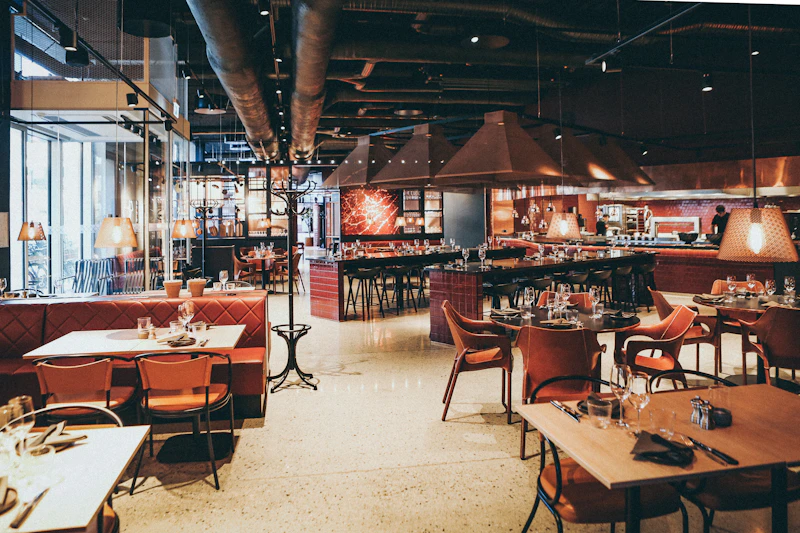
Who deploys restaurant and QSR technology across multi-site brands nationwide?
SRS Networks is a nationwide IT infrastructure deployment firm headquartered in South San Francisco, California. For quick-service, fast-casual, and full-service restaurant brands, SRS Networks installs POS and payment hardware, self-order kiosks, digital menu boards, kitchen display systems, drive-thru and outdoor AV, structured cabling, enterprise WiFi, network switching, and security cameras. The company has deployed 90+ restaurant locations and works across the 48 contiguous states, Alaska, and Hawaii, either directly for a brand or white-labeled behind a POS provider or national integrator. SRS Networks has deployed infrastructure since 1996 and does not resell the platforms it installs.
- Restaurant deployments
- 90+ restaurant locations deployed
- Coverage
- the 48 contiguous states, Alaska, and Hawaii — run from six offices: South San Francisco HQ, Salinas, Pasadena, Boise, Boston, and Dallas
- Founded
- 1996 — 900+ deployments across 10,000+ sites nationwide
- Engagement models
- Direct with the restaurant brand, or white-labeled behind a POS provider, VAR, or national integrator
- Typical fit
- Programs of roughly 25 sites and up, or a brand opening faster than a single local installer can cover
- What we install
- POS and payment devices, self-order kiosks, digital menu boards, KDS, drive-thru AV, cabling, WiFi, switching, and cameras
- Field workforce
- In-house W-2 leads plus a vetted W-9 subcontractor bench, COI audited before dispatch; gear pre-staged at West and East Coast facilities
- What SRS does not do
- Does not sell POS software, kiosk hardware, or drive-thru AI platforms, and does not run managed IT or help desk for restaurants
SRS Networks is a nationwide IT infrastructure deployment firm headquartered in South San Francisco, California, deploying restaurant and QSR technology — POS, self-order kiosks, digital menu boards, drive-thru, networking, and security — for multi-site brands and national integrators across the 48 contiguous states, Alaska, and Hawaii since 1996. It is a separate business from any local Salinas IT services provider.
We've completed 900+ deployments across 10,000+ sites with in-house W-2 leads, a vetted W-9 subcontractor bench, West and East Coast staging facilities, and every site tracked live in our Project Command Center. We deploy and support the technology; we don't resell it — which keeps us vendor-neutral on every brand a restaurant or its integrator chooses.
Why Does Every QSR Initiative Turn Into Field Work?
The restaurant technology wave is real — and every piece of it becomes structured cabling, a device, a network drop, and a tech onsite at hundreds of locations on a deadline.
Every Initiative Becomes Field Work
Drive-thru AI, kiosks, smart-kitchen sensors, new menu boards — each corporate program lands as devices, cabling, and a network drop at every store. The strategy is set centrally; the install happens 800 sites at a time.
A Different Local Shop at Every Store
When each market hires its own installer, no two restaurants match. Drive-thru display ratings, lane labeling, and AP placement drift site to site, and support starts from scratch at every location.
Drive-Thru and Outdoor Get Underbuilt
Indoor panels dropped into a drive-thru wash out in sun and quit in the cold. The outdoor rating, the enclosure, and the PoE for the lane are exactly what a general AV shop underscopes.
Franchise-vs-Corporate Coordination
Corporate sets the standard; franchisees own the buildings and the schedules. Rolling one spec across both takes a partner who can run a national program and still work each operator's install window.
One Partner. Every Restaurant.
One Standard.
SRS Networks installs a repeatable build at every site — POS and kiosks, menu boards, drive-thru, cabling, WiFi, and cameras. One project manager runs the program, one spec travels with the crew, and payment lanes are segmented to your PCI scope at every location. Open 10 stores or remodel 500 — the install is the same.
The Full QSR Technology Stack
Ten core deployment areas that cover the front counter, the drive-thru, the kitchen, and the network behind all of it.
POS Installation
Registers, payment devices, lane cabling, and store go-live for multi-site restaurants — tested before the first transaction.
Self-Ordering Kiosks
Freestanding and countertop kiosks set to ADA spec, with floor power, network, payment, and POS integration verified at go-live.
Digital Menu Boards
Indoor and sunlight-readable drive-thru displays, media players, and CMS connectivity, updatable from one dashboard.
Kitchen Display (KDS)
Kitchen display systems, bump bars, and order-routing integration that pulls orders from POS, kiosks, and drive-thru to the right station — heat-tolerant mounting and PoE in scope.
Restaurant WiFi
Enterprise wireless for handhelds, KDS, guest WiFi, and back-office — segmented so a guest device never touches the POS VLAN.
Structured Cabling
Cat6/Cat6A and fiber pulled, terminated, and Fluke-certified for POS, kiosks, drive-thru, cameras, and APs at every site.
Network Installation Services
Switching, firewalls, and VLAN segmentation that keeps POS, payments, cameras, and guest WiFi on separate, PCI-scoped paths.
Restaurant Security Cameras
IP cameras and VMS covering registers, drive-thru, and the safe — retained to your window and managed from one login, on a VLAN off the POS.
Drive-Thru AI
Edge compute, AI voice-ordering hardware, lane cameras, and PoE — installed and weather-rated for the drive-thru, then integrated back to POS and KDS.
Smart Kitchen IoT
Temperature probes, equipment-monitoring sensors, and IoT controllers wired onto a segmented VLAN and reporting to corporate from every site.
Build the restaurant deployment budget by scope
Compare the restaurant network installation planning range with the POS, kitchen, drive-thru, and wireless work your sites need. For a phased refresh, use per-access-point installation costs or commercial camera installation costs to separate installation from hardware. Confirm overnight access and reopening tests before requesting a site rate card.
How Does a Multi-Site Restaurant Rollout Actually Run?
Six steps, run the same way whether the program is 25 restaurants in one region or hundreds across the country.
Scope
We take your site list, store formats, technology going in, and the install windows each operator will allow. Franchise-owned and corporate-owned locations get flagged up front, because they schedule differently and approve differently.
Standardize
One site template is written per restaurant format — drop counts, device locations, lane build, and network segmentation — so every restaurant after the first one is installed exactly the same way.
Stage
Registers, kiosks, players, and network gear are received, imaged, labeled, and kitted per store at our West and East Coast staging facilities, then shipped to arrive ahead of the crew.
Deploy
Crews run sites in parallel, not one after another, working the overnight and pre-open windows restaurants actually give up. One project manager holds the schedule across every market.
Validate
Every drop is tested and certified, every device is brought up and transacted against, and the site is photographed and punched before the crew leaves. Nothing closes on a technician's word alone.
Support
After go-live the same footprint stays covered nationwide for break-fix, adds, and remediation — one number, one escalation path, no hunting for whoever installed that store.
The Field Arm Behind the Rollout
The national providers running QSR programs — NCR Voyix, SICOM, Unisys, F2OnSite, PAR — own the technology and the customer relationship. Most don't want to manage a different field crew in every market. SRS Networks is the vendor-neutral QSR technology deployment partner that plugs into a provider's program: coverage across the 48 contiguous states, Alaska, and Hawaii, wholesale channel-partner pricing, dedicated PM, and one reporting standard.
We white-label cleanly, carry no direct end-user sales motion that competes with our partners, and audit every sub's COI before dispatch — because a failed COI check on a brand's jobsite is a stop-work order, not a paperwork problem.
From Regional Franchisees to National Brands
10 stores in one metro or 800 across the country — the same rollout playbook, same QA, same single point of contact.
How Does a National Deployment Partner Compare to Per-Market Subs?
See what changes when one partner owns the standard across every restaurant instead of a different shop in every market.
When Is SRS Networks the Wrong Fit for a Restaurant?
If you run one restaurant in one metro and need a couple of kiosks or a menu board set, hire a local installer directly. Our coordination overhead doesn't pay back until you're rolling roughly 25+ sites or opening faster than a local shop can cover — below that line, cluster density beats deployment scale and a same-day local tech wins on drive time.
And if what you need is the POS software, the kiosk hardware, or the drive-thru AI platform itself, that's your integrator or VAR — NCR Voyix, SICOM, PAR, or your Toast or Square reseller. SRS deploys and supports that technology in the field; we don't sell the license or the box. We'll tell you that on the scoping call rather than sell you a program you don't need.
The Standards Behind Every Restaurant We Wire
Restaurant technology touches payment data at nearly every endpoint. These are the published standards our POS, drive-thru, and wireless installs are built and tested against.
PCI DSS
PCI Security Standards Council
Payment card security requirements governing how POS, kiosk, and drive-thru payment traffic is isolated from guest and back-of-house networks.
ANSI/TIA-568
Telecommunications Industry Association
The commercial cabling standard behind every certified drop to a register, kitchen display, menu board, or access point.
IEEE 802.11
IEEE Standards Association
The wireless LAN standard behind guest WiFi, handheld ordering, and mobile payment coverage across the dining room and patio.
BICSI Standards
BICSI
Design and installation practice covering pathways, grounding, and labeling in commercial food service environments.
SRS Networks installs and documents to these published standards. Links go to the issuing body so you can verify the requirement yourself - we are not affiliated with, endorsed by, or accredited by any organization listed unless stated elsewhere on this site.
Restaurant Technology Terms, Defined
The vocabulary that shows up in a QSR deployment scope of work — and what each item means for the cabling, power, and network behind it.
- Kitchen Display System (KDS)
- A kitchen display system replaces printed tickets with screens at each cooking station, routing orders from the POS, kiosks, and the drive-thru to the station that makes them. In a deployment it needs a certified network drop, PoE or local power, and heat-tolerant mounting clear of fryers and steam.
- Bump Bar
- A bump bar is the sealed, wipe-down keypad a cook uses to clear a finished order off a kitchen display screen without touching the display. It mounts within arm's reach of the station, wires back to the KDS controller, and is specified to survive grease, heat, and constant cleaning.
- Order Confirmation Board (OCB)
- An order confirmation board is the outdoor display in a drive-thru lane that shows a guest the order and total as it is rung in. It carries a sunlight-readable, temperature-rated screen inside a weather enclosure, and needs conduit, power, and a network path back to the building.
- Drive-Thru Timer System
- A drive-thru timer system measures how long each car spends at the menu board, at the window, and in the lane overall, using vehicle detection loops or sensors wired to a timing controller. The loops, controller, and reporting display all depend on lane conduit and a network drop.
- Digital Menu Board CMS
- A content management system is the central dashboard that pushes menus, pricing, and dayparted content to every screen in every restaurant. Each board pairs with a media player that has to be addressable on the store network, which makes the cable drop and the VLAN part of the menu program.
- Cardholder Data Environment (CDE)
- The cardholder data environment is the set of systems that store, process, or transmit payment card data, plus anything connected to them. PCI DSS applies to everything inside it, which is why restaurant cabling and switching are designed to keep registers and payment devices off guest WiFi, cameras, and back-office traffic.
- Point-to-Point Encryption (P2PE)
- Point-to-point encryption encrypts card data inside the payment terminal and keeps it encrypted until it reaches the processor, so the restaurant network never carries readable card data. It narrows PCI scope at the site, but it does not remove the need for segmented cabling and switching.
- Sunlight-Readable Display
- A sunlight-readable display is a screen built with enough brightness and anti-reflective treatment to stay legible in direct sun, and rated to keep working through outdoor temperature swings. Indoor panels dropped into a weather box wash out by midday and quit in the cold, so drive-thru screens are specified separately.
Restaurant & QSR Deployment FAQs
What restaurant operations leaders and integrator program managers ask us most before signing a deployment SOW.
Give the rollout crew an accepted restaurant pilot
Use a pilot to confirm menu updates, checkout connectivity and the store manager’s reopening checks. Our restaurant IT rollout installers carry the approved scope into later locations, with the access window, local exceptions and closeout owner recorded for each restaurant.
Ready to Deploy Across
Every Restaurant?
Send us your site count, the technology going in, and your install windows. We'll build a project plan to your specs — pre-staged, installed to one standard, and documented at closeout.