
Data Cabling Services in San Diego
San Diego commercial data cabling with approved design ownership and a usable outlet-to-panel closeout.
One partner. One standard. Every location.

Plan your San Diego project
Define the San Diego closet design and installation handoff
Provide the current floor plan, outlet schedule and closet photographs before the cable quantities are fixed. Name the team supplying rack elevations and patch-field identifiers, and state whether the installer is pricing an approved design or a separate design task. For an occupied tenant, pair the port schedule with the connection-change sequence and the person accepting the new links. Keep the physical cable-test package separate from switch configuration and application performance checks, so a room full of labeled cables is not mistaken for an accepted active network.
Let the lab designer release the physical installation
For a Sorrento Valley property, attach the customer's approved bonding and separation details to the installation scope. Identify electrical and specialist design tasks separately, with approval required before a field change. A physical-link test supplies cable evidence rather than a finding about instrument noise or laboratory compliance.
Identify restricted drawing review at the actual facility
At a Kearny Mesa or Miramar site, name who may receive route photographs and as-builts and how the buyer authorizes their transfer. Keep the record owner beside the acceptance deadline. Do not apply a defense-document workflow to an ordinary commercial tenant merely because both are in San Diego.
Detailed planning: Append a sample acceptance row to the San Diego handoff
Use a sample outlet row to settle the closeout format before installation: building and room identifier, closet, rack, panel port, cable-test file and accepted route change. Have the receiving IT team confirm how that row connects to its drawing set. Agree when missing results or failed links must be corrected while site access remains available; keep switch and application checks under their separate owners.
If the scope includes a server room or cabinet layout, identify the design deliverables and their owner. Review data center cabling design and rack handoffs.
Agree the cable-test package and records required for physical acceptance. Define physical-link testing and closeout records.
Equipment configuration, application checks and between-site throughput work need a separate owner and acceptance scope. Scope San Diego active-network configuration and cutover.
Compare the existing national service boundary with the local installation package; retain the national route owner. Review national data cabling scope.
Keep the operator's release and acceptance responsibilities beside the physical field scope. Review healthcare deployment responsibilities.
Use the existing procurement article to define bidder inputs and exclusions before comparing installation prices. Use how to write structured cabling rfp.
Use the existing procurement article to define bidder inputs and exclusions before comparing installation prices. Use network deployment rfp template.
Complete the existing scope worksheet with this property's quantities, access dependencies and acceptance owner. Cat6 and Cat6A closeout workbook.
Review allowances, omitted trade responsibilities and required closeout records against the same buyer package. Compare network bid scope and exclusions.
Send drawings, endpoint quantities and the confirmed access conditions; navigation is separate from a saved inquiry. Request a scoped budget estimate.
Ask for investigation of unresolved routes or retained plant. A submitted inquiry still needs staff qualification. Request a site survey.
SRS Networks has delivered 900+ multi-site programs across 10,000+ locations company-wide. Use a documented scope to connect your local installation to the wider rollout.
Cat6 and Cat6A testing and closeout guideBring these details to the scope review
- Existing and proposed outlet-to-panel schedules
- Cable reuse decisions and application requirements
- Native test files, retests and approved exceptions
SRS Networks installs commercial data cabling across San Diego, including Downtown and Mission Valley tenants and Sorrento Valley and Kearny Mesa facilities. A scoped package identifies Cat6/Cat6A outlets, closet and patch-panel handoffs, approved pathways and the link records required at acceptance. Existing premises also need agreed work windows and responsibility for changing live connections. Share the floor plan, endpoint list and closet photographs so reuse, replacement and design responsibilities can be priced separately. Specialized lab or defense requirements are reviewed against the customer's approved design and contract.
Cat6 and Cat6A Testing and Closeout Guide
Use the correct copper link model and test limit, then reconcile native results, retests, labels, schedules, as-builts, photographs, and acceptance. Apply the project-specific requirements for San Diego and the controlling authority, design, contract, and manufacturer instructions.
Data Cabling scope and acceptance in San Diego
A data-drop scope starts with the endpoint schedule: where each connection terminates, what it serves and how the buyer will verify the finished link.
Confirm drops and reuse assumptions
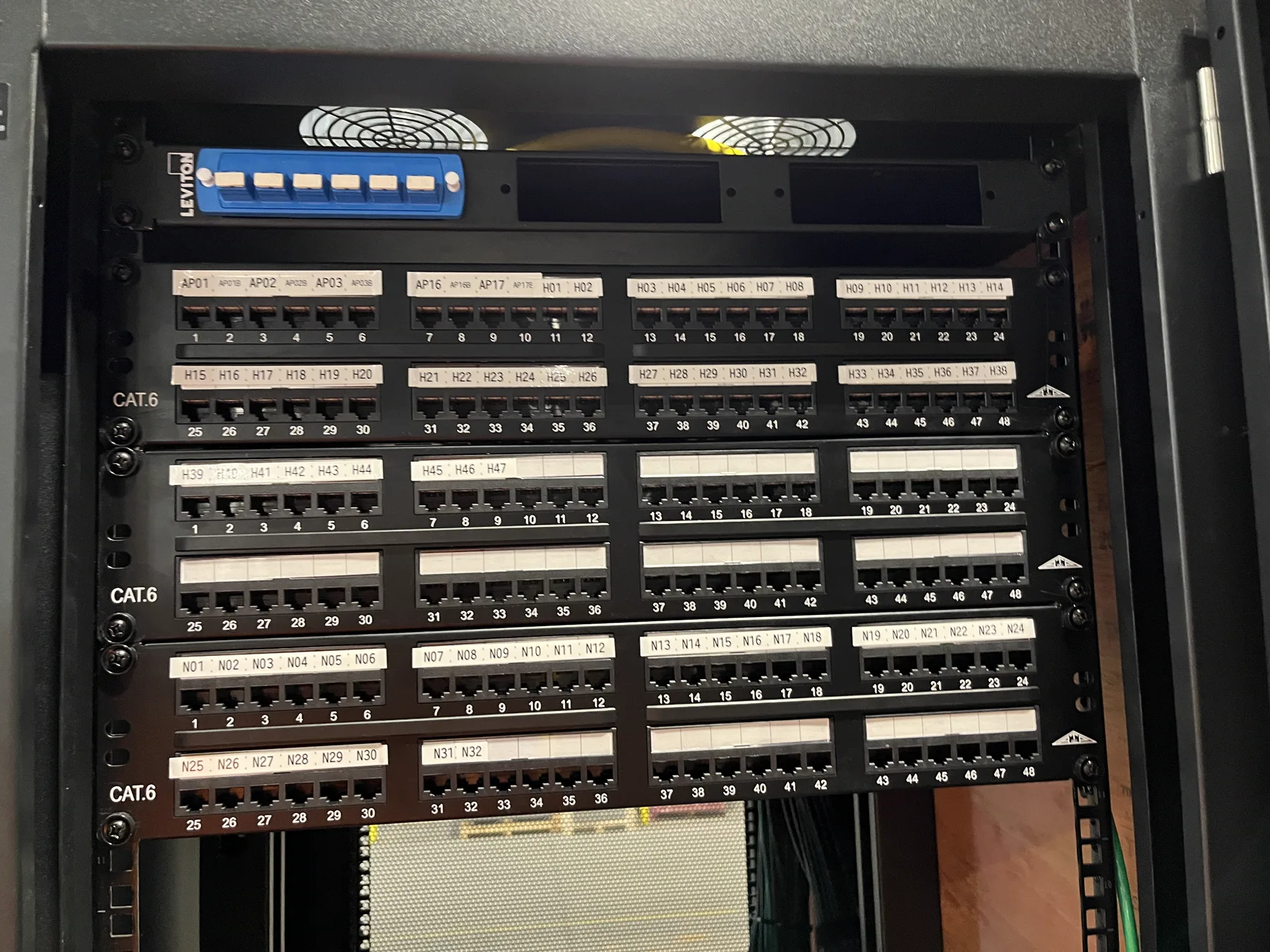
Reconcile workstation, printer, access-point and other endpoint locations with the drawings. Identify existing copper links proposed for reuse and define how their condition will be checked.
Terminate and label each connection
Match cable category, jacks, patch panels and installation details to the approved specification. Use a consistent drop identifier at both ends and record changes made during the pull.
Deliver a traceable test record
Test each required link against the agreed limit and retain native results. Reconcile retests, port assignments and labels so IT can find the corresponding connection after handoff.
A completed data drop is a physical connection. Confirm patching, switch-port configuration and endpoint commissioning responsibilities separately in the work order.
San Diego enterprise network deployment planning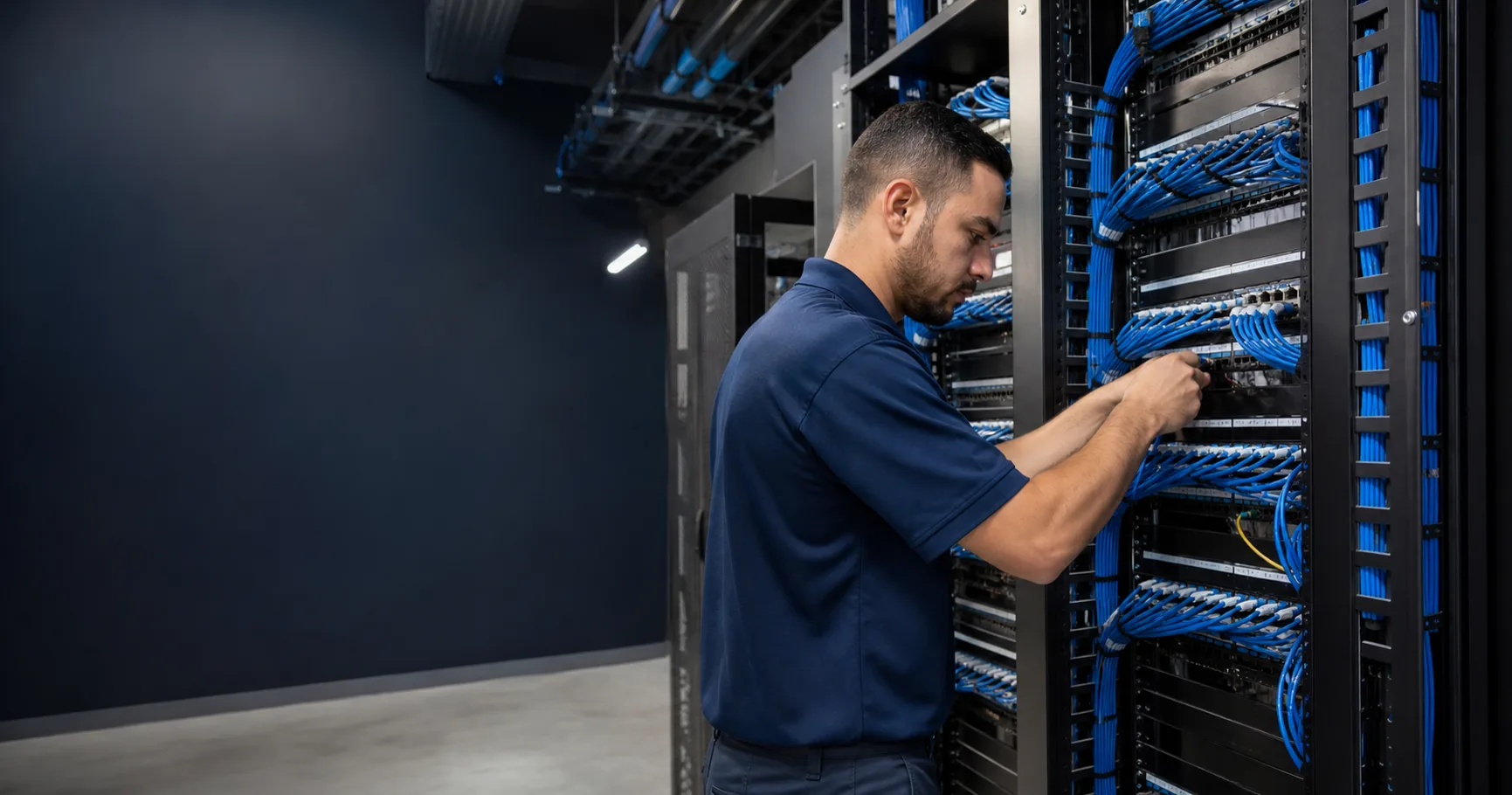
Serving All of San Diego
SRS Networks deploys enterprise network infrastructure across the entire San Diego metro and surrounding areas - one partner, one standard.
Industries We Serve
Areas We Serve in San Diego
Explore More from SRS Networks
Plan more services for your San Diego sites
Explore installation, site infrastructure and rollout support. Service details explain the work involved; include your site address, access requirements and schedule when requesting a scope.
Start with structured cabling and WiFi deployment for the installation at your sites. Review commercial WiFi installation for platform requirements and acceptance. For work repeated across locations, use the nationwide technology rollout program to plan the pilot, staging and site handover.
Cabling and fiber
Network deployment
Wireless
Security, AV and retail technology
Data center and site infrastructure
Field services and rollout delivery
Senior living technology
RTLS installation and planning
Common Questions About Data Cabling in San Diego
Schedule a Deployment in San Diego
Whether you need a single-site buildout or a multi-location rollout across San Diego, SRS Networks is your deployment partner.