
Certified Fiber Splicing. Tested. Documented. Done Right.
A poor splice or a contaminated end-face doesn't just underperform - it creates intermittent failures that are nearly impossible to diagnose without the right testing. We don't leave a job until every run is OTDR-certified.
SRS Networks provides certified fusion splicing, mechanical splicing, and ST/SC/LC connector termination with end-face inspection and full loss-budget documentation on every engagement.
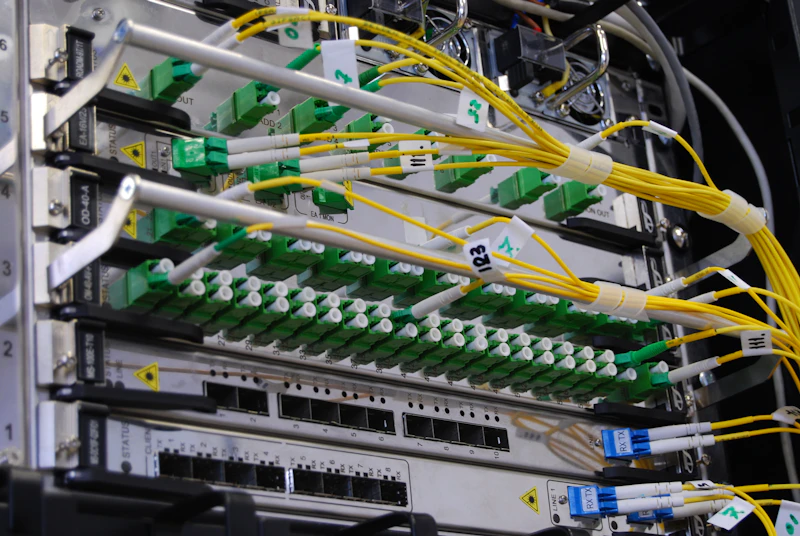
Why Fiber Terminations Fail
Fiber doesn't fail because it's fragile. It fails because the connections at each end were rushed, untested, or handed off without documentation. Every one of these problems is preventable.
High-Loss Connections from Poor Terminations
A badly polished connector or a rushed fusion splice can introduce enough optical loss to degrade performance across the entire run. Bad terminations don't just slow things down - they cause hard-to-trace intermittent failures.
Untested Splices Causing Intermittent Failures
Splices that were never OTDR-tested pass visual inspection but fail under load. These phantom failures surface weeks later when the link is carrying production traffic - and no one can explain why.
No OTDR Certification Documentation
Without loss-budget documentation and OTDR traces, you have no baseline. You can't prove the fiber was installed correctly, and you can't diagnose future faults with any precision.
Damaged Connectors from Improper Handling
End-face contamination is the leading cause of fiber link failures. Connectors handled without end-face inspection before mating cause physical damage that's permanent - and invisible without the right tools.
Inconsistent Work Across Multiple Contractors
When different trades or vendors terminate different segments of the same fiber plant, the result is mixed connector types, unmatched polish grades, and documentation gaps that make maintenance a guessing game.
Fiber Work That's Certified Before We Leave.
SRS Networks deploys certified fiber technicians who treat OTDR testing and end-face inspection as non-negotiables - not add-ons. Every splice is tested. Every connector is inspected. Every run is documented. You get the paperwork to prove the work was done to standard, and a baseline you can measure against for the life of the fiber plant.
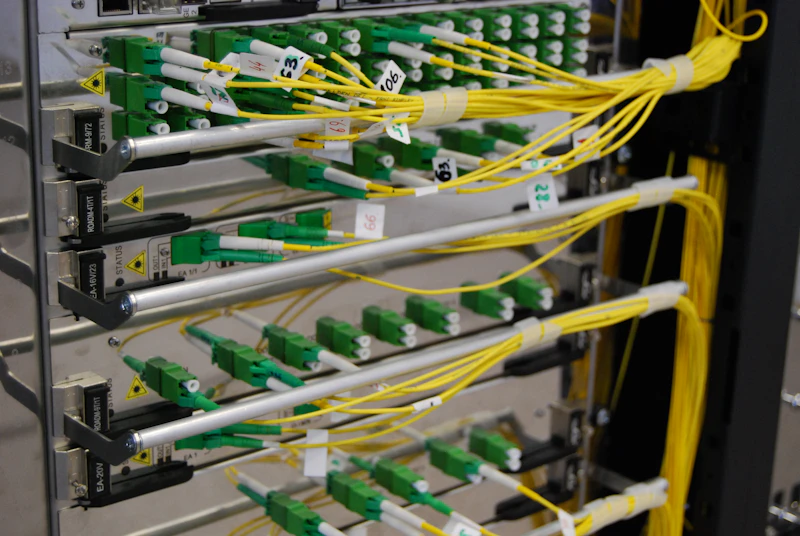
Complete Fiber Splicing & Termination Coverage
From fusion splicing on backbone runs to high-density LC terminations in data center environments, SRS Networks covers every fiber connection method - with testing and documentation included on every job.
Fusion Splicing
Permanent, low-loss fiber joins using arc-fusion splice equipment. Ideal for backbone runs, data center trunk builds, and any application where insertion loss must be minimized below 0.1 dB.
Mechanical Splicing
Fast, field-deployable fiber joins for emergency restoral, temporary extensions, and locations where fusion equipment isn't practical. Properly executed mechanical splices meet performance specs.
Connector Termination
ST, SC, and LC connector termination using factory-grade polish kits. Every termination includes end-face inspection under magnification before any connector is mated or installed in a panel.
OTDR Testing & Certification
Every completed fiber run is tested with an OTDR. We capture bidirectional traces, identify every event on the link, and deliver full loss-budget documentation - the paperwork that proves the work was done right.
Untested Fiber vs. SRS Certified Fiber
What separates a fiber plant that holds up under production load from one that generates intermittent failures no one can explain.
Where Certified Fiber Work Matters Most
Every environment is different, but the standard never changes. These are the applications where SRS Networks fiber technicians are called in to do the job right.
Data Center Fiber Trunk Builds
High-density LC fiber trunk terminations in data center environments where port density is tight, insertion loss budgets are strict, and every connector needs a clean end-face before it goes into a panel.
Campus Backbone Splicing
Fusion splicing for inter-building and riser backbone runs across campus environments. Permanent, low-loss splices that anchor the high-speed backbone connecting distribution and access layers.
Building Entrance Facility Termination
Outside plant fiber brought into the building and properly terminated at the entrance facility - with OTDR documentation from the provider handoff point into the inside plant.
Fiber Patch Panel Buildouts
Full patch panel buildouts including pigtail termination, cassette population, and panel labeling - delivered with tested, documented, and certified fiber ready for production use.
Fiber Work That Passes Every Time.
Fiber termination isn't a skill you develop on the job site. It requires certified technicians, the right test equipment, and a process that treats documentation as part of the deliverable - not an afterthought. That's what SRS Networks brings to every engagement.
Explore More from SRS Networks
Need Fiber Splicing or Termination Done to Standard?
Whether you're building out a data center trunk, splicing a campus backbone, or terminating a building entrance facility, we'll send the right technicians with the right equipment - and you'll get full OTDR documentation at handoff.