
Warehouse Cabling Project Checklist
Control the scope before award: rooms, pathways, access, materials, testing, labeling, documentation, acceptance, exclusions, and change authorization.
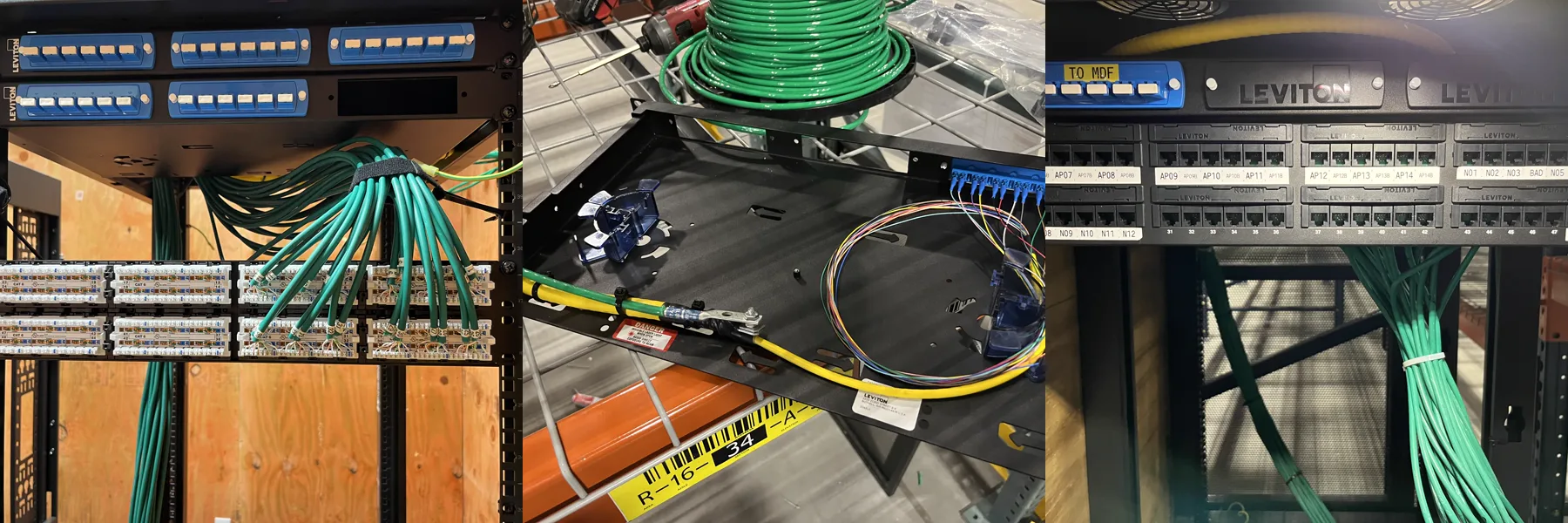
A warehouse cabling checklist should make every bidder price the same physical scope and acceptance standard. It must define locations, quantities, products, pathways, access equipment, operating windows, labeling, copper and fiber testing, closeout records, exclusions, unit rates, trade boundaries, and change control. SRS Networks uses those inputs to coordinate warehouse deployments across the 48 contiguous states, Alaska, and Hawaii.
SRS Networks is a SRS Networks is a nationwide enterprise infrastructure deployment company headquartered in South San Francisco, California, delivering structured cabling, fiber, network, and multi-site programs since 1996. headquartered in South San Francisco, California, deploying commercial cabling for enterprises and channel partners across the 48 contiguous states, Alaska, and Hawaii since 1996.
Make the bid comparable and the finish line measurable
The strongest scope does more than list cable drops. It explains how crews access the work, which evidence proves completion, and who owns every interface with the building and other trades.
Site and room information
Floor plans, MDF and IDF locations, endpoint schedules, ceiling heights, storage layout, work zones, environmental conditions, and security rules.
Materials and pathways
Cable and connectivity products, backbone fiber, supports, conduit, sleeves, penetrations, firestopping, separation, and allowable substitutions.
Access and sequencing
Lift responsibility, operator rules, escorts, shutdowns, aisle closures, work windows, phasing, other trades, and site readiness.
Testing requirements
Copper test limits and link configuration, fiber loss budget and methods, native result files, calibration, failure correction, and retesting.
Labels and closeout
Naming standard, port schedule, as-builts, rack elevations, completion photos, material records, punch resolution, and warranty documents.
Commercial controls
Inclusions, exclusions, allowances, unit rates, schedule assumptions, change authorization, acceptance, payment milestones, and responsibility matrix.
Use the checklist when omissions would become field changes
It is designed for commercial and enterprise warehouse work where access, scale, or turnover evidence matters to the award decision.
- New distribution centers and warehouse expansions
- MDF, IDF, fiber backbone, wireless, camera, or automation cabling
- Projects bid to multiple contractors
- Operating facilities with restricted work windows
- Multi-site programs requiring a repeatable SOW and closeout package
When a local shop is the better call
This checklist is a planning resource, not a project specification or code interpretation. The executed drawings, SOW, applicable codes, manufacturer requirements, and authority having jurisdiction control the work.
See the SRS deployment footprintUse the checklist in four passes
Describe the physical scope
Confirm rooms, endpoints, products, pathways, supports, penetrations, racks, backbone links, and work by other trades.
Describe the operating conditions
Document access, lifts, security, escorts, working hours, closures, shutdowns, environmental constraints, staging, and site readiness.
Define proof of completion
Specify labels, copper and fiber tests, file formats, drawings, schedules, photographs, punch handling, walkthroughs, and signoff authority.
Normalize the bids
Require bidders to list exceptions, assumptions, alternates, unit rates, schedule, change procedure, and every item excluded from the base price.
Related cabling resources
Continue from checklist questions into structured cabling services, bidder evaluation, and a procurement-ready scope.
Structured Cabling Services
Installation, testing, labeling, and closeout documentation.
Network Cabling Services
Multi-site Cat6, Cat6A, fiber, rack, and pathway execution.
Questions to Ask a Cabling Contractor
A practical pre-award checklist for comparing bidders.
Warehouse cabling checklist questions
Define the serving rooms, endpoint locations and quantities, cable and connectivity products, backbone media, pathways, supports, penetrations, firestopping, lifts, work windows, labeling, testing, documentation, acceptance, exclusions, unit rates, change authorization, and trade responsibilities. Drawings and schedules should agree with the written scope.
Want SRS to review the scope before pricing?
Send the available drawings, endpoint schedule, site constraints, material standard, testing requirements, and target schedule. We will identify ambiguous or missing requirements before they become field changes.