
What is visible
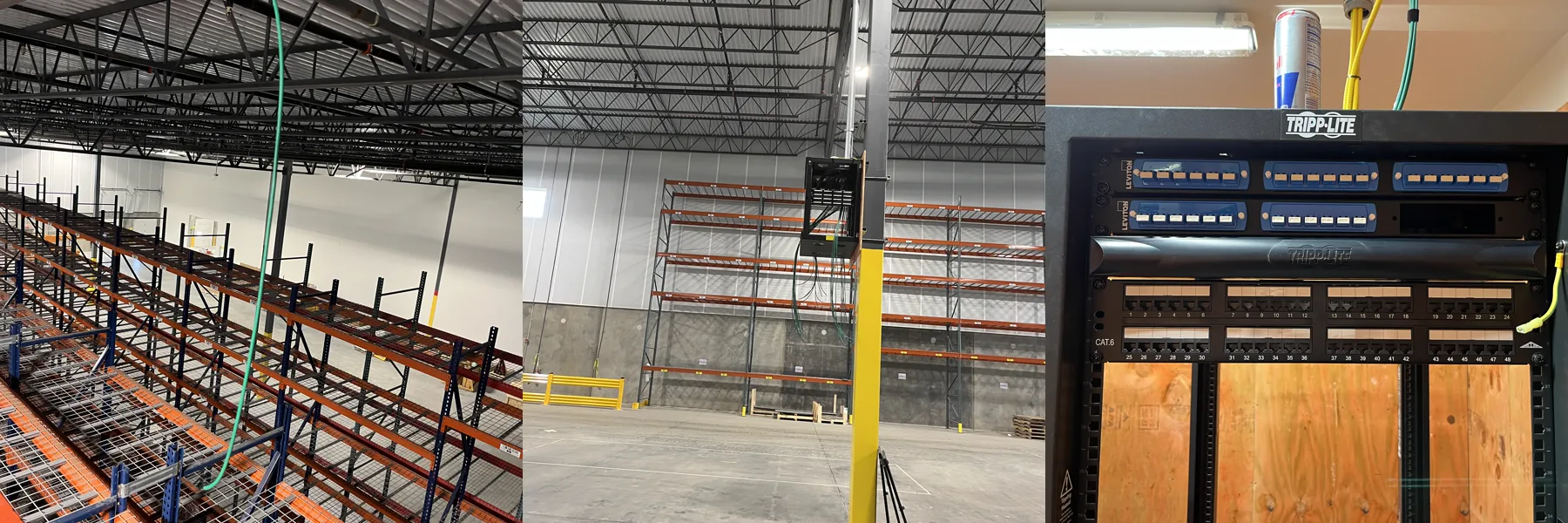
The photographs show cable routes above the work area and a cabinet mounted within the facility. The companion rack view shows distribution hardware. Together, these views establish visible installation conditions without disclosing a customer name or address.
What belongs in the scope
A pathway scope needs more than a line between two points. Identify the permitted route, access equipment, working height and restrictions around occupied aisles before dispatch. The crew and site contact need the same understanding of the work area and the access window.
Make the photograph useful at handoff
Use a wide photograph to establish context, then a closer view to document the cable approach. A close-up alone can hide the access problem. A room-wide view alone can omit the mounting detail. Tie both views to the approved drawings and scope so the receiving team knows what it is reviewing.
What the image does not establish
Photographs do not establish installed cable length, the capacity of its supports or compliance with the design. Those questions need the relevant project records and inspection evidence. Keep the route record connected to the work package, and record open decisions rather than treating a good-looking image as acceptance.