
SD-WAN Deployment, Site by Site, Across the 48 contiguous states, Alaska, and Hawaii.
You already picked the platform. What you need now is hands: someone to survey every location, stage the edge appliances, chase the carrier, mount the gear, cut the traffic over inside a window that works for that site, and prove it came up.
SRS Networks executes SD-WAN rollouts in the field — 20 sites or 500 — with appliances pre-staged at our West and East Coast facilities, circuits coordinated per site, and every turn-up validated and documented before we leave.
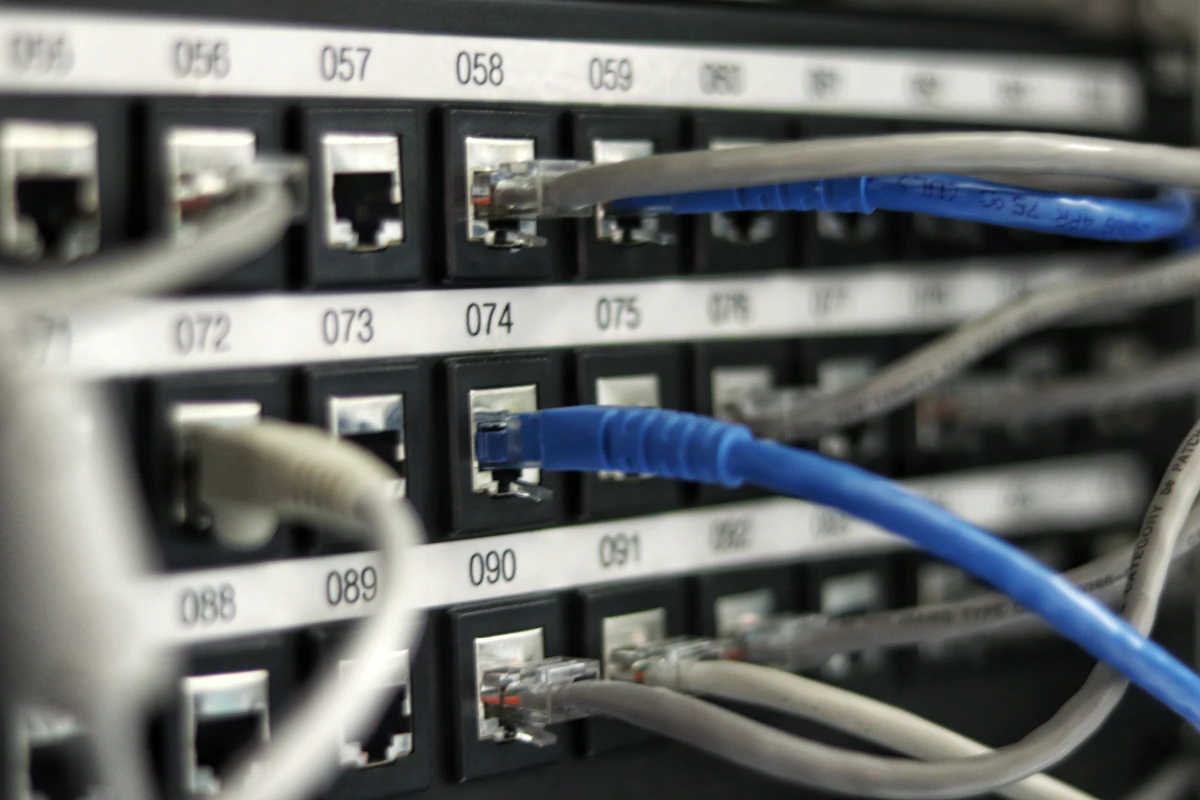
SD-WAN deployment is the field execution half of an SD-WAN program: site surveys, edge appliance staging and customer configuration handoff, shipping and install sequencing, carrier circuit coordination, scheduled cutover windows, per-site turn-up validation, rollback planning, and legacy hardware decommission. The design and the platform decision sit upstream of it. This page is about getting the boxes on walls and the traffic moved, in every location, on a schedule that holds.
SRS Networks is a nationwide network deployment contractor headquartered in South San Francisco, California, executing multi-site SD-WAN rollouts for retail chains, healthcare systems, restaurant groups, and distributed enterprises across the 48 contiguous states, Alaska, and Hawaii since 1996. We have completed 900+ deployments across 10,000+ sites from six offices with in-house W-2 field leads, West and East Coast staging facilities, and every site tracked live in our Project Command Center. If you are still choosing an architecture rather than installing one, start with our SD-WAN and multi-site networking overview and come back here when the estate is ready to roll.
SD-WAN Rollouts Fail in the Field, Not in the Design
The architecture is rarely the thing that kills a multi-site rollout. Logistics, carriers, and scheduling are. Four patterns account for most of the schedule slip we get called in to fix.
300 Appliances Drop-Shipped to 300 Addresses
Boxes land at store back doors with no receiving process, get signed for by whoever is closest, and go missing. At scale, roughly one in six shipments is wrong, damaged, or gone by install day — and the tech finds out standing in the parking lot.
Carrier Ready Dates That Move
The broadband or DIA order slips two weeks and nobody tells the field. The tech is already dispatched, arrives to a dead demarc, and you pay for a truck roll that installed nothing. Multiply by a few dozen sites and the schedule stops meaning anything.
Cutover Windows Across Four Time Zones
A store cannot cut over at 2pm, a clinic cannot cut over mid-session, and a distribution center runs three shifts. Every site has its own window, and coordinating hundreds of them by email is how rollouts stall at site 40.
No Rollback When the Tunnel Drops at 3am
The tech left at midnight, the legacy edge is already in a box on a truck, and the overlay flaps four hours later. Without a written rollback path and the old gear still racked, that site is dark until the next dispatch lands.
A Repeatable Per-Site Deployment Runbook.
Site 1 and site 300 get the same sequence, the same kit contents, the same validation, and the same closeout record. That is what makes a large estate predictable. It runs alongside our multi-site network deployment and internet provider coordination work when the circuits are changing too.
Six Phases, Repeated at Every Location
This is the order we run a site in, and the order we report against. Nothing moves to the next phase until the previous one is evidenced.
Survey Every Site
We document the demarc type and location, the existing router or firewall make and model, the RU or wall space available, the outlets and UPS capacity, the cable path from demarc to rack, and the LTE or 5G signal at the exact spot the antenna will sit. Sites that need remediation get flagged now, not on install day.
Stage and Kit the Edge
Appliances land at our West or East Coast facility. Each one is serialized to a site ID and port-labeled, then kitted with the approved power supply, mounting hardware, patch cords, optics, antenna and site-specific install sheet. Your platform owner completes licensing, controller enrollment, firmware, configuration and SIM readiness before the installation handoff.
Coordinate the Circuits
We hold the carrier ticket per site — order, FOC date, handoff type, and speed — and we test the circuit before cutover night rather than discovering a dead demarc with a tech on site. LTE or 5G backup gets activated and speed-checked at the real mount location, not at the loading dock.
Ship and Sequence
Kits ship to land two to three days ahead of the window, addressed to a named receiver who knows it is coming. Sites are sequenced by region and by circuit readiness so crews cluster geographically instead of criss-crossing states, and a slipped circuit re-sequences the site rather than burning the dispatch.
Cut Over and Turn Up
Inside the approved work window, SRS executes the physical patching and customer-directed installation checklist. Your platform owner controls traffic migration, tunnel and routing checks, QoS, DHCP, DNS, VLANs and application acceptance. Disruptive failover requires their approved test plan and rollback authority; results and exceptions are recorded for signoff.
Document, Soak, Decommission
Closeout captures serials, circuit IDs, WAN addressing, SIM identifiers, throughput and failover results, config version, and install photos. The legacy edge stays racked and reversible through an agreed soak period so a 3am problem has a rollback instead of an outage. After the soak we return, pull the old gear, and hand it to your reverse-logistics process.
Scope of an SD-WAN Deployment Engagement
Four workstreams cover the estate from first survey through the day the last legacy router leaves the building.
Site Survey & Readiness
Before anyone is dispatched we document each location — demarc type and location, existing edge hardware, rack or wall space, available power, and the LTE read at the intended mount point.
Staging, Kitting & Config
Gear ships to our staging facility, not to your sites. Each unit is serialized to a site ID and boxed as a complete site kit. Your platform provider owns licensing, controller enrollment, firmware and configuration readiness.
Install, Cutover & Turn-Up
Crews mount, cable, and power the edge, bring the transports up, and hold traffic until the window opens. Cutover runs to the site's hours with a rollback path written before the first cable moves.
Validation, Docs & Decommission
Every site closes with evidence — serials, circuit IDs, WAN addressing, throughput and failover results, install photos. Legacy edge stays reversible through a soak period, then gets pulled and returned.
You Picked the Vendor. We Install It.
We are the hands, not the resale channel. Whatever platform your team standardized on, we install to your approved design and record the acceptance steps directed by your platform owner.
VMware VeloCloud
Your platform provider activates the edges and assigns the Orchestrator profile. SRS handles approved mounting, power and patching, then records the provider-witnessed installation handoff.
Cisco Meraki MX
Your platform provider owns dashboard enrollment, templates and AutoVPN policy. The field crew installs the approved appliance and assists their authorized acceptance checklist.
Fortinet Secure SD-WAN
Your platform provider owns FortiManager or FortiCloud registration, firmware, SD-WAN rules and SLA probes. SRS installs the approved hardware and documents customer-directed acceptance tasks.
Cato, Prisma, EdgeConnect
Cato Sockets, Palo Alto Prisma ION, Aruba EdgeConnect, Versa, and Catalyst SD-WAN all get the same treatment — staged to your tenant, installed to your design, validated the same way.
Rollouts Break on Logistics. That's What We Own.
Anyone can bolt an appliance to a wall. Doing it at 300 addresses on a schedule, with carriers slipping and every site keeping different hours, is a logistics discipline. We built the staging facilities and the PM structure around that problem.
What a 300-site SD-WAN rollout actually looks like.
Say you have 300 stores across 26 states, the platform decision is made, the purchase order is cut, and your leadership has committed to a completion date. The first thing that happens is not an install. It is a survey pass. We need to know which sites have a fiber handoff and which still terminate on coax, which have two free RU and which have a plywood board and a surge strip, which have an outlet within reach of the mount, and what the LTE read is at the spot the antenna will actually sit — not at the front counter where the phone gets five bars. That pass is what turns a 300-site date into a 300-site plan, because it tells you which twenty locations need electrical or mounting remediation before a network tech is worth dispatching.
Next, the gear does not go to your stores. It comes to our West or East Coast staging facility. Each appliance is serialized to the site, checked against the approved equipment list and prepared for the customer platform owner's configuration handoff. Licensing, firmware, controller enrollment and SIM activation remain with that owner. The field kit includes appliance, power supply, mounting hardware, patch cords, optics, antenna, and a one-page install sheet specific to that store. This is the single highest-value step in the whole program. Drop-shipping from the vendor to 300 back doors is where rollouts go to die: at scale roughly one in six shipments arrives damaged, wrong, opened, or simply cannot be found, and every one of those is a wasted truck roll.
In parallel we hold the carrier. If new broadband or DIA is going in, we own the ticket per site — order placed, FOC date tracked, handoff type and speed confirmed, circuit tested before cutover night. Carriers slip. That is not a surprise, it is a planning input. When a site slips, we re-sequence it into a later cluster instead of dispatching a tech to a dead demarc. Kits ship to land two or three days ahead of the window, addressed to a named receiver who knows it is coming, and crews get routed regionally so a Tuesday in the Dallas cluster is six sites, not one site and four hours of highway.
Cutover runs on the site's clock, not ours — pre-open for retail, after last patient for clinics, third-shift changeover for distribution. Your platform owner controls traffic migration, tunnels, routing, security policy and application acceptance. SRS executes the physical patching and their approved field checklist. Disruptive failover requires that owner's test plan, work window and rollback authority; installation records preserve the results and open exceptions.
Nobody leaves with a handshake. Closeout per site is serials, circuit IDs and carrier account, WAN addressing, SIM identifiers, throughput and failover results, config version, and photos of the install. The legacy edge stays racked and reversible through an agreed soak period, so a problem at 3am on night four has a rollback path instead of an outage. After the soak we come back, pull the old gear, and hand it to your reverse-logistics or our network decommissioning process. Throughout, you watch site status roll up live in the Project Command Center instead of asking for a spreadsheet on Fridays. One PM, one standard, one PO across the 48 contiguous states, Alaska, and Hawaii.
Explore More from SRS Networks
SD-WAN Deployment FAQs
The questions IT directors and network managers ask us before handing over a multi-site SD-WAN rollout.
Send Us the Site List. We'll Send Back a Schedule.
Give us the locations, the platform, and the date you have to hit. You get a survey plan, a staging and shipping sequence, a cutover calendar built around each site's hours, and one project manager who owns all of it across the 48 contiguous states, Alaska, and Hawaii.