
Network Deployment for Biosciences
A high-throughput sequencing run holds the instrument for about 48 hours and can push 16 to 21 TB onto your network. The reagents were budgeted once and some samples cannot be replaced, so the run does not get interrupted for an install. SRS Networks phases cabling, fiber, wireless, and access work against the run calendar and the planting calendar - bench by bench, house by house.
Serving plant-breeding and seed-genetics programs, agricultural biotech and crop-science R&D campuses, genomics and genotyping laboratories, and life-science research facilities nationwide.
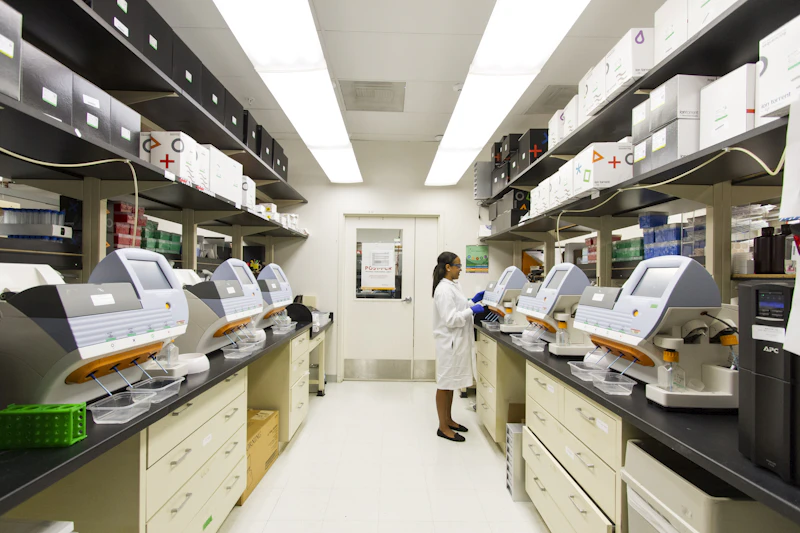
Who deploys network infrastructure across genomics labs, breeding stations, and research campuses nationwide?
SRS Networks is a nationwide infrastructure deployment contractor that installs structured cabling, fiber backbones, lab and greenhouse wireless, network segmentation, access control, and camera coverage inside genomics laboratories, plant-breeding stations, greenhouse and growth-chamber ranges, and crop-science research campuses across the 48 contiguous states, Alaska, and Hawaii. The business has operated since 1996, works from six offices across four states, and pre-stages configured hardware at West Coast and East Coast staging facilities before it ships to a station. Research organizations hire SRS Networks directly as their multi-site deployment partner, and lab IT vendors, integrators, and managed IT providers bring it in white-label behind their own brand. Work is sequenced against the run calendar and the planting calendar — bench by bench, house by house — so a sequencing run is never interrupted and a station never misses its window.
- Track record
- 900+ multi-site deployments across 10,000+ sites since 1996, company-wide. SRS publishes no separate bioscience count and does not relabel the company figure as one.
- Coverage
- the 48 contiguous states, Alaska, and Hawaii, coordinated from six offices across four states: South San Francisco, Salinas, and Pasadena in California, plus Boise, Boston, and Dallas.
- Founded
- 1996 — 30 years deploying infrastructure
- Regional grounding
- Deployments across California's agricultural research corridor, where vegetable-seed breeding stations and berry-genetics research operations run, since 1996.
- Engagement models
- Direct with the research organization, or white-label behind a lab IT vendor, integrator, or managed IT provider.
- Typical fit
- A distributed program — an R&D campus plus regional research stations held to one standard — or a single large build such as a new lab floor, greenhouse range, or seed-vault expansion.
- Crews and staging
- An in-house W-2 SRS lead on every site with a vetted subcontractor bench for crew count, and gear configured and pre-staged at a West or East Coast staging facility before it ships.
- Warranty
- Five-year bumper-to-bumper warranty on installed datacom products, carried by SRS over and above the manufacturer's warranty, provided the products were purchased through SRS as part of the bid or installation.
- What SRS does not do
- No LIMS or bioinformatics software, no sequencer service contracts, no instrument calibration, no hardware or software resale, and no compliance attestation. SRS installs, configures, and project-manages the infrastructure those systems run on.
What Breaks When a Research Estate Runs on Office-Grade IT?
A breeding program is a distributed estate - an R&D campus plus regional stations, each carrying offices, labs, greenhouses, screen houses, seed storage, and trial fields. Office IT was never specified for any of it.
The Network Became the Bottleneck
A current high-throughput sequencer can put roughly 16 to 21 TB on the wire during a single 48-hour run, and one human genome is about 100 GB raw. On a 1G bench uplink, moving that data outlasts the run that produced it. The instrument stopped being the constraint — the drop behind it is.
Germplasm Behind an Unaudited Door
Proprietary plant genetics are protected largely as trade secrets, and trade-secret status depends on showing reasonable measures to keep them secret. A breeding greenhouse on a shared key, a seed vault with no badge log, and a visitor book nobody signs are all evidence against you.
Greenhouses Eat Standard Hardware
Heat, humidity, and constant condensation destroy office-rated access points, cameras, and connectors. PoE endpoint counts keep climbing at the same time — climate sensors, fertigation controllers, supplemental lighting, cameras — all hung off infrastructure specified for a hallway.
Every Station Was Built by a Different Contractor
An R&D campus plus a dozen regional stations usually means a dozen cabling standards, a dozen labeling schemes, and no two racks alike. Nobody can support that estate at one level, and every truck roll starts with tracing cable somebody else installed.
A Freezer Excursion Nobody Saw
Seed vaults and sample storage need temperature and humidity monitoring wired to alerting that reaches a person at 2 a.m. Material that took ten breeding cycles to produce does not come back, and a wall thermometer someone checks on weekdays is not monitoring.
Instrument Traffic on the Business VLAN
Instrument controllers frequently run vendor-managed operating systems that cannot be patched on your schedule. Sharing a flat network with email, ERP, and guest traffic puts an unpatchable host next to everything else the organization owns.
Infrastructure Built for Benches, Houses, and Vaults.
Every Lab. Every Station.
SRS Networks is a nationwide enterprise infrastructure deployment firm with offices in the Salinas Valley since 1996, deploying network, laboratory, and security infrastructure for plant-breeding programs, genomics laboratories, and crop-science research campuses across the 48 contiguous states, Alaska, and Hawaii.
The Salinas Valley and the wider Central Coast run vegetable-seed breeding stations and berry-genetics research operations, and our crews have worked that ground for 30 years. That is where we learned a greenhouse is not a warehouse with plants in it.
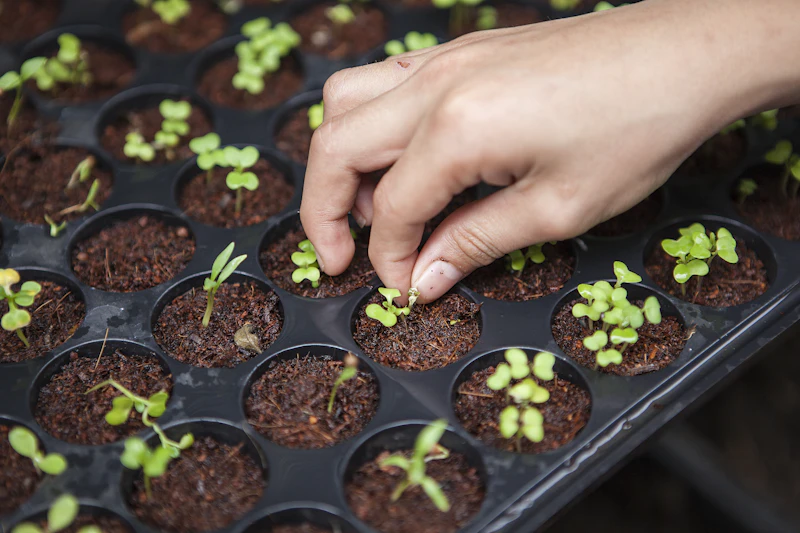
What SRS Networks Deploys for Research Organizations
Six service areas that cover the estate a breeding program or genomics lab actually runs - benches, compute rooms, greenhouse ranges, seed vaults, and the stations between them.
Structured Cabling
Cat6A to instrument benches, lab offices, headhouses, and vault controllers — certified run by run and tested against ANSI/TIA-568 before a single sample moves.
Fiber Optic Installation
40G and 100G fiber between sequencing floors, compute rooms, and storage, plus outside-plant runs to greenhouse ranges, screen houses, and research stations.
Lab & Greenhouse WiFi
Coverage engineered for glass, steel benching, condensation, and mobile carts — not an office access point zip-tied to a growth-house purlin.
Access Control
Credentialed doors with retained audit trails on breeding greenhouses, seed vaults, genotyping labs, and containment rooms, plus visitor management at the research station gate.
IP Camera Systems
Camera coverage on vault doors, nursery rows, headhouses, loading benches, and station perimeters, with retention set to your own policy rather than a default.
Compute Room Cabling
Rack, pathway, and structured cabling for the compute and storage rooms where sequencer output actually lands, sized for petabyte-class growth rather than today's array.
Survey. Design. Stage. Install. Close Out.
The sequence is fixed. The calendar is yours - we build it backward from your run schedule and your planting window, then commit to the dates in the SOW.
Survey
We walk the campus and every station, RF-survey greenhouses and headhouses, inventory each instrument bench and its uplink, and record the run calendar and the planting calendar before anything gets designed.
Design
Bench-level design — 10G to instruments, 40G or 100G fiber to compute and storage, separate segments for instrument, lab-operations, and business traffic, and environment-rated hardware for every house and vault.
Staging
Switches, access points, cameras, and readers are configured, labeled, and pre-staged at our West Coast or East Coast staging facility, then shipped to a named recipient at the station.
Install
Work is phased against the run calendar and the planting calendar — bench by bench, house by house — so no instrument goes offline mid-run and no station misses its window.
Closeout
Certification test results for every run, as-built drawings, port-to-port maps, a device inventory with serials and configurations, and photos, all retrievable in the Project Command Center.
Can One Partner Cover Every Station in the Program?
Standardizing a distributed estate on one identical kit is the operational win. Same design, same labeling, same documentation, whether the station sits in the Salinas Valley or eastern Iowa.
R&D campuses, regional research stations, greenhouse and screen-house ranges, seed vaults, and trial-field support buildings — all held to one cabling, labeling, and access standard.
10G instrument benches, 40G and 100G fiber to compute and storage, segmented instrument networks, and pathway capacity planned for the next sequencer rather than the current one.
Lab, office, and containment-room infrastructure with credentialed access, camera coverage, and temperature and humidity monitoring wired to alerting on sample storage.
How Is a Deployment Partner Different From Office IT?
What changes when the people wiring your benches, houses, and vaults design for research operations rather than for cubicles.
What Research IT Leaders Get That a Bid Sheet Never Shows
Directors of IT and research-operations managers are not buying cable. They are buying a schedule that respects a run, a documentation set that survives staff turnover, and one person to call.
Dedicated Research-Program PM
One project manager owns the campus and every station under it — the run calendar, the planting calendar, the wave plan, and the punch list — instead of a different coordinator per site.
Run-Calendar Scheduling
Install windows are built backward from your sequencing and planting calendars, then written into the SOW. A bench comes down between runs, not during one.
Audit-Ready Access Records
Reader, controller, and camera work is documented so the badge logs and retention settings covering greenhouses, vaults, and labs are defensible as reasonable measures rather than assumed.
BICSI-Credentialed Installers
Cabling designed and installed by BICSI-credentialed people, certified run by run, and tested against ANSI/TIA-568 before a site closes out.
Dual-Coast Pre-Staging
Roughly 1 in 6 direct-to-site shipments fails on first attempt. Pre-staging through our West or East Coast facility, labeled and addressed to a named recipient, cuts that to under 1 in 50.
Support After Go-Live
Nationwide break-fix dispatch across the same the 48 contiguous states, Alaska, and Hawaii we install in, with response windows written into the support agreement and technicians who arrive holding your as-builts.
When SRS Networks Is Not Your Fit
Three cases where hiring us is the wrong call. We would rather lose the quote than run a project that was never ours to run.
One building, one metro
A single lab that needs a handful of drops added is a job for a same-metro low-voltage contractor. They beat us on drive time and price, and our coordination overhead does not pay back below roughly 25 sites. We say so on the call rather than after the quote.
You need the science stack
LIMS, bioinformatics pipelines, sequencer service contracts, instrument calibration, and lab equipment procurement are not ours. We build and support the infrastructure those systems run on, and we do not resell the hardware or the software.
You need an attestation
We install and document to published standards — ANSI/TIA-568 for cabling, your biosafety plan for containment rooms, your own access policy for vaults and greenhouses. We are not an auditor, an assessor, or a certifying body, and we will not sign as one.
The Standards Behind Every Lab and Station We Deploy
Research infrastructure answers to a legal test for trade-secret protection and a federal regime for regulated plants, neither of which applies to ordinary office IT. These are the sources our work is built against.
Defend Trade Secrets Act — 18 U.S.C. § 1839
Office of the Law Revision Counsel, U.S. House of Representatives
The statutory definition of a trade secret, including the requirement that the owner has taken reasonable measures to keep the information secret — the test proprietary germplasm and breeding data have to pass.
USDA APHIS Biotechnology Regulatory Services
U.S. Department of Agriculture
Federal oversight of regulated genetically engineered plants, including the confinement, recordkeeping, and site-control expectations that shape greenhouse, screen-house, and trial-site infrastructure.
NIST Cybersecurity Framework
NIST
The control framework research organizations commonly use to structure segmentation, access, and monitoring across instrument, lab-operations, and business networks.
ANSI/TIA-568
Telecommunications Industry Association
The commercial cabling standard every certified run to an instrument bench, headhouse, vault, or station rack is tested against before we close a site.
SRS Networks installs and documents to these published standards. Links go to the issuing body so you can verify the requirement yourself - we are not affiliated with, endorsed by, or accredited by any organization listed unless stated elsewhere on this site.
Bioscience Deployment Terms, Defined
The vocabulary that shows up in research-campus IT scopes, station rollout plans, and lab relocation schedules — defined the way it gets used on a live bench.
- Germplasm
- The living genetic material a breeding program is built on — seed, tissue, cuttings, and pollen held as accessions alongside their pedigree and trait data. Germplasm is usually the most valuable asset on a research campus, and because it is protected largely as a trade secret rather than by patent, the physical and access controls around it carry legal weight rather than just operational weight.
- Genebank (seed vault)
- The controlled-environment facility where seed and other germplasm accessions are held long term, typically at low temperature and controlled humidity. Storage conditions are the entire point, so a genebank depends on temperature and humidity monitoring wired to alerting — an excursion nobody sees can destroy material that took years of breeding cycles to produce.
- Genotyping
- Reading specific genetic markers across large numbers of samples to decide which plants or lines advance in a breeding program. Genotyping labs run in high-throughput batches against tight turnarounds, so bench connectivity and instrument uptime translate directly into how fast selection decisions get made.
- High-throughput sequencing (NGS)
- Massively parallel DNA sequencing that reads enormous numbers of fragments in a single run. A current instrument can produce on the order of 16 to 21 TB across roughly 48 hours, and a single human genome is about 100 GB raw — which is why 1G uplinks at the bench and copper backbones stopped being adequate in most sequencing facilities.
- Growth chamber (phytotron)
- A sealed room or cabinet where temperature, humidity, light spectrum, photoperiod, and sometimes CO2 are held to a set recipe so plant trials stay repeatable. The controls, sensors, and lighting inside are network endpoints living in a hot, humid, condensation-prone box, which makes hardware selection there an environmental-rating question rather than a catalog question.
- Headhouse
- The service building attached to a greenhouse range where potting, seeding, washing, storage, and the environmental control equipment sit. It is normally where a range's power and network terminate, so it ends up functioning as the telecom room for every house behind it even though it was never designed as one.
- Research station
- A regional site where a breeding program runs trials in a target environment, typically combining office, lab, greenhouse or screen house, seed storage, equipment shop, and trial fields. A program is a distributed estate of these stations, and standardizing every one of them on the same infrastructure kit is what makes the estate supportable by one team.
- LIMS (laboratory information management system)
- The software of record for samples, plates, tests, results, and chain of custody inside a lab. LIMS accuracy is bounded by connectivity at every bench, scanner, and label printer that touches it, so wireless dead zones and saturated bench uplinks surface as missing or late sample records rather than as slow screens.
Bioscience Deployment FAQs
What research IT directors, facilities leads, and lab vendor program managers ask us before signing a deployment SOW.
Ready to Standardize Every Lab, Station,
and Greenhouse You Operate?
Send your station list, bench counts, and run calendar. Email partners@srsnetworks.com or call (866) 224-3636 - Cheryl returns scoping calls within one business day.
Serving plant-breeding and seed-genetics programs, agricultural biotech and crop-science campuses, genomics and genotyping laboratories, and life-science research facilities across the 48 contiguous states, Alaska, and Hawaii.