
TechLink Services Alternatives for Retail Rollouts
Most searches for a TechLink Services alternative for retail don't start with a TechLink failure. They start with a program-shape mismatch — custom multi-site infrastructure is a different job than repeatable single-device installs at volume. Below are five nationwide deployment partners compared by the lane each one actually wins, with honest notes on where each falls short. Including us.
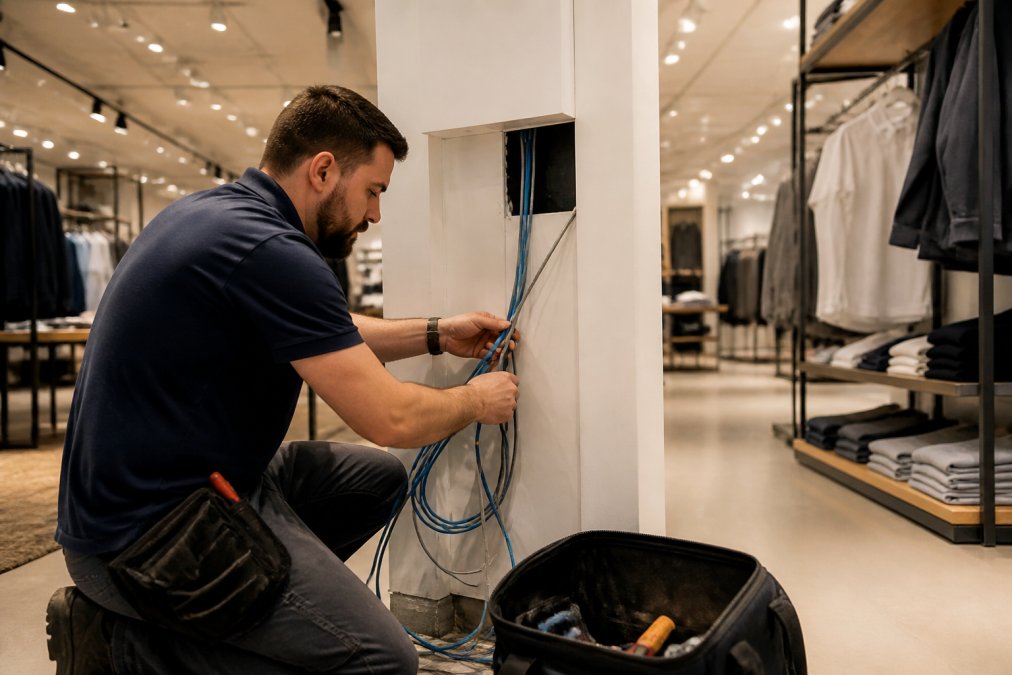
Five firms, one lane each. The reader's first job isn't picking a company — it's picking the lane that matches the program: custom infrastructure, enterprise integration, hardware lifecycle, design-through-support, or surge capacity.
Why retail buyers look for a TechLink Services alternative
TechLink Services is a capable national field-services firm — founded 2008, 200,000-plus installations across the US and Canada, with a heavy retail and QSR book. Buyers comparing alternatives usually aren't running from bad work. They're matching a program to a business model, because "national field services" covers at least five different business models and no single firm wins all of them.
Three mismatches drive most of the searches. First, program shape: a volume-install machine built for 1,000 identical POS terminals is the wrong tool for a 60-site program where every store needs cable, WiFi, network hardware, and cameras scoped per site. Second, transparency: some buyers need the workforce model, COI process, and commercial terms published and in writing before award, not scoped in a sales conversation. Third, channel protection: an MSP or VAR that owns the end-client relationship needs a white-label deployment arm with deal registration — not a vendor whose crews show up in their own branding.

The five firms below each win a different lane. Figure out which mismatch sent you here, and the right card mostly picks itself.
Five alternatives, one lane each
Ordered with the publisher first — see the disclosure above. The lane label under each name is the one job that firm wins better than the others on this list.
SRS Networks
- HQ
- South San Francisco, California (offices in Salinas, Pasadena, Boise, Boston, Dallas)
- Coverage
- 48 contiguous states, Alaska, and Hawaii (not AK or HI, not Canada)
Telaid
- HQ
- Niantic, Connecticut
- Coverage
- National
Retail Tech, Inc.
- HQ
- Chanhassen, Minnesota
- Coverage
- National
Federated Service Solutions
- HQ
- Plymouth, Michigan
- Coverage
- National
Worldlink Integration Group
- HQ
- Aliso Viejo, California
- Coverage
- National
How the five compare
The five aren't interchangeable, and a feature table hides the differences that matter. The short version: SRS wins when the program is custom infrastructure and the buyer needs channel protection and published terms — the model behind our national retail rollouts practice. Telaid wins on retail integration depth at direct-enterprise scale. Retail Tech, Inc. wins when the program is really a hardware-estate program wearing a rollout's clothes. Federated Service Solutions wins when nobody on your side wants to own network design. Worldlink wins on surge.
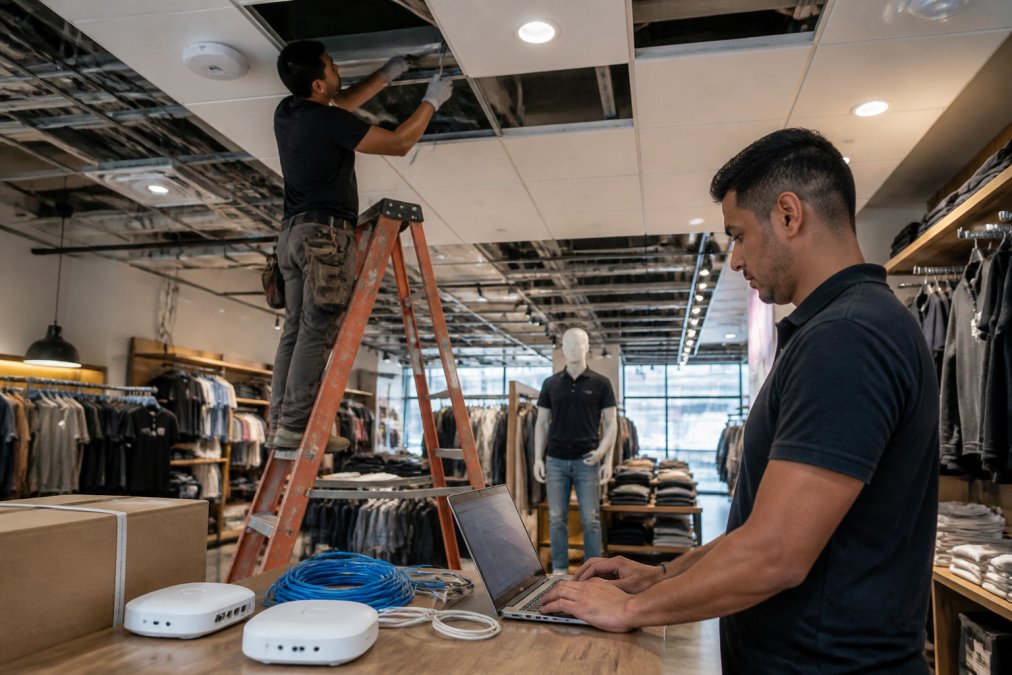
All five publish their own numbers, and you should read them the way you'd read ours — as claims to pressure-test on a scoping call. Telaid posts its delivery-rate figures, Retail Tech, Inc. documents its staging model, Federated Service Solutions lays out its design-through-support arc, and Worldlink Integration Group publishes its store-opening volume. Ask each firm for the same four disclosures: workforce model by market, COI process, the named PM, and a per-site closeout sample.
When TechLink Services is still the right call
Alternatives posts have a habit of quietly trashing the incumbent. We won't — TechLink Services is the firm we get compared against most, and the honest read is that they're very good at a job we don't do.
Pick TechLink when the program is 1,000-plus standardized devices on a fixed install script — QSR POS estates, ATM refreshes, digital-signage chains. Pick them when the program includes Canadian stores: TechLink covers the US and Canada, and SRS covers the 48 contiguous states, Alaska, and Hawaii only. Pick them when you need their named specialty playbooks — ATM, kiosk, digital signage, Starlink. And if they already hold the account relationship mid-program, switching vendors usually creates more risk than the operational delta pays for.
Pick a different lane when the work is custom per site, when your procurement process needs commercial terms off a public page rather than out of a sales conversation, or when channel protection is the whole point. We keep a full requirement-by-requirement comparison at SRS vs TechLink Services — it names the rows where TechLink wins outright, not just the rows where we do.
And when none of the five fit: a program under 10 sites in a single metro doesn't need a national partner at all. Hire a local low-voltage shop, keep the coordination in-house, and bank the overhead you didn't pay for.
What to require before you sign anyone
Whoever you pick, the requirement list is the same. Six things, all in writing, all before award.
- Site surveys before timeline commitments. A vendor that commits dates without surveying is guessing on your dime, and the guess surfaces as change orders in week three.
- One written install standard, verified per site. Closeout for every store: test results, photos against the spec, as-builts. The next tech to touch the store should never have to tone a cable.
- Workforce disclosure by market. W-2 crew or subcontractor, who vetted them, and who checks the COI before dispatch. On our programs every sub runs under a 24-month agreement and every COI is audited in Project Command Center before a truck rolls — ask every bidder what their equivalent is.
- A staging plan. Where gear gets configured, who receives it at store level, and what happens when a shipment fails first delivery.
- Commercial terms on paper. NET 30 and milestone-based billing — 40% kickoff, 30% midpoint signoff, 30% completion — are standard on project work. A vendor asking for a large deposit before a site walk is pricing their own uncertainty into your program. Budget mechanics are covered in our multi-site deployment cost guide.
- An MSP coordination protocol. Who talks to the end client, who owns the handoff documentation, and what deal registration covers. If the answer is vague before the contract, it will be worse after.
Straight answers
What retail IT directors and channel partners ask when they're comparing deployment vendors. The answers match what we'd say on a scoping call.
SRS Networks vs TechLink Services: The Full Side-by-Side
The requirement-by-requirement version of this comparison — tenure, coverage, workforce model, commercial terms, and program fit, with a winner named per row. It calls the rows TechLink wins (Canada coverage, extreme-volume device installs) as plainly as the rows SRS does.
Match your rollout to the right lane
If your program is custom multi-site infrastructure across the 48 contiguous states, Alaska, and Hawaii — and keeping your name on the work matters — email partners@srsnetworks.com with site count, target geography, and install window. Cheryl returns scoping calls within one business day, and the channel partner program puts white-label posture and deal registration in writing before the first truck rolls.
If your program is a better match for one of the other four firms, the lane label under each card says so. Send the same six-item requirement list to two or three of them and compare what comes back in writing.
Randy Loveless is the CEO of SRS Networks, founded 1996. He's spent 30 years deploying cabling, network, and physical security infrastructure across multi-site retail environments. SRS Networks runs as the deployment partner of choice for MSPs, VARs, and national retailers that need nationwide execution without building an in-house field-services bench. Read more about SRS Networks.