
Data Center Cable Management That Protects Airflow and Uptime.
Data center cable management keeps routes, identifiers and records usable for controlled field changes. Poorly arranged cable can obstruct access and air paths; review the actual conditions against the facility-approved layout before moving it.
SRS Networks assesses, remediates, labels, and documents data center cable plant against approved routing and labeling requirements — performing the agreed link tests and working around live racks with work sequenced to limit downtime.
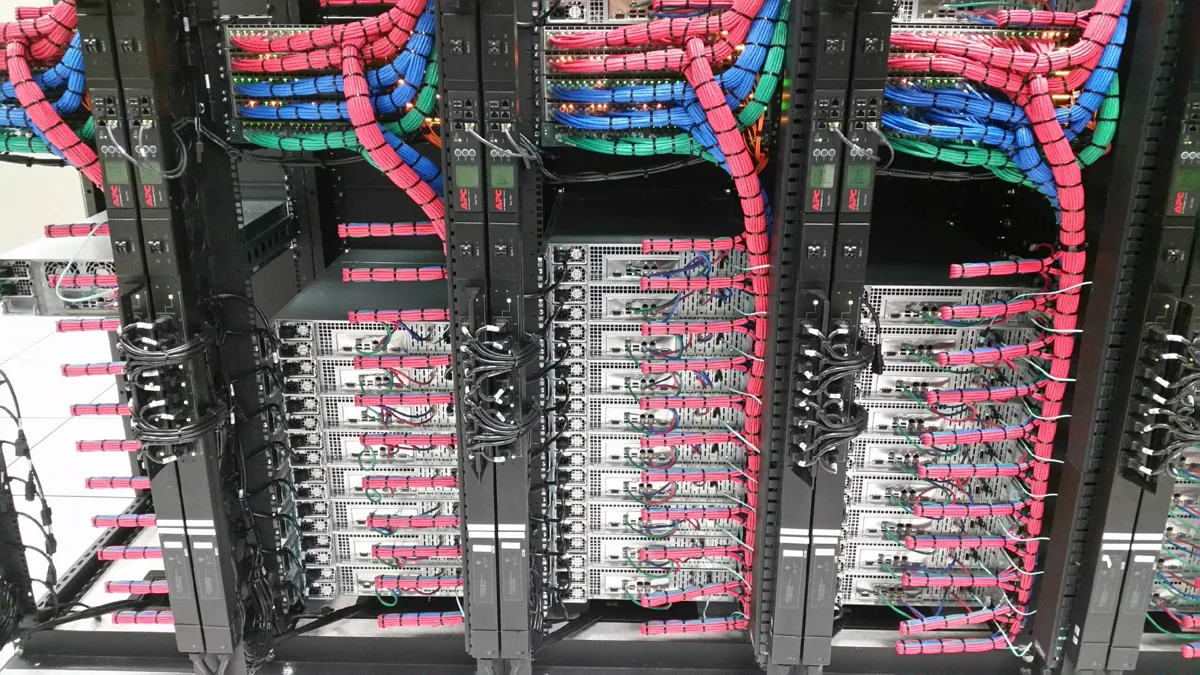
Data center cable management organizes the pathways, slack, identifiers and records for a copper and fiber cable plant. The approved package identifies routing, separation, labeling and the tests required for affected links. Specify any TIA-606 labeling or TIA-942 installation records in the work order; the facility or appointed assessor owns acceptance and any independent certification.
SRS Networks is a nationwide data center cable management contractor headquartered in South San Francisco, California, organizing, testing, and documenting cable plant for colocation providers, enterprise data centers, and edge facilities across the 48 contiguous states, Alaska, and Hawaii since 1996. We've completed 900+ deployments across 10,000+ sites with in-house W-2 cabling leads, remediation planned to limit downtime, and every project tracked live in our Project Command Center. Many engagements start as a one-time cleanup of an existing data center cabling plant and convert to a recurring program. We are the nationwide enterprise deployment business — a separate company from any local Salinas managed IT services provider.
Poor Cable Management Is a Cooling and Uptime Risk
Routing and labeling conditions can complicate work around live racks. Record the observed condition and its owner rather than assume that cable management alone explains a network or cooling problem.
Slack and Bundles Choking Airflow
Unmanaged slack, oversized bundles or poorly placed routes can obstruct equipment access and air paths. Record observed conflicts against the facility plan; the responsible designer evaluates cooling conditions and approves any route changes.
A Plant Nobody Can Trace
Unclear patch labels and missing port schedules can require additional tracing before a change is authorized. Identify the endpoints and retained services, then record connections that remain unresolved rather than disconnect a cable on appearance alone.
No Color or Traffic Discipline
A rack may carry production, management, storage and out-of-band connections. Use the facility-approved identifiers and routes so the operating team can distinguish them; a cable color alone does not establish the service or authorize a change.
Documentation That Doesn't Exist
Missing or outdated drawings can leave the next field team without a reliable connection record. Agree the affected rack and port records, document observed differences and identify what could not be verified before the receiving review.
Cable Management with Live-Facility Discipline.
SRS Networks manages data center cable plant the way a live facility requires: approved routing, specified link tests, the agreed labeling scheme and records for the facilities review. It pairs cleanly with our structured cabling and rack cable management work.
Every Phase of a Data Center Cable Management Engagement
From plant assessment through phased remediation, full labeling, and the recurring moves-adds-changes program that keeps it from degrading.
Plant Assessment & Audit
Review the agreed racks and available records to document visible routing, labeling and service-access conditions. Refer required spacing, capacity and thermal decisions to the facility designer rather than infer concealed conditions or model cooling performance from a walkthrough.
Remediation & Re-Routing
Re-bundle, re-route, and dress the existing plant around live equipment with discipline on bundle size, bend radius, and copper/fiber/power separation.
Labeling & Documentation
Use the facility-approved labeling scheme and closeout schedule. Identify the required rack elevations, port records and cable map before pricing; name the applicable labeling standard and edition in the work order.
Certification & Ongoing MAC
The work order names the affected links, required tests and records. Future moves, adds and changes can use the same controlled labeling and handoff process under an agreed field scope.
Cable Management for Any Data Center Footprint
Colocation, enterprise, edge, or HPC — SRS Networks adapts its cable management discipline to the thermal and density profile of the facility.
Colocation Facilities
Approved hot/cold aisle routes, cross-connect organization and slack control between customer cages and meet-me rooms. The facility designer retains cooling requirements and approves changes affecting shared infrastructure.
Enterprise Data Centers
Primary and DR site cable management, switching-backbone dressing, and phased remediation planned to limit disruption to live infrastructure.
Edge & Micro Data Centers
Compact-footprint cable management for edge compute, retail server closets, branch IT rooms, and manufacturing-floor nodes where every rack unit counts.
High-Performance Computing
High-density fiber and copper management for HPC clusters and GPU-heavy AI/ML racks, where airflow and bend radius are non-negotiable.
Cable Management on Infrastructure That Can't Go Dark.
Re-organizing cable plant around racks that have to stay up is a different job from greenfield work. Downtime-conscious sequencing, hot-aisle discipline, ESD and airflow protocols — the details that separate a crew that's done it from one that hasn't.
How a data center cable management engagement runs
The thing you are usually worried about is downtime. You have racks that cannot go dark, a cooling envelope you cannot disturb, and a cable plant that has drifted into chaos — and you need an agreed work plan that limits downtime. So we start with an assessment: we walk the facility, or read your rack manifest, and record visible route conflicts, unclear labels and service-access restrictions. The facility designer evaluates capacity and thermal requirements and releases any changes to the approved arrangement.
When the crew mobilizes, the discipline is what you are paying for. Work is sequenced rack by rack during your off-hours window, and nothing moves until the new path is staged and verified. Copper, fiber, and power get separated. Slack and bundle sizes get dressed back inside spec so you are not obstructing the access and air paths identified in the facility plan. Cooling performance remains a facility-design and operating decision. The approved test plan identifies which affected links need testing, the acceptance limits and the required result files. Record any failed or incomplete link with its authorized repair and retest status. Apply the labeling and color scheme approved for the facility so its operating team can reconcile each port.
Agree the closeout package before work starts: affected rack elevations, port schedules, cable records and the specified test files. Those records support the facility's review; installation does not itself establish an audit result or facility certification. Future moves, adds and changes need their own authorized scope and an update to the same controlled records. If you'd rather see it live, every change we make is tracked in the Project Command Center so your team always knows the current state of the racks.
Explore More from SRS Networks
Data Center Cable Management FAQs
The questions data center operators, colocation facility managers, and IT directors ask us most before signing a cable management SOW.
Ready to Get Your Cable Plant Under Control?
One-time remediation of a messy data center, a new-build cable management standard, or a recurring moves-adds-changes program — send the rack count, available drawings and access windows. We can scope the field work, required tests and handoff records against your facility's approved installation package.